
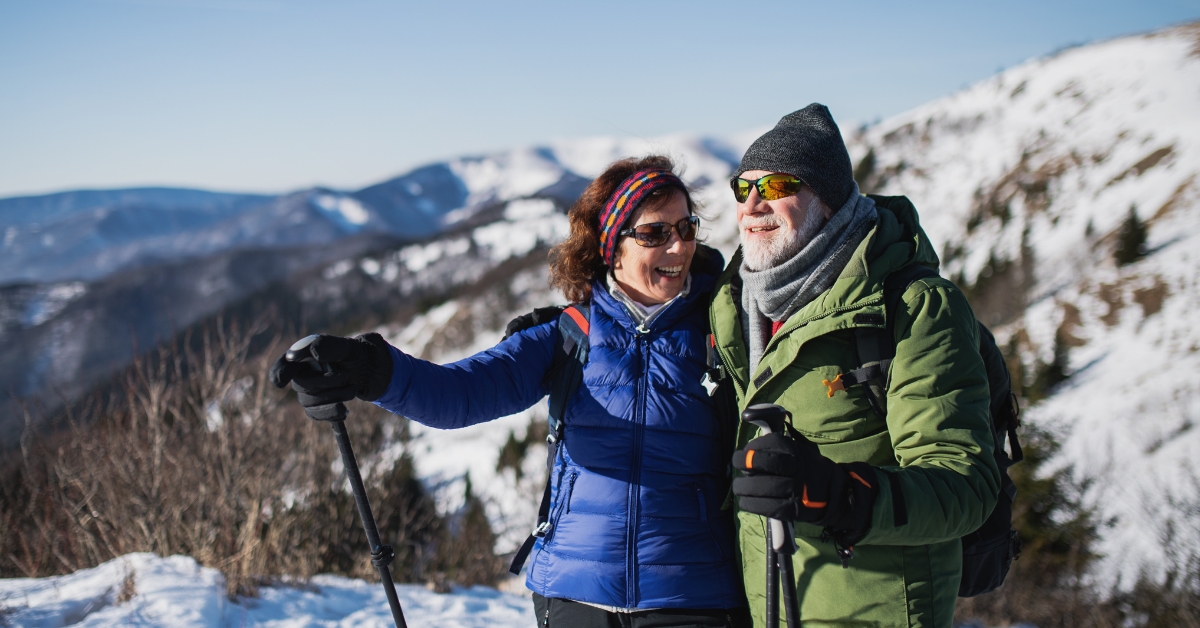
Hiking is surging in popularity for a host of excellent reasons, not least the desire to reconnect with nature. Winter, however, isn’t the season with the fewest risks when you’re out on the trails.
Winter Hiking: What precautions should you take to stay safe?
Hiking inevitably involves bringing gear, even if you’re only heading out for a few hours, and this is especially true in winter. First, you’ll want clothing that’s appropriate for the conditions and, of course, sunglasses that you should wear year-round. A few small items can also spare you a lot of trouble.
Packing Your Winter Hiking Backpack
- Always have something to drink, preferably something hot. Favor beverages that are not diuretic (which won’t prompt you to urinate) to avoid the risk of dehydration.
- A small snack is essential, especially if you anticipate putting in a lot of effort, even if your hike is planned to be short; you never know. Dried fruits make excellent trail companions.
- The basics of first-aid gear are essential, namely a disinfectant and bandages. A small injury or a blister misplaced can simply keep you from walking with all the consequences. For a disinfectant, as long as you still have to keep moving, you can prevent an infection that could be problematic long after your hike.
Preventing Dangers While Winter Hiking
- If the weather calls for it, bring snowshoes or you’ll find yourself in a perilous situation. Snowshoeing hikes take longer to cover, as you move more slowly and with more effort. But without snowshoes and in deep snow, you may not reach the end!
- If you have one, bring your cell phone in case something truly goes wrong. But don’t rely on it too much. Not only can it break or run out of battery, but there’s a good chance there won’t be a signal where you’re hiking.
- Few seasoned hikers head out without a knife… not a kitchen knife, but a sturdy blade like the ones used by alpine shepherds. It’s a tool that has saved many lives and belongs in a backpack.
- Sometimes it’s wise to think about the worst-case scenario, even if it never happens. In winter, risks can be high depending on where you choose to go, so be prepared. A survival blanket weighs only a little (roughly 100 g) yet it can make a real difference. Tuck one into your backpack along with a lighter and a candle. You’ll simply sit cross-legged, wrap yourself in the blanket as best you can, and then light the candle between your legs to create a small heat dome that can help you weather the outdoor conditions.

Winter Hiking: Planning Your Outing
Unless you know the place you plan to hike by heart—and even then, it’s essential to thoroughly plan your route. There are many topographic maps that will show you the markings to follow on safe and identified trails.
Also pay attention to the elevations; they’re always indicated on these very same topographic maps. A mile of flat terrain is not at all equal to a mile with 1,640 feet of elevation gain, and it’s even truer in winter.
When you’re preparing, don’t imagine you can go off-piste to modify existing routes. Not only is that extremely dangerous for you (and it will be even harder to come to your aid if needed), but it also disturbs the very nature you’re moving through.
Finally, and this is not the least important point, check the weather before you head out. Don’t do it three days in advance—do it on the day of your hike, because, especially in the mountains, winter weather can be capricious and often carries heavy consequences for hikers. Throughout your hike, stay alert to the wind and the movement of clouds that can signal a weather shift.

Places to Respect
Hiking is, above all, about engaging in outdoor physical activity, which means that nature is your gym. It’s unlikely someone will sweep behind you to clean up, tidy, or repair, so always keep these reflexes in mind!
- Never leave any litter, organic or otherwise. After all, an animal’s digestive system may not be equipped to handle what you discard. More importantly, in some places you risk leaving behind something that nature won’t be able to decompose because it practically won’t be seen by the environment.
- Never start a fire unless it’s an absolute emergency. Mastering fire is something that only a professional can truly manage; there’s no need to be overly confident—the risk is very real.
- Don’t also toss your cigarette on the ground for the two same reasons as above.
- Be careful not to trample young trees; they’re the future of the forest.
- In case of forestry work, stay vigilant of trees and branches that can fall where you step.
Article republished


