The scenes are disheartening: thousands of hectares of vegetation burned. Fires are raging particularly in wooded areas, destroying the habitats of numerous species, but they also sometimes reach inhabited zones, burning gardens and homes. Most of the blazes are human-caused and fueled by the drought and heat of recent weeks, creating conditions favorable to the spread of fire.
Experts also point to the presence, in private gardens, plants that are highly flammable. Vegetation that puts residential areas at risk and should be avoided near homes.
What are highly flammable plants?
It’s important to note that all plants are flammable, Sespecially when they are not regularly pruned. Regular maintenance of your plantings already helps limit the risk of ignition. Nevertheless, some highly flammable plants are much more prone to spreading fire than others, even if they are well maintained, healthy, and regularly watered. These are plants that possess certain characteristics conducive to ignition.
The characteristics of the most flammable plants:
- Dry, tough foliage, composed of dry or dead leaves or twig-like leaves.
- Very fine or needle-like leaves.
- Extremely dense and abundant foliage.
- Scaly, rough bark.
- Plants with high resin or oil content (including terpenes or gums).
- Under the plant, a substantial layer of fallen leaves or dry needles.
Flammable plants listed below exhibit one or more of these traits. Their list was compiled by European botanical organizations and agencies specializing in fires.
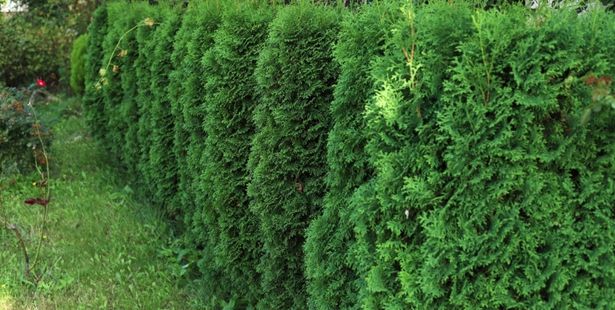
- The cypress and notably the Arizona cypress, Italian cypress, Leyland cypress, and the Tecate cypress. These evergreen trees are often used as hedges or windbreaks, but they can ignite very easily.
- The pine, whose flammability varies by species. Their foliage of small needles and resinous bark promote fires.
- The thuja, a favorite in gardens despite its tendency to spread fires.
- The acacia, whose leaves in some species contain oils and flammable resins that promote fires.
- The rosemary, an aromatic shrub that tolerates drought but contains highly flammable oils.
- Palms, which promote fires because their leaves ignite, then shed easily to the ground, allowing the fire to continue its spread. Embers can also lodge in their trunks. Some species are especially dangerous, particularly when not pruned: the Mediterranean palm, the Canary Island palm, the date palm, the Senegal palm, the pygmy palm, the Mexican palm, and the windmill palm.
- Greasewood (Sarcobatus), a shrub whose needle-shaped leaves promote fires (notably Adenostoma fasciculatum and A. sparsifolium).
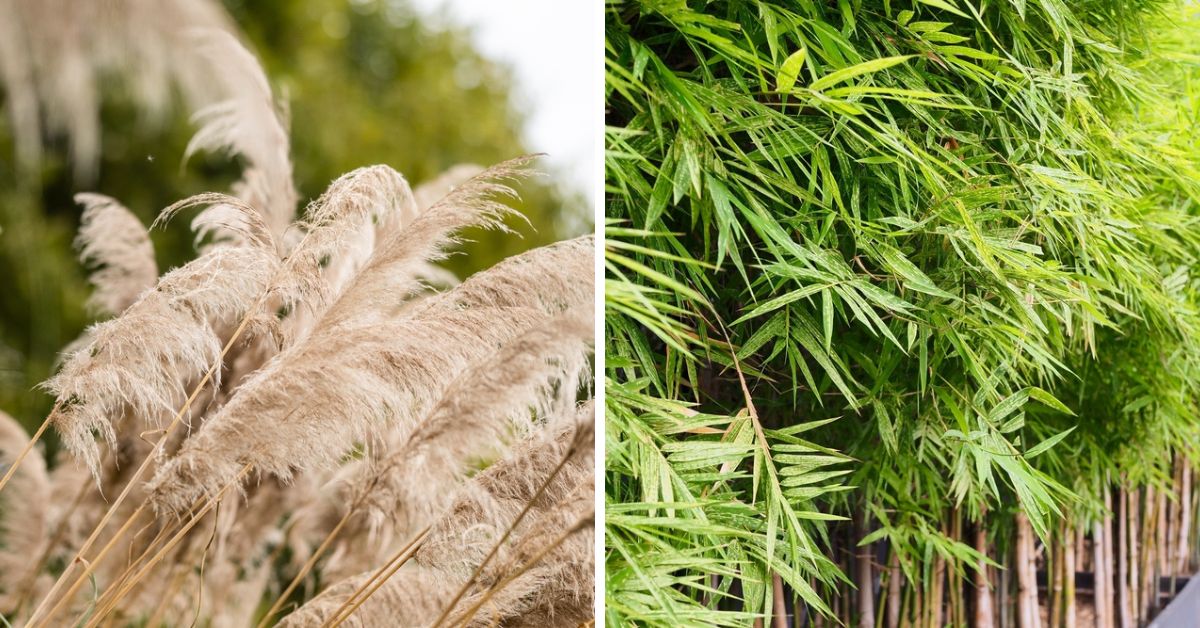
- Bamboos, whose clumping habit and tall dry culms greatly contribute to fire spread.
- Broom, a perennial that is very flammable due to its high oil content.
- The Canary Island ivy, or Hedera canariensis, a fast-growing, highly invasive species.
- Eastern red cedar, a conifer that substantially promotes fires.
- Douglas fir, a conifer whose needles and resinous bark make it vulnerable to fires.
- Eucalyptus, whose leaves produce highly combustible oils.
- Japanese honeysuckle, a shaded ornamental plant commonly planted near houses, but it proves to be highly flammable.
- Maiden grass (Miscanthus sinensis), an ornamental grass whose clumps ignite rapidly.
- Pampas grass, a grass whose plume-like inflorescences are highly appreciated but can easily ignite and spread the fire to the rest of the garden.
- Juniper, a drought-tolerant conifer, but most varieties contain highly flammable resins.
- Burning bush or Dictamnus albus, contains oils in the seeds of its flowers, making it prone to catching fire quickly.
- Melaleuca plants, a genus of flowering plants whose leaves and bark contain flammable oils.
- Manzanita, small evergreen shrubs that can become very dense and whose berries are popular with wildlife. When they form dry wood, these plants greatly promote fires.
- Toyon, a shrub also known as California holly, whose foliage is flammable.

Plants that resist fires better
By contrast, other plants are known for their fire resistance and thus serve as natural firebreaks.
These plants help, in fire-prone regions regularly plagued by drought, to contain wildfires by preventing them from spreading to agricultural and vineyard areas, next to which residential zones often lie. Notably we should mention vineyards, chestnut orchards, and olive trees, but also truffle orchards which, when properly maintained, make good firebreaks.