
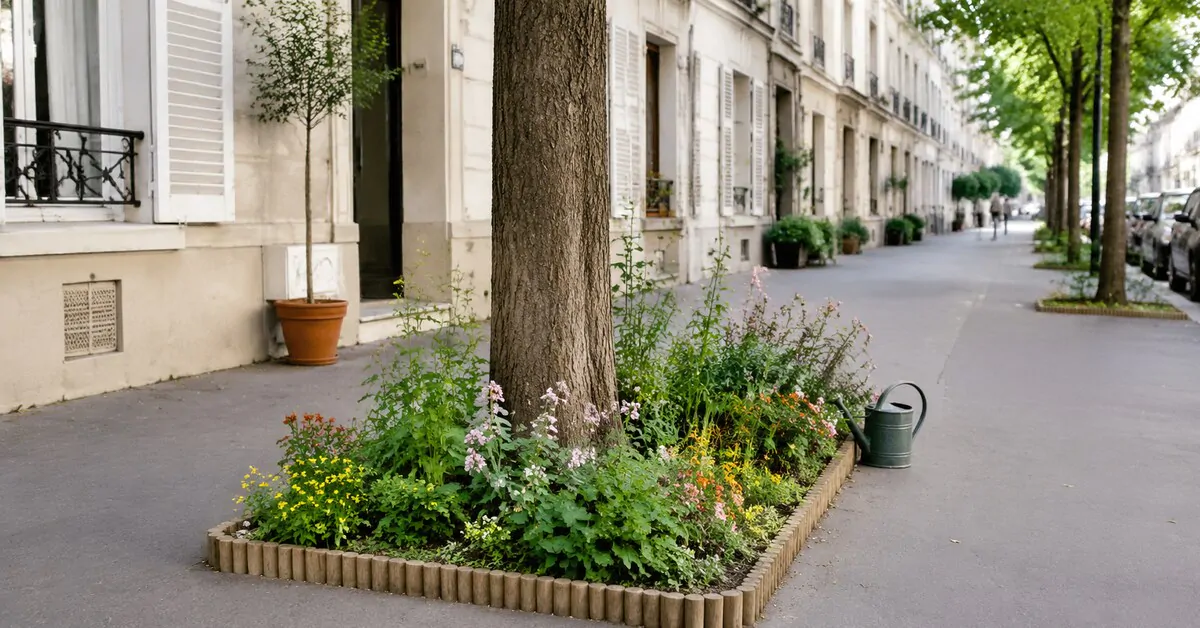
Planting a few flowers in front of your home may seem innocent. Yet the sidewalk is public property. It cannot be occupied freely.
The Vegetalizing Permit provides precisely the framework for these citizen-led initiatives. It allows you to garden legally on your street, without owning land.
The Vegetalizing Permit is a temporary authorization to occupy public space. It is typically issued free of charge by the municipality.
Paris launched this program in June 2015. Since then, numerous localities have adopted or adapted it for their territory. (3)
According to cities, this permit can notably allow you to:
- flower a tree pit;
- cultivate a small strip of open ground;
- install a planter on the sidewalk;
- train a climber up a building façade;
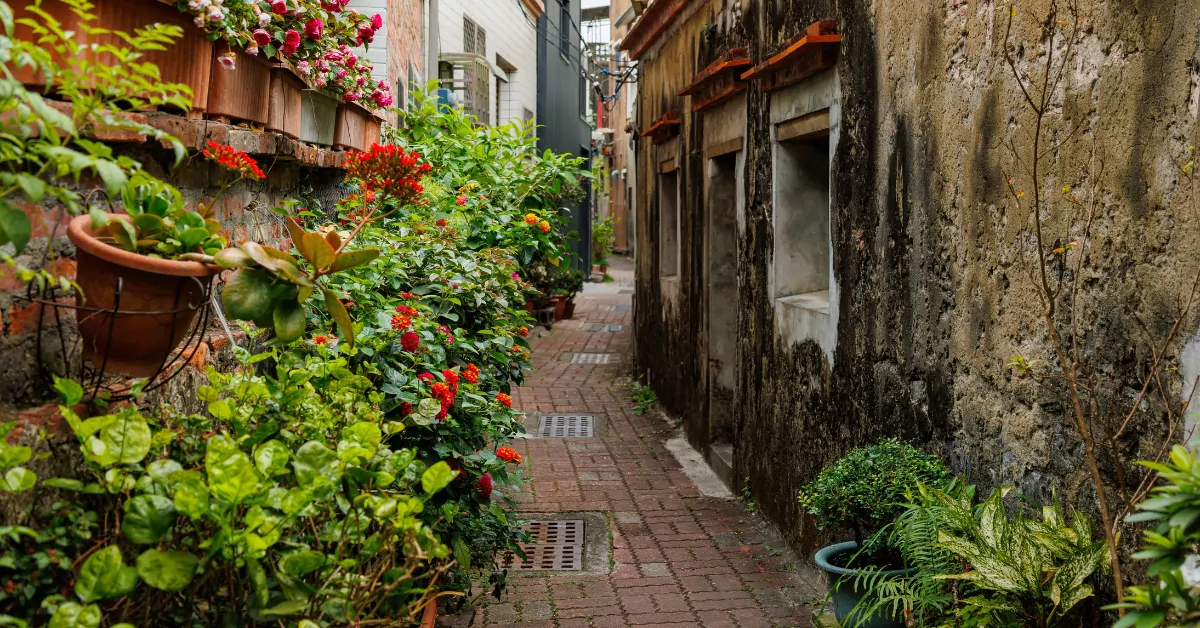
- green up a small neglected space.
Open ground is generally preferred. It requires less watering and allows better water infiltration.
The program applies only to the public right-of-way. For a courtyard, a roof, or a private garden, the owner or condominium agreement suffices. Parks and already-developed squares are also excluded.
Who can apply for a Vegetalizing Permit?
Conditions vary by municipality. Usually a resident, an association, a school, or a neighbors’ collective can submit a project. No special gardening skills are required. However, you must be able to plant, water, and regularly maintain the site.
Some cities strongly encourage collective projects. In Paris, individuals must now assemble a collective of at least five people. This arrangement helps ensure that a planting isn’t abandoned during vacations or after a move.
How to obtain a Vegetalizing Permit?
1. Check that the site is eligible
Start by observing the place’s uses. The project must not impede pedestrians, vehicles, or city services.
Avoid already-developed green spaces. Also check for the presence of grilles, manholes, utility networks, or building exits.
2. Prepare a precise plan
The city hall will typically require:
- the exact address of the site;
- photographs of the site;
- the installation’s dimensions;
- a sketch or a small plan;
- the list of plants considered;
- the materials used;
- watering and maintenance arrangements.
Consider consulting neighbors and business owners. This will help you anticipate delivery days, trash pickup, or access to storefronts.
3. Submit the application
Applications are submitted online or at municipal services. Look up “vegetalizing permit” on your city’s official site.
The technical services then study the project’s feasibility. They may suggest modifications before granting approval.
4. Sign the Vegetalization Charter
The applicant must typically commit to a charter. It governs plant choices, materials, and maintenance methods.
It often bans pesticides. It also favors native, pollinator-friendly species suited to the climate.
5. Wait for authorization before planting
Do not begin work until you have written approval. Once the permit is granted, the city may prepare the soil or remove a grate.
Some municipalities also provide soil, seeds, or small signage.
How much does a Vegetalizing Permit cost?
The permit is normally free. However, not all expenses are necessarily covered. In Paris, the City plans the projects into open soil if needed. It may also provide soil and seeds. The plants remain the responsibility of the gardeners.
For a above-ground installation, the holder must purchase the planter. Plastic is prohibited in Paris, in favor of more durable materials.
These terms vary. Always check your municipality’s regulations before purchasing equipment.
Rules to follow after obtaining
The authorization is not simply an administrative green light. It commits the gardener for the duration of the project.
Specifically, you must:
- water and prune the plants;
- remove dead vegetation;
- pick up leaves and rubbish;
- keep the installation in good condition;
- avoid invasive, toxic, or highly allergenic plants;
- maintain a clear sidewalk path;
- protect existing equipment and trees.
The minimum width depends on the municipality. Paris requires at least 1.60 meters of passage, and sometimes 1.80 meters near certain installations.
The permit remains temporary and revocable. In Paris, it lasts three years and can be tacitly renewed, up to a maximum of twelve years. A lack of maintenance can lead to its withdrawal.
A small garden useful to the whole street
A few flowers won’t by themselves transform a neighborhood’s climate. Yet the proliferation of these spaces strengthens urban nature.
Greening helps cool urban areas and combats heat islands. It also preserves biodiversity and improves residents’ well-being. (2)
Pollinator-friendly plants also provide resources for bees, butterflies, and other pollinators. Choosing native species reduces water needs.
These small gardens become spaces for conversation. Seed exchanges, tips, and even a few watering cans happen there. A single tree pit can bring neighbors together who might not have spoken otherwise.
Without a garden, with a small budget and no expertise, it becomes possible to take action right in front of your home. The Vegetalizing Permit turns a small public space into a shared ecological project—provided you respect the street and commit to long-term maintenance.
- https://www.legifrance.gouv.fr/codes/article_lc/LEGIARTI000042914938
- https://agirpourlatransition.ademe.fr/collectivites/conseils/adaptation/vegetalisation
- https://www.paris.fr/pages/un-permis-pour-vegetaliser-paris-2689