
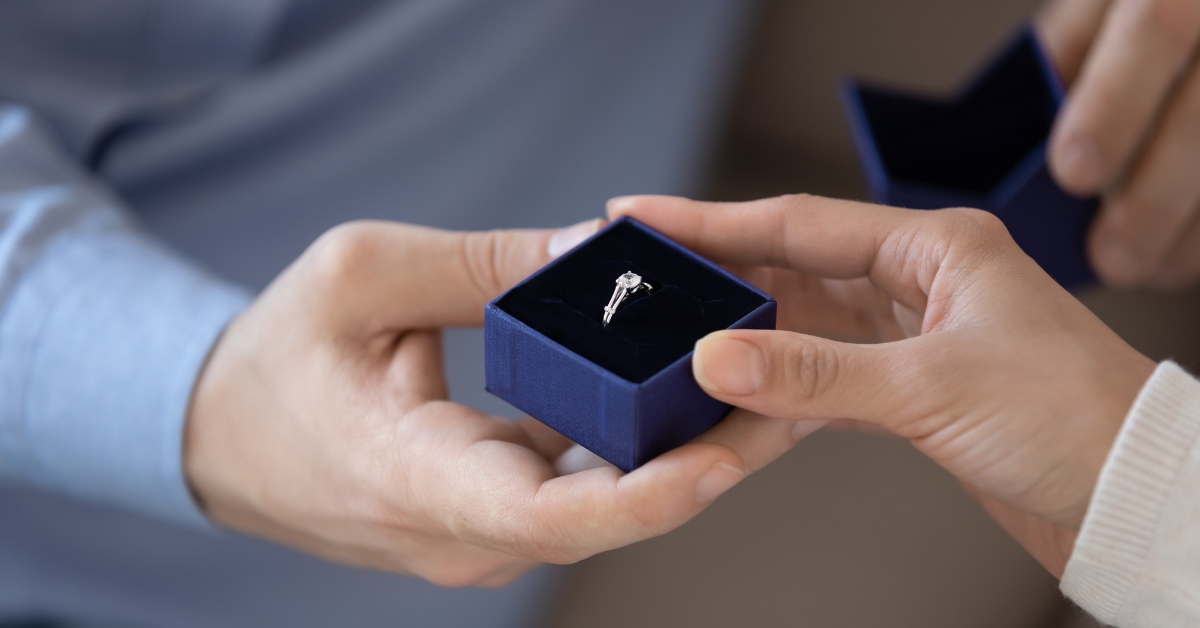
Are you planning a surprise? Here are several discreet tips to figure out your partner’s ring size without tipping them off.
Giving a ring remains one of the most symbolic gifts. But balancing the surprise with the fear of choosing the wrong size makes many hesitate at checkout. Fortunately, there are several simple and discreet tricks to learn your partner’s ring size without arousing suspicion.
To complement our guide on how to choose your ring size, here are the best techniques to uncover the right finger size without spoiling the surprise.
Borrow a Ring They Already Wear
It’s the most reliable method. If your partner regularly wears a ring on their ring finger, take advantage of a moment when they remove it—shower, workout, nighttime—to borrow it discreetly for a few minutes.
The ideal next step is to have it measured at a jeweler, use a virtual ring sizer, or measure its inner diameter with a precise ruler. Note, however: not all fingers are the same size. A ring worn on the index or middle finger may not yield the correct measurement for the ring finger.
Make an Impression in Soap or Modeling Clay
This technique works especially well if you can only borrow the ring for a few seconds. Just press the ring gently into soft soap, modeling clay, or even soft wax.
The impression you obtain can then help a jeweler estimate an approximate size. Some people also prefer to trace the inner contour of the ring on a blank sheet with a very fine pencil. The more precise the line, the more reliable the measurement.
Compare the Ring with Your Own Finger
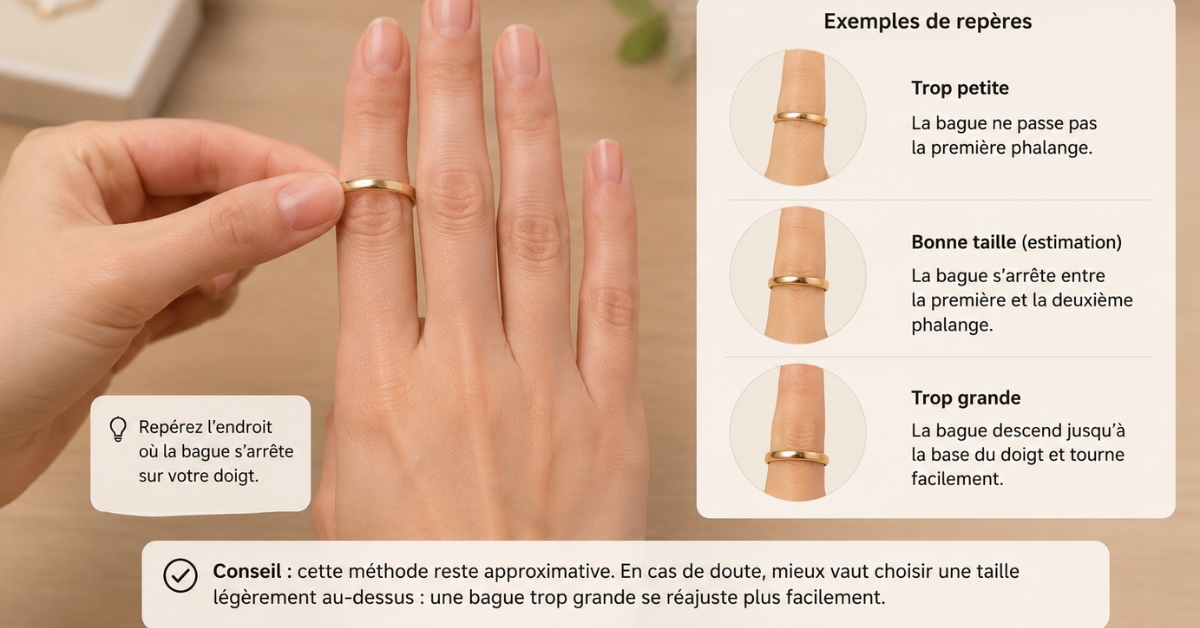
A less scientific method, but often effective: discreetly try the ring on your own hand and note where it stops. For instance, if it halts around the middle of your pinky or slides down to the second knuckle of your ring finger, that can give a useful reference for the jeweler.
This technique is approximate, but it can be enough to avoid a big sizing mistake. And if in doubt, it’s usually wiser to choose a size a bit larger: a ring that’s too big can be resized more easily than one that’s too small.
Ask a Friend or Relative for Help
The best discreet moves rarely happen alone. A close friend, sister, brother, or even a parent can become your strongest ally for getting the information without looking suspicious.
This person can casually spark a jewelry-related conversation, propose a shopping session, compare “for fun” ring sizes, or accompany your partner to a jeweler under a different pretext. This method works especially well if your partner enjoys talking about fashion, accessories, or gift ideas.
Measuring Their Finger While They Sleep: Good or Bad Idea?
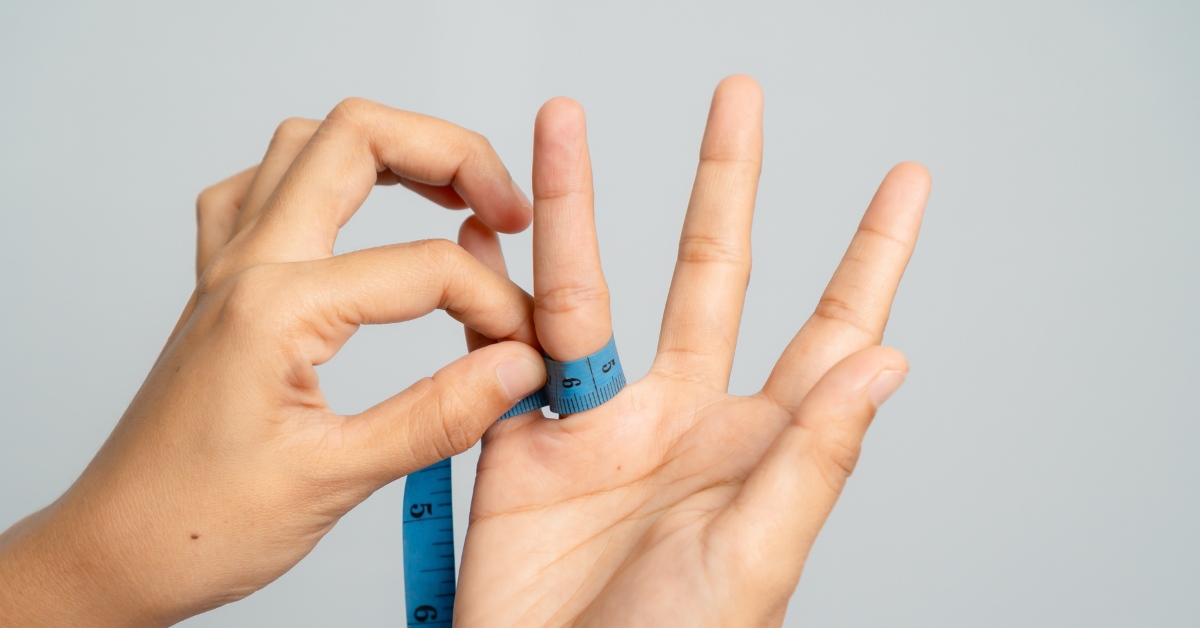
Some people attempt to discreetly measure their partner’s finger while they sleep using a piece of string or a flexible tape. The idea is to wrap the string lightly around the finger, mark the join, then measure the length.
On paper, the idea could work. In practice, it demands a lot of finesse, a partner who sleeps deeply, and real nerve. If the person wakes up, the surprise could take a slightly less romantic turn.
Common Mistakes to Avoid to Get the Right Ring Size
Even with a good estimate, some mistakes are common. The first is measuring a ring worn on a different finger. The discrepancy can easily be several sizes, especially between the ring finger, middle finger, and index finger.
Another pitfall: measuring a finger when it’s hot, after physical activity, or late in the day. Fingers can swell a bit, throwing off the measurement. Finally, take into account the ring width: a wide band fits more snugly than a thin model.
What If the Size Isn’t Perfect After All?
Don’t panic: most jewelers offer resizing after purchase. A resizing is often possible for rings made of gold, silver, or platinum, though it depends on the design, stones, and any engraving.
Before buying, check the exchange or alteration policy. This allows you to gift the ring with a lighter mind, without turning the surprise into a millimeter-perfect puzzle.
Ultimately, the most important thing is the intention behind the jewelry. And if the surprise lands well, a few millimeters’ difference will be quickly forgotten.