
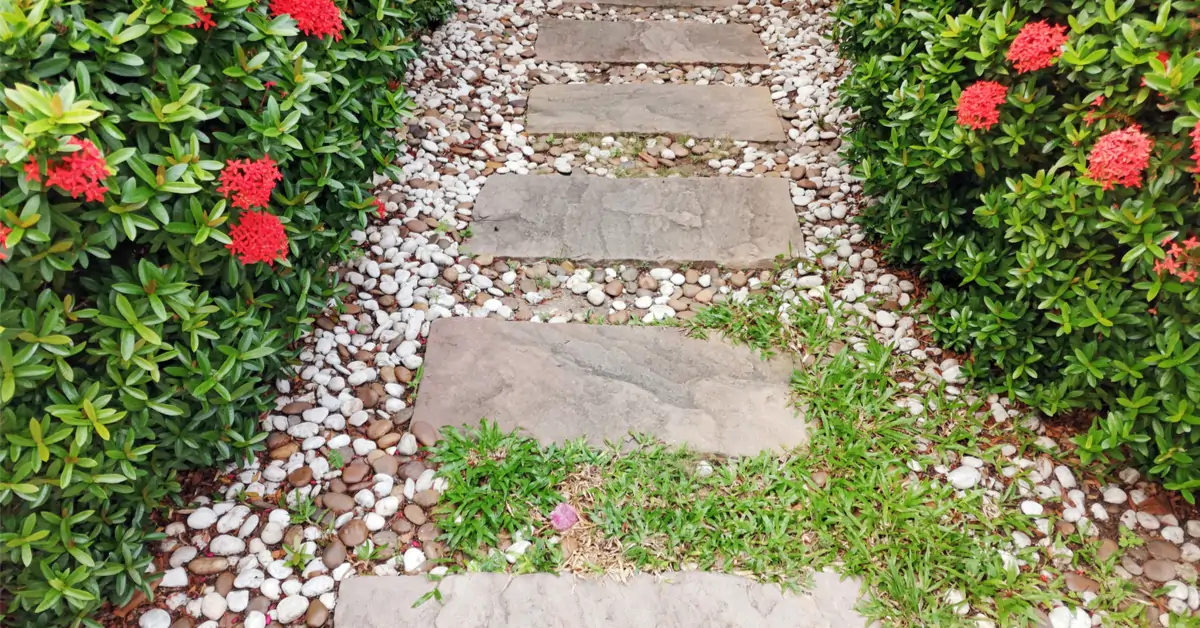
When tending a garden or a vegetable patch, you’ll inevitably find yourself fighting against weeds — a term that’s not exactly current, since they’re adventices only from our human perspective. The same goes when you’ve laid out a gravel driveway… Let’s explore all the tips for achieving a weed-free garden path—what we’ll prefer to call adventices.
How to prevent weeds from growing under gravel?
If you’re wondering what the best tool for weeding in gravel is, know that it’s your hands. Weeds — though that term isn’t exactly current, because they aren’t “bad” except to us humans — have the peculiarity of being as numerous as they are different.
Depending on your soil type, what grew there or what grows nearby, you’ll have so many types of plants that will develop that your fingers will be best suited to fight effectively.
One thing is certain: the most effective approach is to remove unwanted weeds as soon as they appear to prevent them from taking hold or, worse, multiplying. It’s a bit like having a green thumb, because it’s as effective as it is eco-friendly.
Boiling water to kill weeds in gravel
Boiling water is particularly effective as it burns the plants along with their roots and destroys any seeds.
The most practical solution to avoid weeds in gravel with boiling water is to use cooking water instead of boiling water from scratch… A good way to rationalize energy use and avoid waste!
Diluted white vinegar to prevent weeds in gravel
At a ratio of 0.5 liters for every liter of water, white vinegar is a solution that works if you’re wondering how to weed a gravel driveway, but it should be weighed carefully.
Indeed, the use of white vinegar is not so different from using chemical herbicides and can have an impact on the immediate environment, but, in the longer term, on the entire ecosystem. Vinegar acidifies the soil and can disrupt microbial life. Also avoid homemade mixes with salt, bleach, or other household cleaners: they can be harmful to soils, waters and health.
Therefore, favor other solutions or use this one sporadically and with restraint. For garden herbicide use, it’s best to opt for products labeled “For garden use” when a treatment is truly necessary.
A propane torch for weeding between rocks
Using the thermal energy and, specifically, a small torch can help you quite simply get rid of the greenery that grows in your gravel driveway.
As several cities now do to manage their adventitious plants, running the torch over your gravel will instantly kill the plants and seeds. However, you may need to linger a bit if you want the roots to be affected as well, but regular passes with the torch will eventually exhaust the plants and they will stop coming back.
Think Before Installing a Gravel Driveway
Compacting the soil, possibly rolling it, and laying gravel is the fastest way to see it quickly overrun by plants of all kinds.
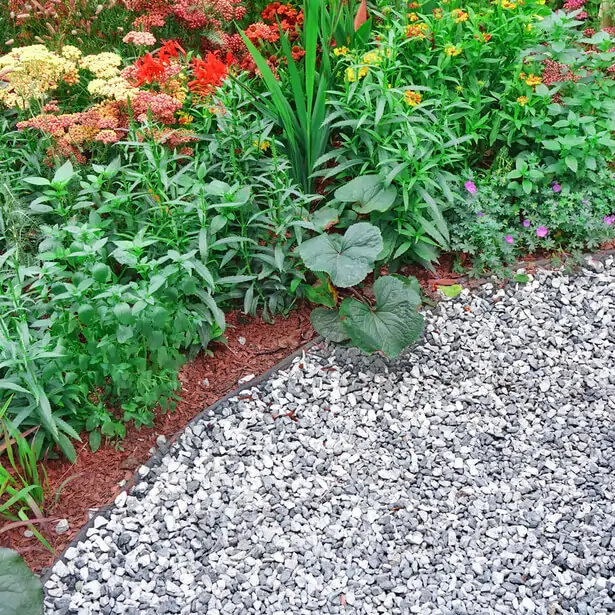
To prevent weeds in gravel, you should therefore prepare the ground along the gravel path by thoroughly weeding to start. It’s then a matter of covering the soil with something that inhibits adventitious growth.
If you can use plastic tarps, their ecological impact remains debatable for simple walkways. There are plates or rolls made of hemp or recycled textiles that are not only effective but also sometimes produced in the United States. A permeable fabric is preferable to a totally impermeable tarp, as it limits runoff and lets the soil breathe more.
If you have a shredder and some arborvitae on hand, you can also opt for a “bed” of mulch from that tree, as it is highly inhibiting to soil life. Reserve it for areas where you truly don’t want anything to grow. All that remains is to cover it with gravel for the driveway.
All the effective weed-control techniques for removing weeds: chemical products, only those approved for garden use, and biological solutions. The authors also explain methods of combat and prevention, with photographs illustrating the most common problems.
Available at Cultura.com