
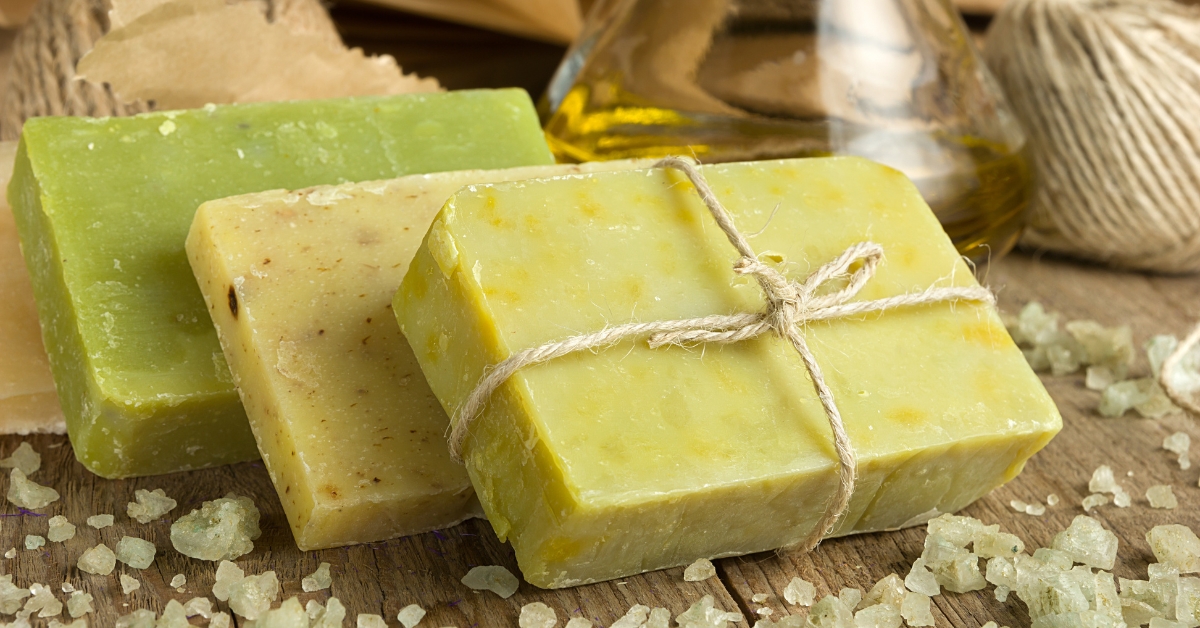
Using solid soap is a good thing. Making it yourself is better and greener. Here are our tips for easily making your own soaps at home!
First, a quick warning: making your own soaps takes a bit more time and skill than making your household cleaners! Making your own soap from A to Z is indeed quite long and a little tricky. Are you ready to give it a try? Here are some tips to know and our recipe!
Making Your Own Soaps at Home: Cold Process Saponification
We’ll start with the basics: what is soap? It’s a mixture of vegetable oils and caustic lye, enriched as needed with fragrances or other natural or artificial additives. To make soaps, the cold process blends these ingredients to create a solid loaf, rich in glycerin (which naturally results from the combination of the vegetable oil and the lye).
You can use a soap base (natural glycerin) sold on natural cosmetic sites, but what could be more satisfying than making your soap from A to Z?
Safety Considerations for Soap Making
Optional ingredients to dress up your soaps? Essential oils for scent, green or red clay for texture, natural exfoliants (such as coffee grounds), dried herbs (lavender, rose petals)…
WARNING – Be very careful during the process! Caustic lye is highly corrosive. It’s important to keep children and pets away while handling it, and to protect yourself with gloves and safety goggles.
You should also be prepared with a good amount of patience! Indeed, homemade soaps need to cure for at least a month before they are usable. If you’re planning DIY gifts for Christmas or birthdays, plan ahead…
Steps to Make Your Own Soaps
There are as many natural soap recipes as there are people: it’s all about the result. Do you want a soap that foams well? A very hard bar? A soap with specific properties (exfoliating, cleansing…)? A soap that smells nice? It’s helpful to ensure your soap foams, if only for the psychological satisfaction, even if the cleansing power remains the same.
To understand the right oil-to-lye-to-water ratio for your own recipe, and to tailor the blend to your needs, you’ll need some chemistry basics and to understand the basics of saponification. A website (in English) SoapCalc lets you test your homemade soap recipes before you start to ensure the recipe will work.

Making Your Home Soap: Our Simple Recipe
Short on time or not keen on playing chemist? Here’s our simple DIY almond-scented artisanal soap recipe. Choose organic, high-quality ingredients: don’t hesitate to raid the kitchen aisle for the best ingredients. If the vegetable oils are edible, they’ll be good for your skin!
- 100 g olive oil
- 60 g shea butter
- 80 g coconut oil
- 35 g caustic soda pure
- 85 mL water
- 8 mL sweet almond oil
Equipment: A hand blender, a kitchen thermometer, glass bowls; soap molds (see below).
Steps to Make Your Own Soap
After you’ve suited up in protective clothing, pour the water into a glass pot and dissolve the caustic soda in it. Melt the coconut oil and the shea butter in a double boiler, then add the olive oil.

When the temperature of both mixtures falls below 40 degrees, pour the lye-water into the oils and add the sweet almond oil. Mix well with a hand blender.
Use equipment specifically designed for soap making whenever possible. If not, wash them very thoroughly after use to remove any traces of caustic soda. You can wait 48 hours for the cold process to fully take effect, which makes it easier to wash the utensils with hot water afterwards.
Check the pH of your soaps with a pH tester; homemade soaps should have a pH around 9 or 10 (similar to Marseille soap). If it’s lower, they’re corrosive. If it’s higher than 11, they’ll be ineffective.
Make Your Solid Soap… In Advance
Pour your mixture into molds. You can find wooden soap molds at stores to make bars, or paper soap molds. It’s also possible to make your own molds: you’ll find many tutorials online.
Let them rest for 48 hours before unmolding (always wearing gloves because the soap is still quite caustic). Then let them dry for at least 4 weeks before cutting and using.