
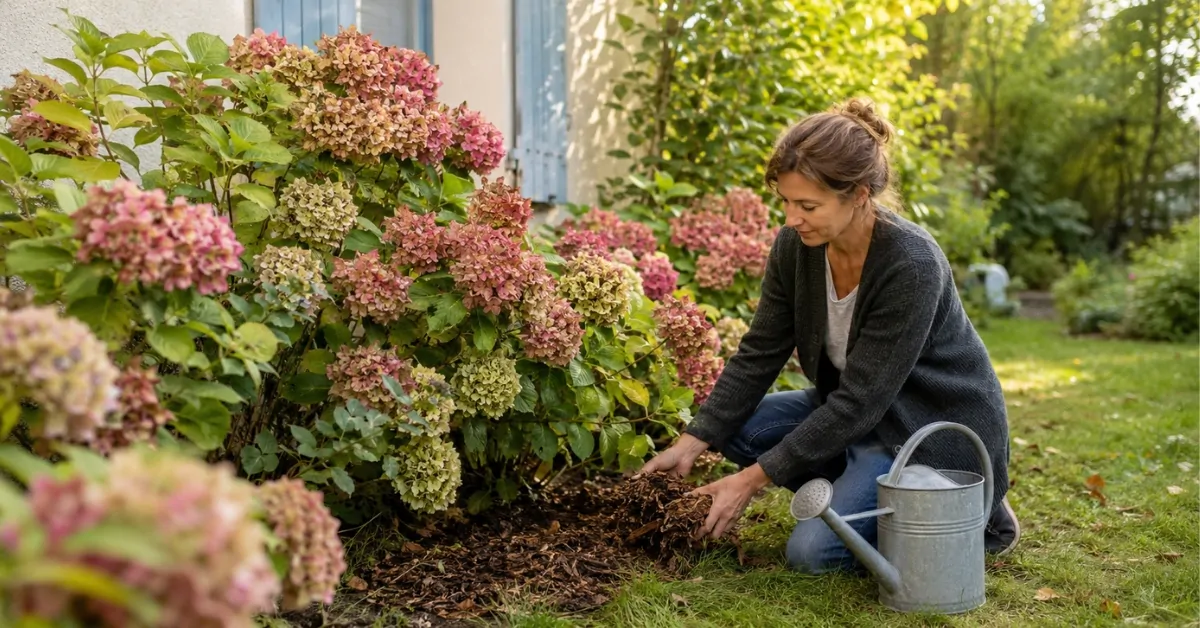
September marks a gentle transition for hydrangeas. The big flower heads that have brightened the garden all summer long begin to fade or take on more autumnal hues, ranging from faded pink to almond green and burgundy. That doesn’t mean it’s time to cut everything back: it’s actually a period for observation and light care that will shape the plant’s vigor for the coming season.
Where Hydrangeas Stand at This Time of Year
In September, most hydrangea varieties, especially the common bigleaf hydrangeas (Hydrangea macrophylla) that dominate many American gardens, are nearing the end of their bloom cycle. The blossoms gradually dry on the stem and take coppery, highly decorative tones, which many gardeners choose to leave in place until spring.
Why You Shouldn’t Prune Right Away
This is a common mistake: pruning hydrangeas at the end of summer. For most varieties, the next year’s flower buds have already formed on the current wood. Pruning too early or in the wrong place can jeopardize the forthcoming flowering.
The right move: Wait until late winter, typically February, to prune your hydrangeas. In September, simply remove flowers that are truly damaged or diseased, without touching the rest of the wood.
Watering: A Vigilance Point You Can’t Let Lapse
Even as temperatures begin to fall, September can still bring hot, dry days. Hydrangeas, renowned for their water needs, remain susceptible to dehydration during this period.
How to Tell if a Hydrangea Is Thirsty
The foliage is a reliable indicator: when the leaves droop and look wilted by the end of the day, it’s a sign you need to water. Favor watering in the morning or evening, at the base of the plant, avoiding wetting the foliage to minimize the risk of fungal diseases.
Nourishing the Soil to Prepare for Autumn and Winter
September is also the right time to give the soil a boost before the shrub enters dormancy.
A Protective Mulch
Spread a layer of organic mulch ( fallen leaves, wood chips, compost) around the base of the hydrangeas to retain soil moisture, curb weed growth, and shield the roots from the first frosts that will gradually arrive.
The Case of Blue Hydrangeas
For gardeners who want to preserve or intensify the blue color of their hydrangeas, this is the time to act on soil acidity—a factor that directly influences the shade of the blooms.

Color tip: An acidic soil promotes blue; a more alkaline soil yields pinkish tones. A little crushed slate or a specialized “blue hydrangeas” soil amendment can help you achieve the shade you’re aiming for.
Planning for a Possible Planting or Repotting
If you’re considering installing new hydrangeas in your yard, September and early autumn are favorable. The still-warm soil and more frequent rains aid in rooting before winter, provided you mulch well afterward to protect young roots.
In short: key September actions
- Don’t prune faded blooms, unless they’re damaged
- Monitor watering during still-warm days
- Mulch the base of the shrubs to prepare for autumn
- Adjust soil acidity for blue hydrangea enthusiasts
- Take advantage of the season to plant new specimens
Also read
- Gardening in September: what to do in the garden, in the vegetable patch, and in the orchard?
- Gardening in autumn: the essential steps for a flourishing garden