Sowing onions from seed isn’t something that immediately comes to mind when planning your vegetable garden, yet onion seed sowings offer real benefits if you’re a heavy onion user or if you want to use them in crop rotations to deter carrot fly.
When to sow onions?
Just like leeks, which belong to the same family, onions are sown at different times of the year depending on when you want to harvest.
The spring onions sown from March to April, depending on your region, will be transplanted into the open ground about a month after sowing.
The autumn onions sown from late August to September will be transplanted into the open ground about a month later.
How to sow onion seeds
Direct sow in the ground
Direct sowing into the garden soil is a bit more unpredictable in terms of success and may not be feasible everywhere in the United States depending on climate and frost dates; onion sowing can also be done directly in the ground outside frost periods.
You can sow in-line at a depth of 1 cm, spacing the seeds about 2 cm apart, with the understanding that once all seeds have germinated, you’ll keep only the strongest plants every 8 to 10 cm.
In a seedling tray
Onion seeds in a seedling tray are certainly the most reliable method to succeed in this endeavor.
Find a tray or anything that can serve this purpose—a container at least 20 cm long by 10 cm wide and at least 5 cm deep. Puncture the bottom for drainage to ensure the soil doesn’t stay soggy.
Sow your seeds loosely as farmers did in the Middle Ages and cover with a 1 cm maximum layer of potting mix.
Water gently and keep the soil moist by placing your tray in full sun indoors or in a greenhouse, and keep only one seedling per centimeter to ensure strong growth.
Transplanting onion seedlings
Start by properly preparing your soil, meaning make sure the bed where you’ll transplant your onions is well weeded. This is essential if you want to minimize maintenance for the rest of the season, because onions greatly prefer not to compete with weeds.

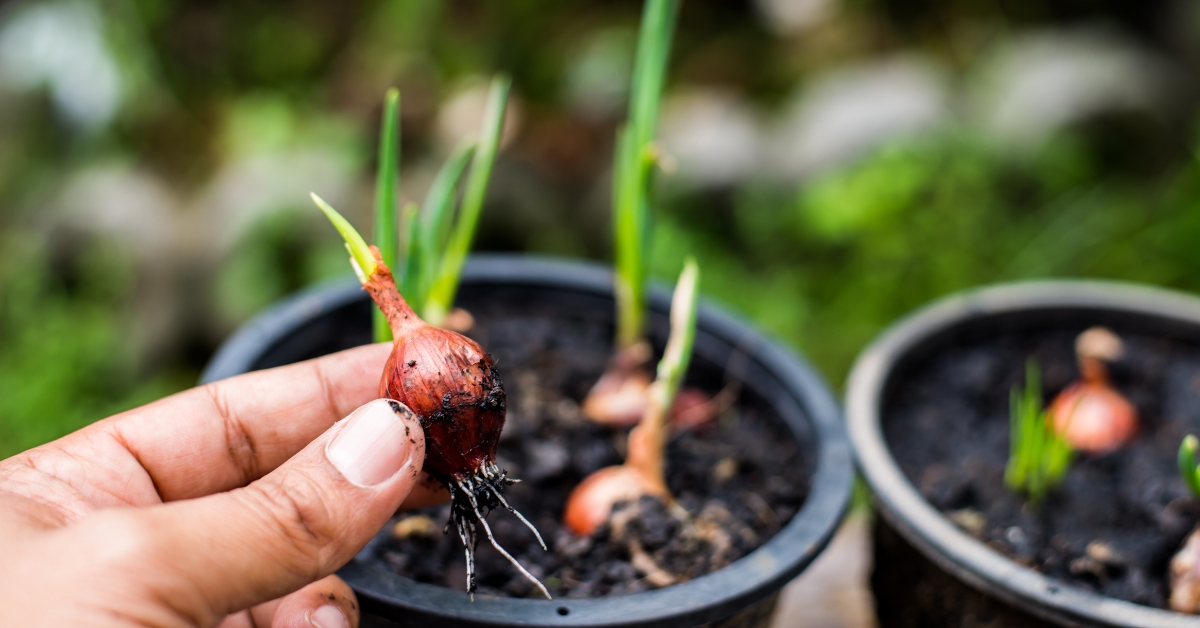
In well-tilled soil, transplant your seedlings three by three, spacing them 20 to 25 cm apart, making sure that the small bulb (also called a bulblet) is buried level with the soil. Planting them in groups of three will help your onions grow smoothly, but you’ll be able to produce more on a smaller area.
Water regularly at transplant and be sure to scrape the soil several times during the season to ensure healthy onion growth. At transplant time, don’t hesitate to mulch to keep the soil loose and moist; your onion soup or onion tart will thank you!


What could be more rewarding than tasting a vegetable you’ve grown entirely yourself?
And what if you took it a notch higher by learning how to harvest and store the seeds from your harvest as well?
To discover on Cultura.com