
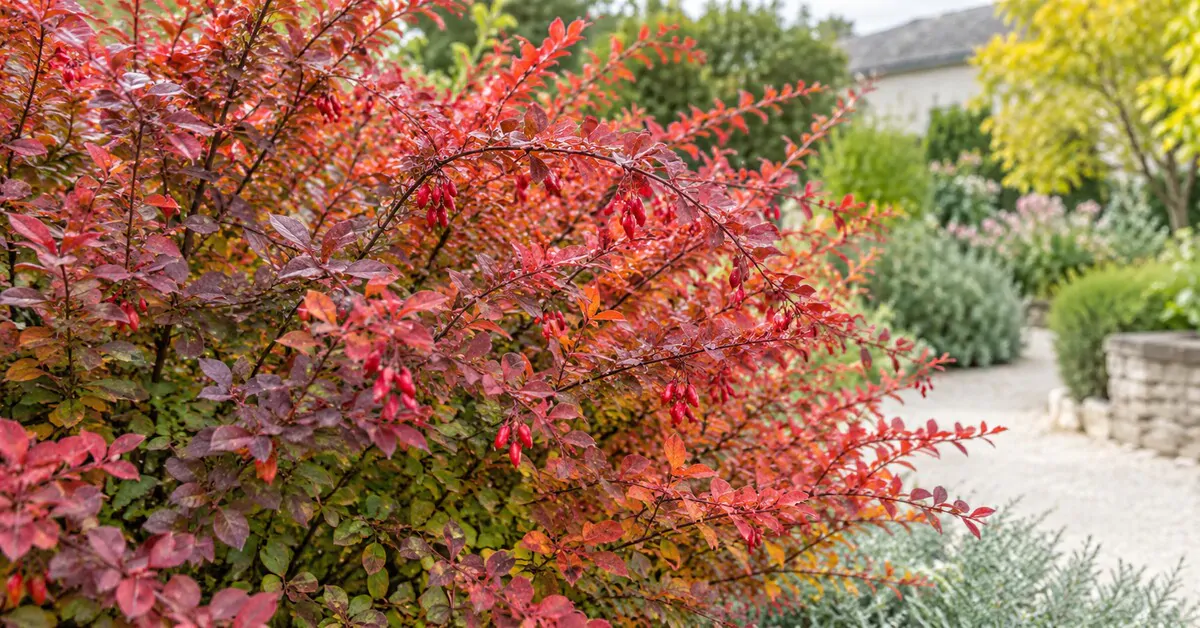
Thunberg’s barberry, also known by its scientific name Berberis thunbergii, is a premier ornamental plant for anyone looking to add a splash of color to their garden, especially in autumn. Its color palette, ranging from fresh green in spring to bright orange-red in fall, gives it a striking aesthetic appeal. Beyond its beauty, this plant also has botanical characteristics and uses that deserve our attention.
A Japanese shrub that adapts to a wide range of soils
Berberis thunbergii originates from East Asia, notably Japan and the surrounding regions. Having adapted to a variety of environments, it can be grown in many gardens, regardless of soil type. Its exceptional adaptation to varied climate conditions makes it a popular plant in many parts of the world.
A deciduous shrub that lights up in autumn and spring
Thunberg’s barberry is a deciduous shrub, meaning it loses its leaves in winter. The leaves are small and oval, often arranged in clusters along the stems. The plant also produces small yellow flowers in spring, which are then followed by red or blue-black fruits.
Growing Thunberg’s barberry
To maximize your chances of success with this shrub, it is best to plant it in autumn or in spring.
Planting and growing conditions
Thunberg’s barberry isn’t a finicky plant, but it does deserve careful attention during planting to optimize its growth and development. While it can adapt to a variety of soils, a well-drained soil rich in organic matter is ideal. Soil preparation may include adding compost or well-decomposed manure to improve its structure and fertility.
The actual planting process is fairly straightforward. Dig a hole about twice as wide as the plant’s root ball. Set the shrub, ensuring the top of the root ball is level with the surrounding soil, then backfill and lightly pack. A thorough watering is necessary right after planting to help the plant establish itself.
Regarding placement, while Thunberg’s barberry can tolerate some shade, it will express its full color potential in full sun. A sunny location will also help the plant produce more flowers in spring and fruits in fall.
In terms of care, Thunberg’s barberry is a relatively easy plant to maintain. It is resistant to diseases and pests. To promote healthy growth and lush foliage, regular watering is necessary, especially during dry spells.

When and how to prune Thunberg’s barberry?
Pruning is a crucial step to maintaining the health and shape of your Thunberg’s barberry, and it’s important to do it at the right time and in the right way. The ideal period for pruning the shrub is late winter or early spring, just before the plant begins to produce new growth. This timing is optimal because the plant is dormant, which minimizes stress and allows better healing of the cuts.
First, inspect the shrub to identify branches that require pruning. Look for dead, damaged, or diseased branches that you should remove first. Then identify areas where you want to encourage new growth or control the shrub’s size.
Begin by removing the weaker branches, those that look diseased or those that cross and rub against each other, as they can lead to disease or pest issues. Make cuts at a 45-degree angle, about 5 to 10 mm above a bud facing outward. This method encourages new growth to head outward, giving the shrub a more open and attractive form.
If your goal is to reduce the shrub’s overall size, do not remove more than a third of the plant’s total mass in a single pruning session. Too harsh a prune can indeed stress the plant and affect its overall health.

Thunberg’s barberry, many uses
Another advantage of the shrub is its versatility in the garden. Thunberg’s barberry makes an excellent hedge, its autumn color helping it stand out from other plants, especially when planted in a group. It can also be incorporated into rock gardens or mixed borders to add texture and color.
It is important to note that the berries of Thunberg’s barberry are not those traditionally used in phytotherapy (these typically come from the species Berberis vulgaris), but the plant belongs to the same genus (Berberis) and shares several medicinal properties. Berberine, an alkaloid present in many species of the Berberis genus, is known for its antimicrobial, anti-inflammatory, and antioxidant properties. In some traditional medicinal practices, the roots and barks of these plants are used to treat a variety of ailments, from digestive issues to infections.
Thunberg’s barberry is thus well suited to thrive in the garden, offering an incomparable display of autumn color! Whether you are a beginner or an experienced gardener, this plant will charm you with its resilience and beauty, especially in autumn, but also in spring.