
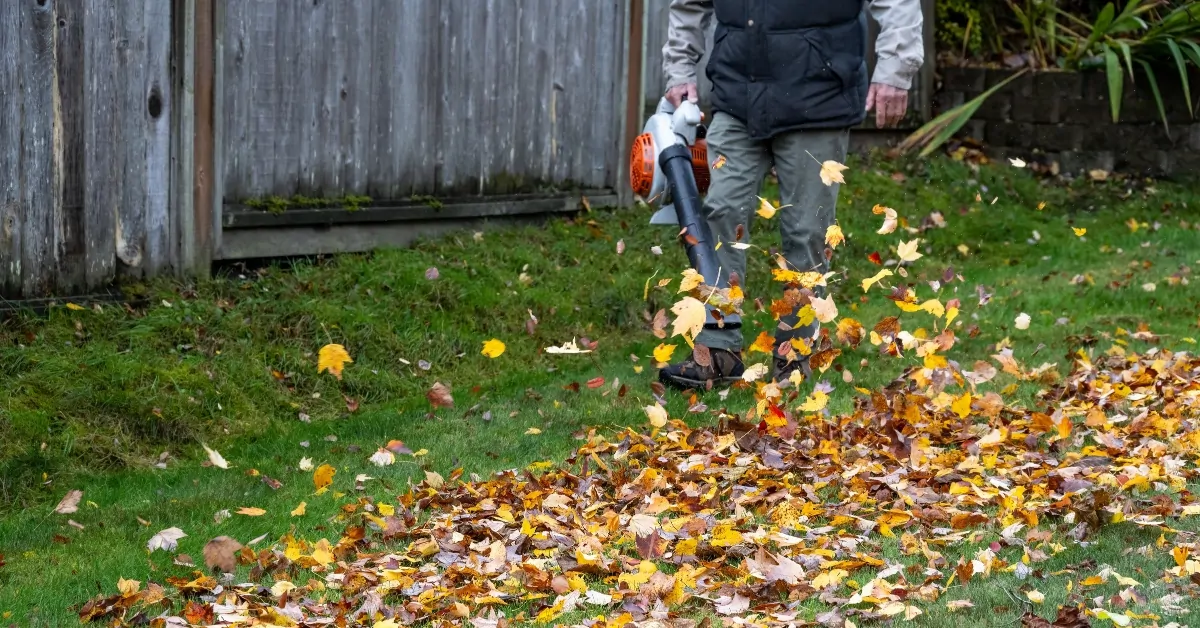
“Already more than one dry leaf scatters across the yellowing lawns; in the evening and morning the breeze is fresh, Alas! the sunny days are over!,” Théophile Gautier wrote in his “Chanson d’automne.” One might append at the end of this excerpt “Vrrrroooouuummm.” If you haven’t recognized it yet, that’s the “soft noise” of a leaf blower making its appearance this autumn. A device whose use by municipalities or homeowners is debated.
The leaf blower: a nuisance to people and nature
You can’t miss them. In recent years, leaf blowers have become the best friends of municipal crews. They make gathering leaves in parks or gardens easier, a task that can be tedious. More and more homeowners are also equipping themselves with this device.
Yet, using it comes with drawbacks for nature, but also for the people who use it or who are nearby. Not all models are created equal: a gas-powered blower and an electric device do not emit the same pollutants in use.
A noise that can damage hearing
Let’s start with the main nuisance that no one misses: the noise. What could be more unpleasant than hearing that infernal “Vrrroouuummm” while you’re strolling peacefully?
Some blowers can produce sound pressure of around 100 dB(A). Not the most melodious sound to be hearing… But more importantly, the risk to hearing depends on the sound level and the duration of exposure. A single figure is therefore not enough to define a “health limit.”
As a reference, exposure to 80 dB(A) for eight hours already carries an auditory risk. The louder the noise, the shorter the permissible exposure time. The hearing protection recommended in the manual is therefore not merely an accessory.
Risks of burns with gas-powered models and back disorders also deserve attention. The device can weigh several kilograms; it’s wise to follow the manufacturer’s instructions and limit prolonged sessions.
Dust and particulates suspended in the air
To use the device, you must also wear the equipment outlined in the manual, including protective goggles and clothing suited to the projections.
Because leaf blowers spread dust with some power. These particles can irritate the eyes and the airways, especially for people with asthma. The same goes for pollen and other allergenic particles present on the ground.
A suitable respiratory protection may be necessary. Above all, avoid directing the blast toward bystanders, children, or animals.
A fuel–oil mix for two-stroke engines
Another important point to highlight: gas-powered leaf blowers emit exhaust gases. They use two- or four-stroke engines.
Two-stroke engines typically run on a gasoline–oil mixture. Four-stroke models operate differently depending on their design and generally emit fewer of certain pollutants. In every case, follow the manual for fuel and lubrication.
An American test conducted in 2011 already illustrated these differences. The two-stroke blower tested emitted about 299 times more non-methane hydrocarbons per minute than a Ford F-150 pickup, under the conditions used.
That old result concerned specific devices and a particular protocol. It does not mean that all modern blowers pollute “299 times more than a car.” It also does not measure their overall climate impact.
Electric leaf blowers, whether plugged-in or battery-powered, do not emit exhaust fumes where they are used. They tend to be quieter, but they continue to raise dust and disturb small wildlife. Their manufacturing and electricity consumption also have an environmental impact.
Why get rid of fallen leaves?
Removing fallen leaves systematically deprives the soil of organic matter naturally provided by them. It also deprives certain invertebrates of a food source and shelter.
It’s also important to distinguish between a blower and a leaf vacuum mulcher. The former moves the leaves and disturbs habitats. The latter can directly kill small animals sucked in and ground up. All the more reason not to try to achieve a perfectly pristine garden all the way under the hedges.
Carrying out a complete cleanup is therefore not necessary. On pathways, stairs, or a deck, wet leaves can become slippery. On the lawn, a thick and persistent layer risks suffocating the grass. The idea is to clear these zones, then move the leaves to a place where they will be useful.
Use that is sometimes regulated
Noise nuisance has prompted some communities to regulate the use of these devices.
In many American communities, the hours applicable to noisy yard work may depend on local ordinances. Check with your city or county code before firing up the blower, especially on Sundays and holidays. Even during permitted hours, excessive noise can constitute a nuisance to neighbors.
In Geneva, the allowed period runs from October 1 to January 31. The hours are 8 a.m. to 7 p.m. Monday through Friday, and 9 a.m. to 6 p.m. on Saturday. Use is not allowed on Sundays or holidays, unless an exceptional exemption is granted. Additional municipal restrictions may apply. These Swiss rules should not be confused with those of your own town in the United States.
The rake and the broom, the alternatives
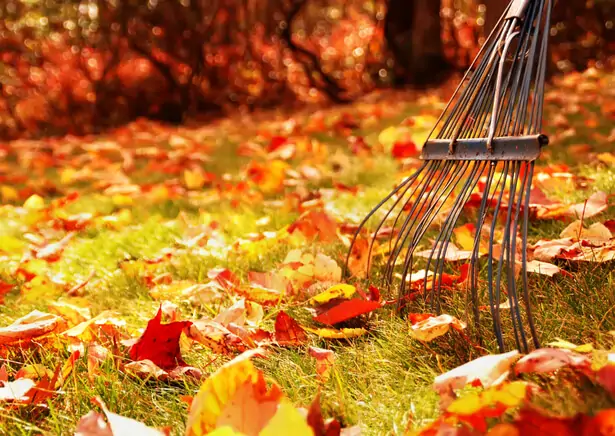
Because there are alternatives. If you want to clear a small area of the leaves that litter it, a rake and a broom remain effective tools. They were used long before leaf blowers, with no fuel or rechargeable batteries to worry about!
The leaf rake is suitable for the lawn, while the broom clears a deck or a driveway. On large areas, the work time may differ. But in a small garden, these tools surely deserve to make a comeback.
You can also simply use these leaves for your garden. As they decompose, they help enrich the soil, acting as a natural fertilizer. They’ll also provide protection for your plantings during the winter.
The right garden move
Leave some leaves under shrubs and at the base of trees. Move those from walkways toward beds or the compost. Avoid using obviously diseased leaves as mulch.
You can also set aside part of your harvest to prepare a leaf mold. Or keep a few attractive specimens for autumn crafts with leaves. A way to enjoy the season without silencing the birds.
Also read
Autumn in the garden: making leaf mold
Article updated October 2026
- http://ge.ch/bruit-rayons/actualites/souffleuses-feuilles-fin-de-la-periode-dutilisation-autorisee