
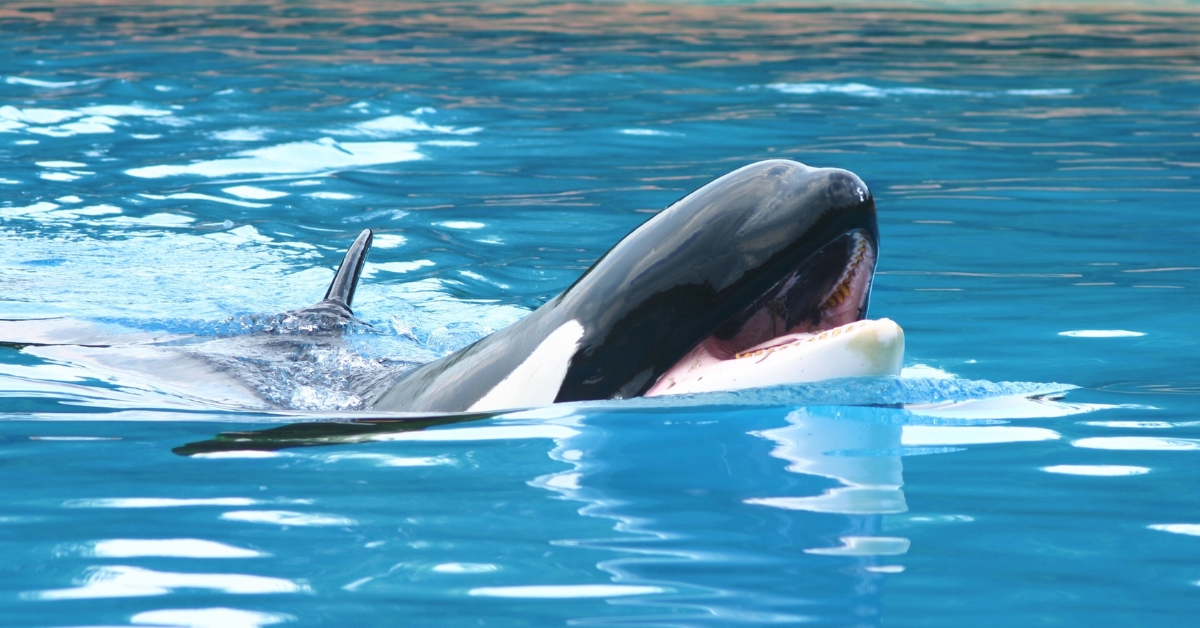
More than a year after Marineland’s closure, the question of what will happen to its animals remains unresolved. At the heart of the debates, the two orcas still housed at the Antibes park crystallize political tensions, logistical constraints, and major ethical issues.
Marineland: Tenerife or Canada, two opposing options
The definitive closure of Marineland, which took place in 2025, was dictated by French law, which bans cetaceans in captivity. Since then, two orcas, Wikie and her son Keijo, remain on site, along with about a dozen dolphins. As TF1 explained in a long report published at the end of January 2026, this transitional situation cannot last. On one hand, the legislation requires a rapid outcome. On the other hand, maintenance costs and the animals’ living conditions fuel criticism. A meeting at the Ministry of Ecological Transition brought together NGOs, experts, and park management to reach a decision. The timeline is tight. “A final decision will be reached by the end of March 2026,” the government says. In other words, the fate of the orcas should be sealed in the coming weeks.
Two major options dominate today’s debate. The first is transferring to another zoological park, notably Tenerife, home to Loro Parque. This solution is considered the quickest and most logistically feasible. Indeed, the park already hosts several orcas and has suitable facilities. However, this route faces sharp opposition from animal welfare groups. They denounce a mere transfer of captivity without a meaningful improvement in the animals’ welfare.
In response, a more ambitious alternative is proposed: moving to a marine sanctuary in Canada. This project, located in Nova Scotia, aims to provide cetaceans with a semi-natural environment. It is supported by several NGOs and appears to be a more ethical solution on paper.
Between the Canadian sanctuary’s struggles and the Spanish park, a highly political choice
But according to TF1’s report, this route is currently seriously compromised. Several major obstacles stand in the way. First, the sanctuary project is not yet operational. No fully functional site is ready to welcome orcas immediately. Second, financial difficulties weigh heavily. According to TF1 Info, 12 million euros are still needed to start construction. This shortfall significantly delays the timeline and makes any short-term solution uncertain. Finally, administrative and logistical constraints further complicate the situation. Transporting orcas over long distances requires strict international permissions and exceptional technical means. All of these factors impede the project.
In this context, the final decision appears to be as much political as technical. The French government must arbitrate between a quick but contested solution and a more virtuous but uncertain option. NGOs, for their part, maintain their position. They favor a marine sanctuary, arguing that transferring to a park like Loro Parque would only prolong captivity.
Conversely, some experts and policymakers argue for a pragmatic solution. The transfer to Spain would allow for a quick response to legal requirements and ensure continuity of care for the animals.