
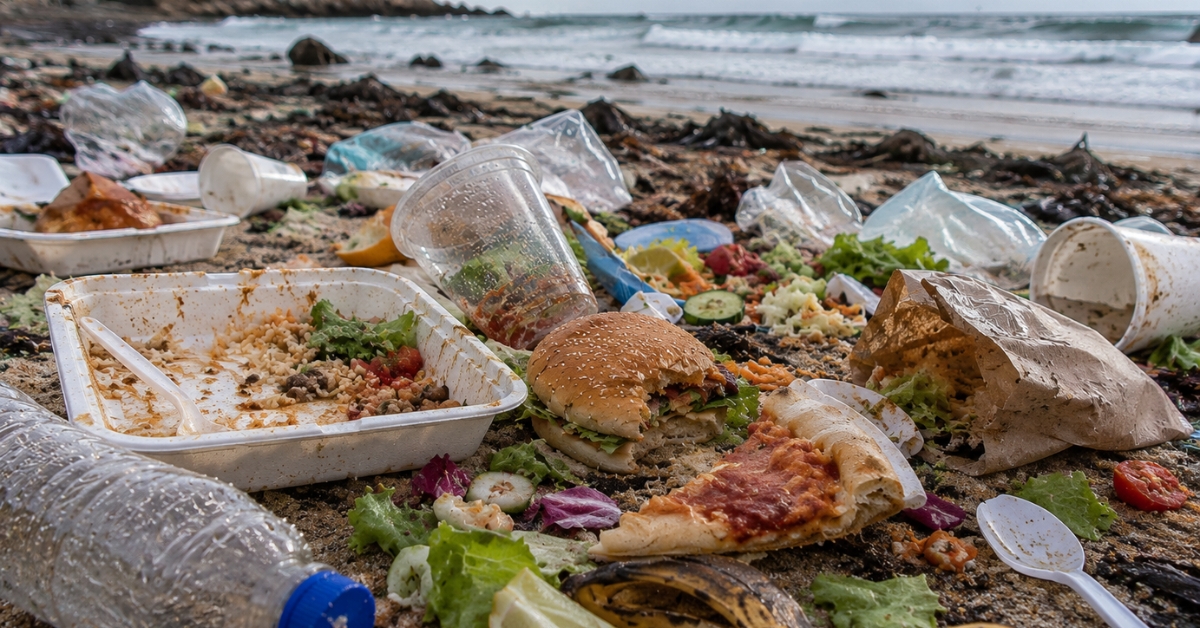
An international, unprecedented-scale scientific study, published in One Earth and led by the University of Plymouth in the United Kingdom, offers the first global panorama of marine litter categorized by its use.
Mapping Plastic Pollution
To reach these conclusions, the researchers gathered and rigorously analyzed data from more than 5,000 distinct beach litter surveys conducted around the world. This work allowed mapping plastic pollution across seven continents, within nine major oceanic systems, 13 regional seas, and 112 nations. The geographic area examined is so vast that it accounts for roughly 86% of the world’s human population, giving the study unprecedented legitimacy and statistical precision to understand the exact nature of debris fouling our coastlines.
The analysis of this monumental database highlights an undeniable reality: plastic waste generated by the food and beverage sector far surpasses all other categories of pollution on coastlines around the globe. More specifically, food packaging, beverage bottles, and their caps and lids form the top trio of items most ubiquitous in the marine environment. The study shows that these items rank among the three most abundant waste types in 93% of the countries evaluated.
Also read – Plastic micro-particles invade the oceans
Ban What Isn’t Essential
Facing an uninterrupted tide of plastic estimated at roughly 20 million tons entering natural ecosystems each year, current waste-management and recycling infrastructures are overwhelmed and structurally unable to solve this planetary crisis on their own. To stem this scourge, the scientific community states that it is now essential to shift from a symptom-focused approach to a source-reduction strategy. This entails implementing stringent, urgent policy regulations aimed at dramatically restricting the volumes of plastic produced on an industrial scale.
Among the avenues under consideration, researchers notably suggest tying the production of new plastics to their real societal usefulness, banning those that do not provide an essential and vital benefit to the community. “Single-use packaging for food and beverages is the primary contributor to plastic pollution in our oceans on a global scale,” summarizes Dr. Max Kelly, a postdoctoral researcher and the study’s lead author. “Actions to cut down on the use of these items will be a cornerstone in meeting this global environmental challenge.”