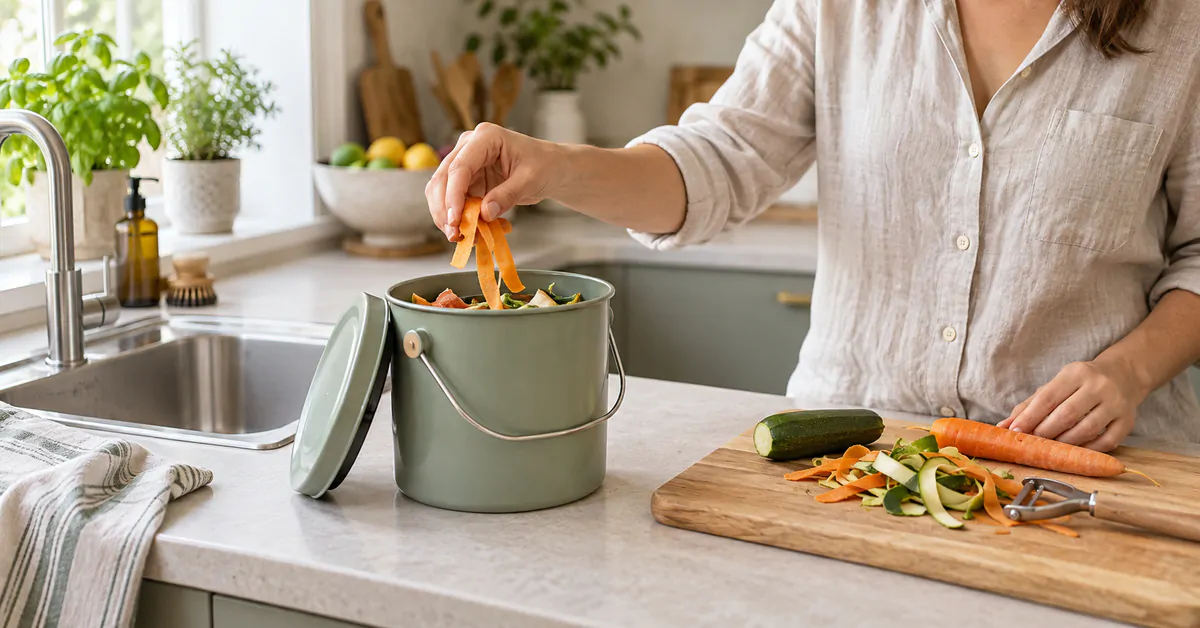
Dreaming of a smell-free kitchen composter? It’s absolutely possible. Many households abandon the idea because they fear odors. Yet smell is never inevitable. It simply signals an imbalance in your bin. Here’s how to prevent it, which model to choose, and which mistakes to avoid.
Organic waste accounts for about a third of our trash. Composting it lightens your bags, nourishes your plants, and helps the planet. All without sacrificing kitchen comfort.
Why does a kitchen composter stink?
An unpleasant odor almost always has the same source. Waste is rotting instead of decomposing properly. The most common causes:
- excess moisture (fruit peels, very watery vegetables);
- lack of air in the bin;
- too much nitrogen-rich waste (leftovers, fresh clippings);
- a bin that is never stirred or aerated;
- foods that aren’t suitable, such as meat or fish.
Good news: all of this can be easily corrected.
Which kitchen composter should you choose to avoid odors?
The bokashi: the apartment champion
The bokashi is an airtight bucket. You drop your waste in with an inoculant based on fermented bran. The waste ferments without air. The odor stays mildly acidic, like lacto-fermented vegetables. It even accepts small amounts of meat or dairy. Remember to regularly drain the liquid produced, diluting it to water your plants.
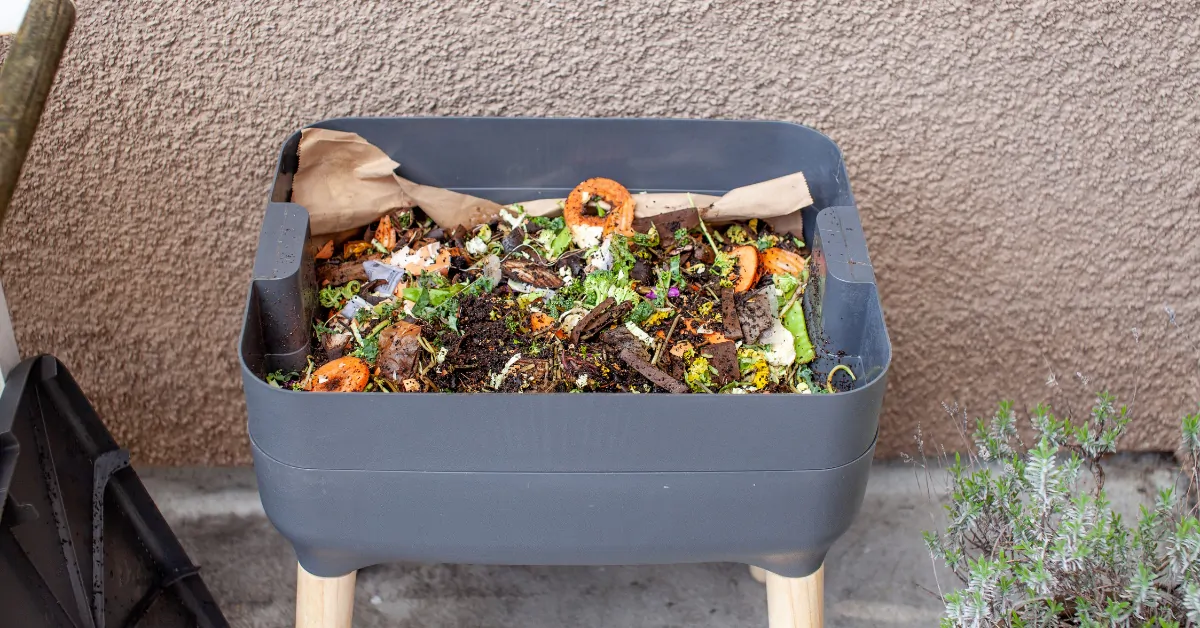
The vermicomposter: discreet and efficient
With this option, worms do the work. When well managed, the bin smells like forest floor. It’s suitable for small spaces, indoors or on a balcony. However, avoid excessive citrus, onions, and garlic—worms don’t appreciate them.
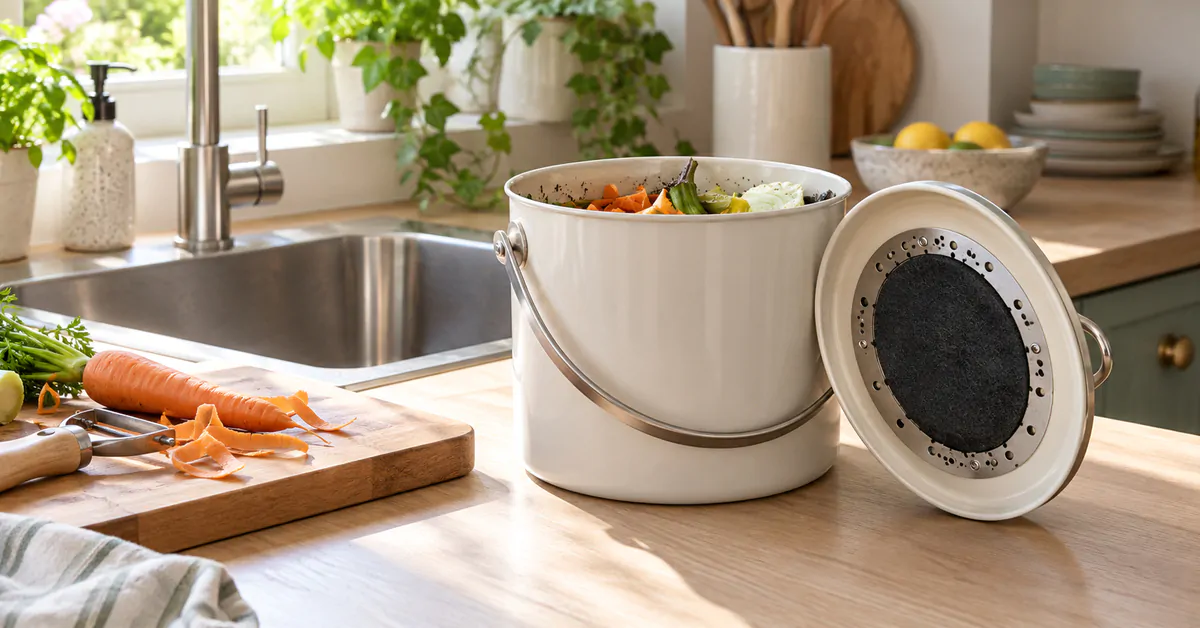
The countertop-bin with a charcoal filter
This small bin sits near the sink. Its lid houses an activated charcoal filter that traps odors. It serves as temporary storage before transferring to an outdoor compost or a local collection point. Remember to replace the filter regularly.
7 tips for a kitchen compost bin with no bad odor
- Balance the materials. Mix moist wastes (peels) with dry wastes (cardboard, paper towel).
- Chop into small pieces. They break down faster and rot less.
- Drain your waste. Avoid soggy leftovers.
- Add coffee grounds. They provide nitrogen, but don’t overdo it.
- Empty it often. Move the kitchen bin every two or three days.
- Clean the bucket. Rinse with hot water and a bit of white vinegar.
- Keep it cool. Place it away from the oven and radiator.
What should you put in your kitchen composter?
The right habits
- fruit and vegetable peels;
- coffee grounds and tea bags without plastic;
- crushed eggshells;
- stale bread in small quantities;
- used paper towels and torn brown cardboard.
Mistakes to avoid
- meat, fish, and bones in a standard composter;
- dairy in large quantities;
- oils and fats;
- cat litter or animal waste;
- excess citrus in a vermicomposter.
No garden? There are solutions
Living in an apartment doesn’t mean you can’t compost. Since January 2024, many municipalities have started offering source-separated organics collection options. Depending on your town, you can:
- join a neighborhood community compost site;
- take advantage of a dedicated pickup right at your building;
- request a discounted compost bin from city hall.
Check with your city or county sustainability office for the options available where you live.
Composting in the kitchen: a simple, durable gesture
A smell-free kitchen compost bin rests on three principles: air, balance, and a bit of regularity. Choose the model that fits your home, follow our tips, and let nature do the rest. Your trash will be lighter, your kitchen healthier, and your plants will thank you.
Read also
What to put in compost: the 6 mistakes to avoid