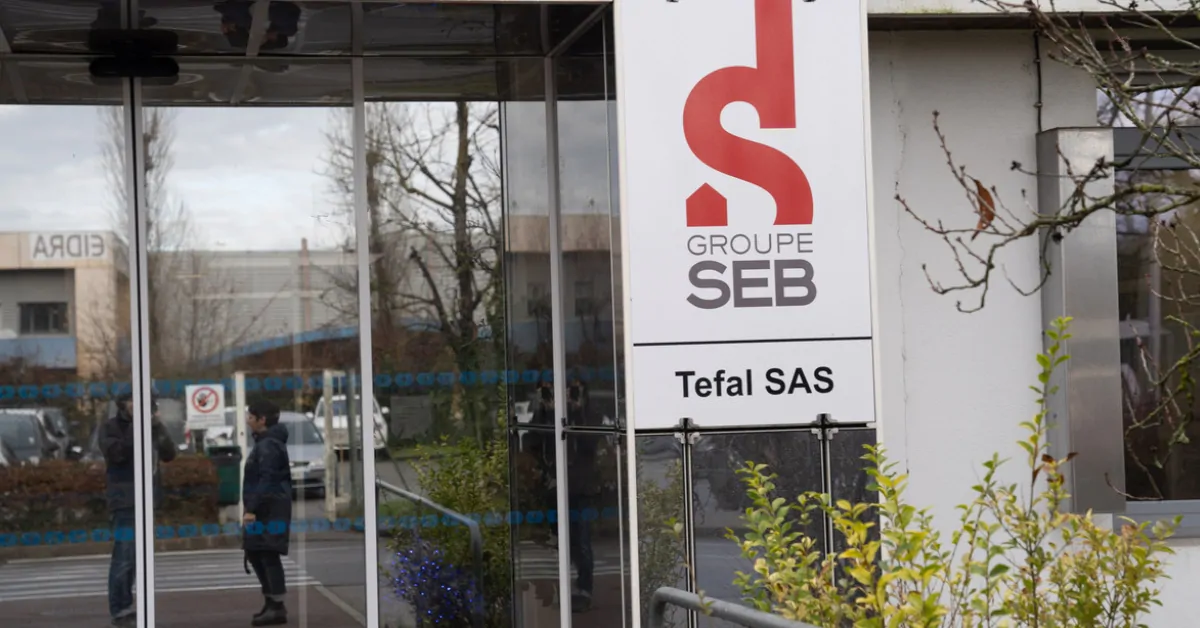
Behind the standoff over nonstick cookware lies a far broader public health issue: the persistent contamination of the environment by chemical substances, some of which are linked to serious health effects. The company has three months to respond before possible legal action.
SEB and Tefal: three months to review the vigilance plan
On October 8, 2026, the associations Générations Futures, Notre Affaire à Tous and ClientEarth sent a formal notice to Groupe SEB. Made public the following day, this move targets primarily the use of PFAS, these substances commonly known as “forever chemicals,” in industrial processes and certain products marketed by the French manufacturer. The associations are calling for a revision of SEB’s vigilance plan, a better assessment of health and environmental risks, and a strategy for the gradual phase-out of these chemical compounds.
At the heart of the concerns lies polytetrafluoroethylene, or PTFE, used in the nonstick coatings of certain Tefal pans. But the organizations want to go beyond the composition of cookware. Their initiative also addresses industrial emissions, worker exposure, pollution that could affect nearby residents, and the environmental consequences from production to product disposal.
The procedure rests on the French law of March 27, 2017 on the duty of vigilance for large companies. This framework requires the companies involved to identify and prevent serious violations of human rights, health, safety of people, and the environment that could result from their activities, but also those of their subsidiaries, subcontractors, and suppliers under the conditions set by the law.
For the three associations, Groupe SEB does not sufficiently take into account the risks associated with fluorinated substances in its prevention policy. They fault it for having described PFAS as “unpopular substances” in its vigilance plans for 2023 and 2024, then as “emerging pollutants” in 2025 and 2026. Such labels, they argue, are incompatible with the scientific understanding of the persistence of these pollutants and the possible consequences of certain exposures.
The organizations thus demand an exhaustive identification of the risks related to PTFE and the other PFAS used in the group’s activities. Their demand also includes the development of a timeline to progressively phase out these substances, without overlooking the transformation of industrial sites and the employment prospects of workers.
SEB has three months to present a response. If the response is absent or deemed insufficient, the associations intend to bring the matter before the Paris Judicial Court. This formal notice is a step preceding potential litigation, not a judgment against the company.
In turn, the industry does not acknowledge the shortcomings attributed to it. “We will carefully review the content of this formal notice and respond as appropriate within the framework provided by law,” said Groupe SEB. The manufacturer also asserts that its activities are conducted in compliance with French and European regulations, under the oversight of the competent authorities.
PFAS: What health risks with Tefal pans?
The debate requires an essential scientific distinction. Not all PFAS have the same toxicological properties. This family comprises more than 4,000 chemical compounds—some are particularly concerning due to their persistence, their ability to accumulate in organisms, and the health effects observed after prolonged exposure.
Among the best-documented consequences are elevated blood cholesterol, reduced immune response to certain vaccines, and lower birth weight. Other associations are under study, including liver damage, hormonal disturbances, reproductive or neurological development issues. The level of evidence varies depending on the substances and the conditions considered. The cancer question is especially sensitive. In November 2023, the International Agency for Research on Cancer classified PFOA in Group 1 as carcinogenic to humans. PFOS was classified in Group 2B, possibly carcinogenic. Another indicator of health concern: EFSA has set a tolerable weekly intake of 4.4 nanograms per kilogram of body weight for the sum of four PFAS—PFOA, PFOS, PFNA, and PFHxS.
Regarding domestic use of nonstick cookware, EFSA notes, in its July 2026 updated documentation, that PFAS can migrate into food from certain materials that come into contact with them. It nevertheless estimates that the contribution of cookware and packaging to human exposure remains small compared with other sources. Contaminated water and certain foods, notably fish and eggs, represent significant exposure pathways. Children can be proportionally more exposed due to the amounts of food consumed relative to their body weight.
PFAS at Rumilly: the emissions of the Tefal plant under supervision
In Rumilly, in the Haute-Savoie region, where Tefal has a major industrial site, health concerns take on a local dimension. Since 2022, several investigations have revealed PFAS contamination in different water resources across the territory. Analyses notably showed the presence of PFOA, a substance whose use and production are subject to international restrictions. During the 2022 investigations, a concentration reaching 0.124 micrograms of PFOA per liter was measured in drinking water. This exceeded the reference maximum health value of 0.075 micrograms per liter established in 2017. Since the discovery of this pollution, management measures have been undertaken, including the use of activated carbon treatment.
In response to these results, the Haute-Savoie prefecture issued an order on April 29, 2026. This order requires Tefal to prepare an emissions assessment, develop a reduction plan, and implement two years of monitoring. The action plan must be submitted by January 1, 2027, with implementation starting in March 2027.
The three associations’ approach, therefore, goes beyond calling for the removal of a single chemical from cookware. It aims to compel the manufacturer to integrate environmental and health risks into its strategic decisions, while preparing for the future of its workers. The months ahead will be crucial to determine whether SEB intends to revise its vigilance plan and formalize a substitution pathway, or if this new confrontation will continue before the Paris Judicial Court.
Read also
PFAS at Rumilly: Tefal accused of half a century of toxic pollution