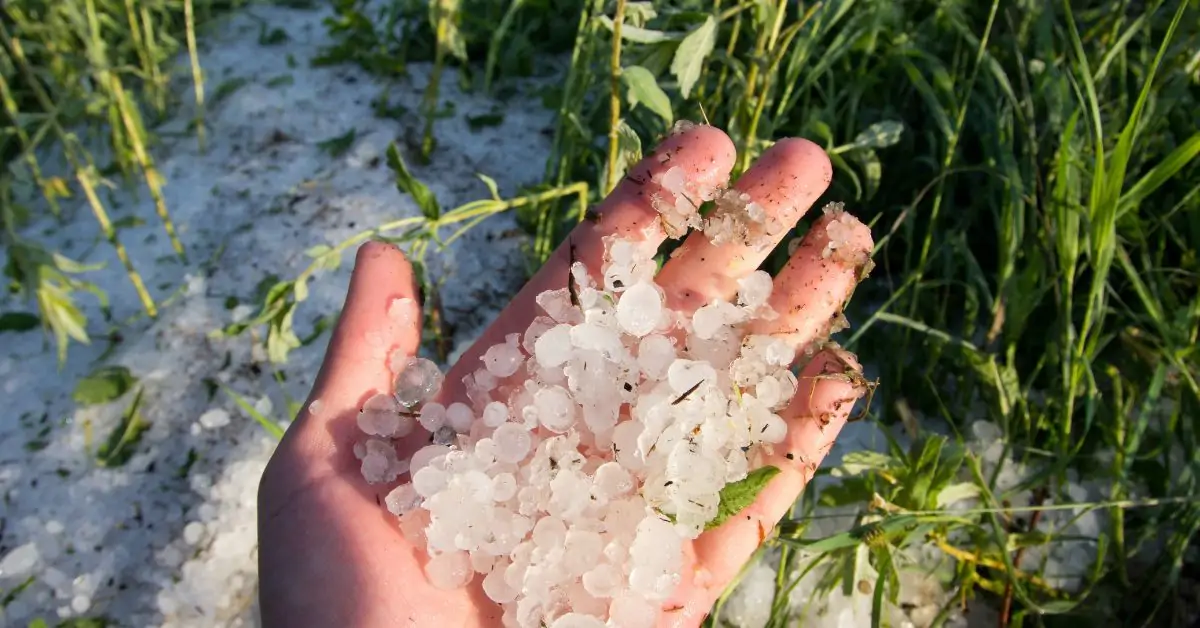
On August 17, 2026, many counties, especially in the East, are under a yellow thunderstorm alert. Hail, heavy rain, and gusts can quickly damage crops. A few simple steps can help protect the garden and the vegetable patch, provided you act before the storm arrives.
What to remember
- Install protections before the storm and secure them firmly.
- Never go outside to protect your crops while thunder is rumbling.
- After the hail, harvest, prune cleanly, and monitor for diseases.
- Do not automatically treat injured plants.
Protect plants and vegetables before the hail
Thunder rumbles and the heat becomes stifling. Worried about a hail shower? Here are a few steps that could save your crops or, at least, limit the damage.
You can also take precautions to protect your garden before the storm.
Solid boards or securely fixed tiles
This solution isn’t suitable for taller plants, but it can shield low-growing crops. You can arrange solid boards between concrete blocks to create a shelter.
The boards should be angled enough to shed water and firmly held in place. Avoid simply resting tiles, which could slide or be blown away by the wind.
A wintering row cover on a sturdy frame
If you have wintering row covers in good condition, they can limit damage from small hailstones.
Install them on hoops or a frame so they don’t rest directly on the leaves. Tighten them securely on all sides. A light veil may still give way under heavy hail or large-caliber hailstones.
Protective cloches
For young plants and small flowers, you can use rigid protective cloches sold commercially.
Inverted pots or sturdy crates can also serve as temporary shelters. They must be wedged or weighed down to withstand gusts. Remove them as soon as the danger passes to avoid heat buildup.
Protect trees and large surfaces from hail impact
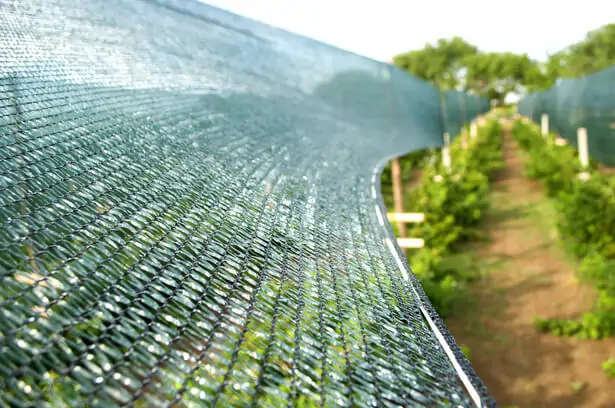
There are very effective hail nets, particularly used by orchardists to limit damage to fruit and branches.
To avoid buying new, you can ask a grower if they have usable leftover pieces. Check, however, that they do not have significant tears.
The net should be stretched over a sturdy structure and slightly inclined. It must not rest directly on the vegetation, as the weight of hail could crush the branches.
The advantage of some nets is that they can also provide light shading during peak heat. Check their shade percentage to avoid depriving crops of light.
How to react after a hailstorm?
Wait until the storm is fully over before going outside. Then start by checking the stability of trees, branches, fences, and protective measures.
Pick up any fruits and vegetables that have fallen to the ground. Also harvest ripe or developing produce that can continue to ripen, such as some tomatoes.
Discard fruits that are deeply cracked, mushy, or dirty. Portions that are only lightly damaged can sometimes be consumed quickly after careful cleaning and trimming.
In the days that follow, continue to watch the fruits and vegetables left on the plants. Remove those that start to rot to avoid attracting pests and to prevent diseases.
Sort and prune to help plants recover
When the foliage has dried, cut torn leaves and broken stems with a clean, disinfected tool. Make neat cuts, without removing unnecessarily healthy parts.
Stand the plants back up and replace damaged stakes. For leafy vegetables and young shoots, wait a few days before deciding to pull them: some plants can recover.
Damaged plants can go to compost. However, avoid adding ones that show obvious signs of disease.
Watch for disease after the hail
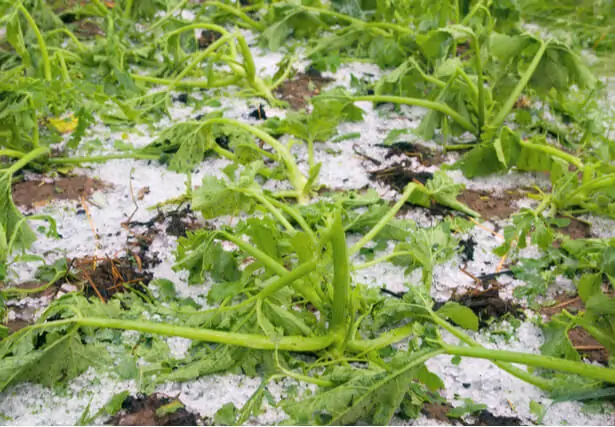
The impacts of hail create wounds of varying depth. Paired with high humidity, these wounds can facilitate the establishment of certain fungal or bacterial diseases.
Should you treat plants systematically?
Powdery mildew can especially affect tomatoes, potatoes, and certain cucurbitaceous plants when humidity lingers. Downy mildew can also appear on weakened plants.
To limit risks, start by removing the most severely damaged parts. Space plants if needed and avoid wetting the foliage.
A treatment based on Bordeaux mixture should not be applied automatically. While copper is permitted in organic farming, it can accumulate in soils and affect soil-dwelling organisms.
If a treatment is truly necessary, use only a product approved for the plant and disease in question. Rigorously follow the dose, the number of applications, and the pre-harvest interval indicated on the label. This interval varies by product and crop.
A horsetail decoction can be used as a preventive to support the plant’s natural defenses. Its effectiveness remains variable, and it does not replace removing diseased parts.