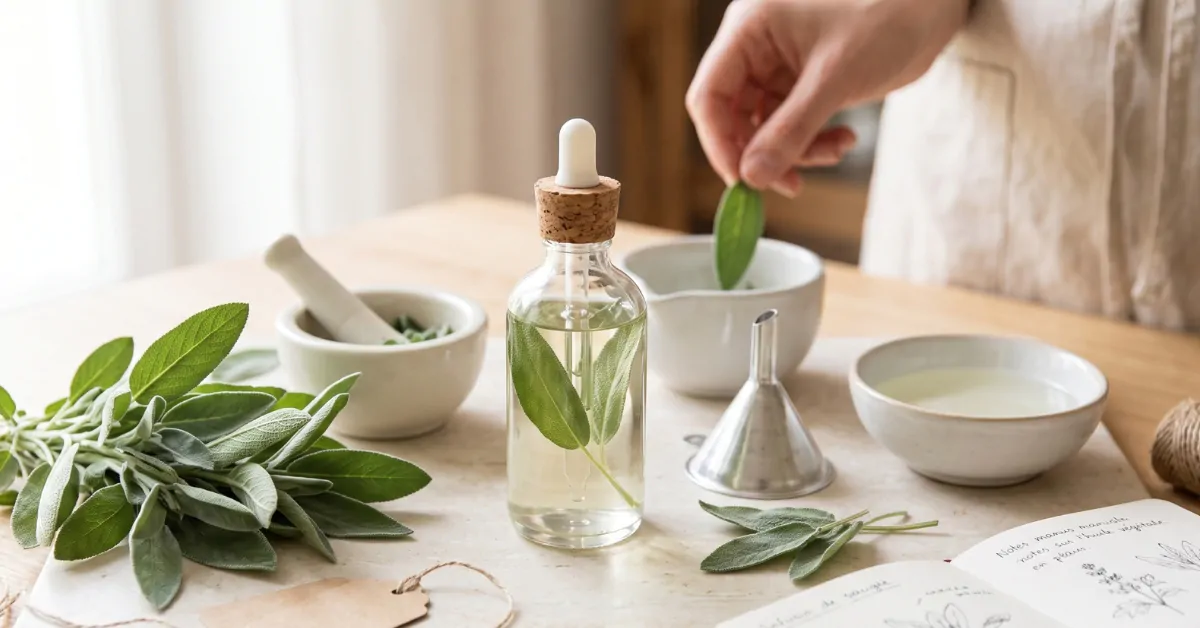
What if sage left your kitchen and moved into your bathroom? Facial toner, a hair rinse, a foot soak… Discover five homemade recipes for a simple, zero-waste beauty routine, with precautions to know before you get started.
In your garden, on your balcony, or in the spice cabinet, sage is far more than just an herb. For centuries it has been used in natural beauty rituals to purify the skin, rebalance oily hair, or curb body odor. Economical, locally grown if you cultivate it yourself, and packaging-free, sage is an ideal ally for a sustainable, zero-waste beauty routine. Here’s why to embrace it, and how to use it in five easy recipes.
Why Sage Is a Beauty Plant?
Common sage (Salvia officinalis) is rich in polyphenols, flavonoids, and aromatic essential oils. In traditional use, it’s believed to have purifying, astringent, and antioxidant properties, which explains its presence in many products for oily skin, greasy hair, and personal hygiene. Its effects are modest and gradual: these are gentle maintenance routines, not cures.
A note of caution: traditional use does not prove the effectiveness of these homemade recipes for pores, acne, or sebum production. The properties of a studied extract do not automatically transfer to an infusion.
Which sage to choose? For these recipes, use properly identified common sage (Salvia officinalis). The clary sage (sauge sclarée) pictured in the caption is a different species.
Sage for the Face
For combination to oily skin
The natural astringency of sage helps tighten pores, mattify shine, and purify skin prone to breakouts. It’s a very simple step, with no industrial products or plastic bottles to throw away.
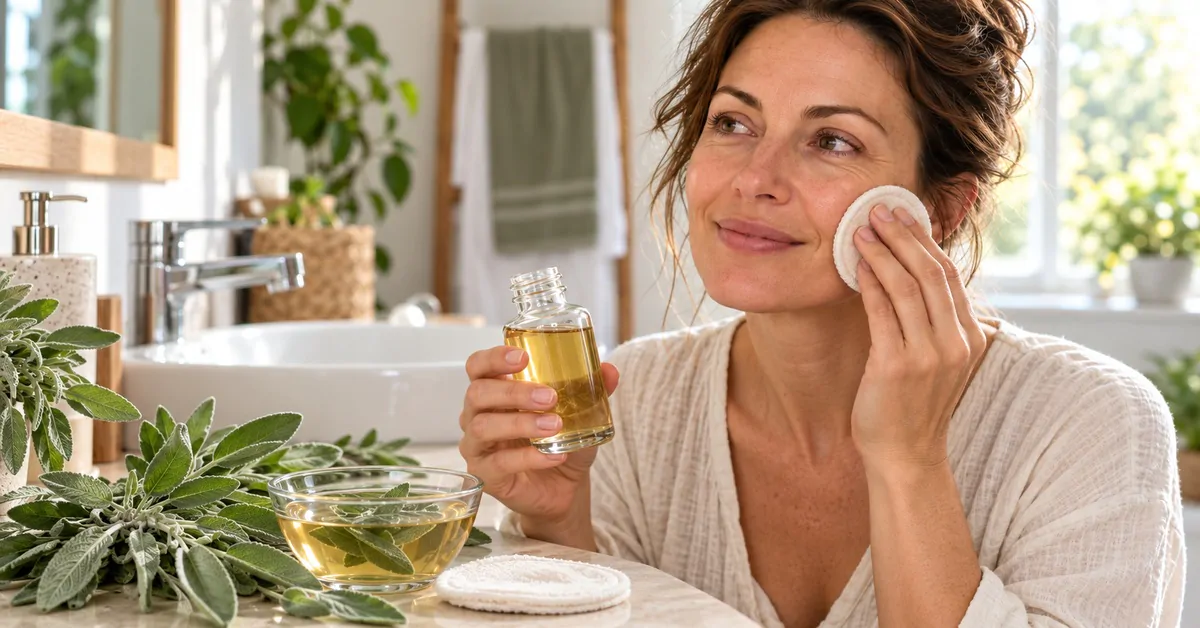
Recipe #1: Sage Toner
- Steep 1 tablespoon of sage leaves (fresh or dried) in 200 ml of simmering water for 10 minutes.
- Strain and let cool completely.
- Apply at night with a washable cotton pad to cleansed skin, avoiding the eye area.
- Store no more than two days in the refrigerator, in a glass jar with a lid.
Recipe #2: The Purifying Steam Bath
Pour hot water (not boiling) over a handful of sage leaves in a large bowl. Lean over the steam with a towel over your head, for 5 minutes at a comfortable distance. Then rinse with lukewarm water. Avoid this if you have very sensitive skin or rosacea.
Sage for Hair
For greasy, dull hair
In the final rinse, sage infusion is traditionally used to regulate excess sebum and bring shine, particularly to brown hair.
Recipe #3: Sage Hair Rinse
- Steep 2 tablespoons of sage leaves in 500 ml of hot water for 15 minutes.
- Let cool slightly and strain.
- After washing, slowly pour over the hair and massage the scalp. Do not rinse, or rinse very lightly.
- Use 1–2 times per week.
Note: A “color effect” may occur: with repeated use, sage can slightly darken brown hair and dull the first gray hairs. The effect is gradual and subtle, and it does not replace coloring. If you have blond or color-treated hair, first test on a strand.
Sage Against Sweat
It’s one of sage’s most well-known uses in natural cosmetics: reducing excessive sweating and body odor.
To be distinguished from: traditional use against excessive sweating does not prove the effectiveness of a homemade spray on underarms. This infusion is not a validated antiperspirant.
Recipe #4: Sage Deodorant Spray
- Prepare a sage infusion (1 tablespoon per 100 ml of water), strain, and let cool.
- Pour into a reusable spray bottle.
- Spray under clean, dry armpits.
- Keep refrigerated and use within a week.
Safety note: a one-week shelf life is not guaranteed for this infusion without a preservative. Favor a batch intended for immediate use and discard the rest. Do not apply it after shaving if your skin is irritated.
Sage for Oral Care and Feet
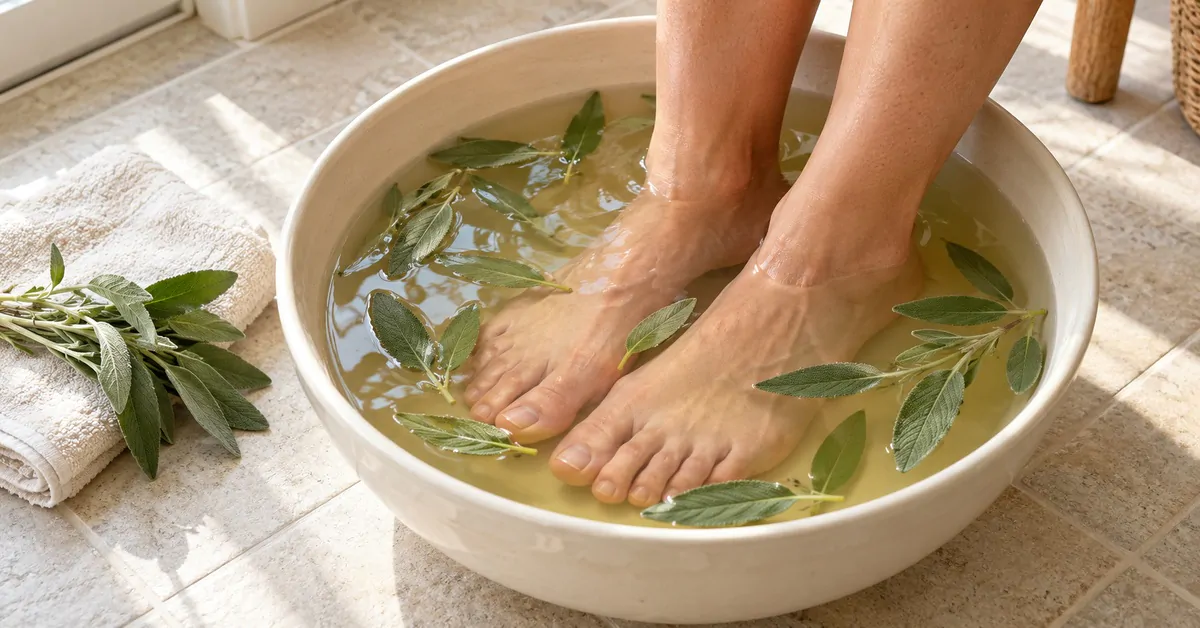
Recipe #5: The Fresh Foot Bath
A handful of sage leaves in a basin of warm water for 10–15 minutes: a natural way to refresh the feet and reduce odors. You can also use a cooled sage infusion as an occasional mouthwash to refresh breath, without swallowing.
For the feet, wait until the water is comfortably lukewarm and dry the skin well between the toes. The mouthwash does not replace brushing with a fluoride toothpaste or regular dental care.
An Eco-friendly, Zero-Waste Beauty Routine
- Grow your sage in a pot: one plant is enough for year-round care, with no packaging or transport.
- Save extra leaves or stems for your care infusions, rather than tossing them.
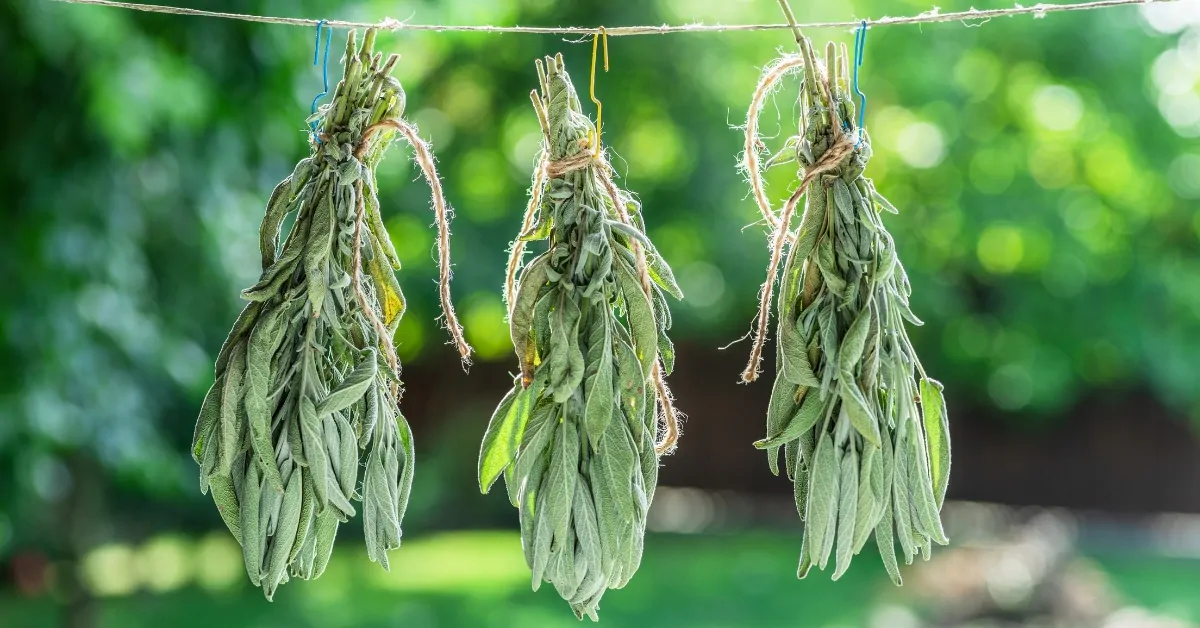
- Air-dry seasonal excess, head down, in a dry, airy place, then store it in a glass jar.
- Reuse the infusion remnant: cooled, it can serve as a purifying facial mask for a few minutes or be added to a bath.
- Use recovered bottles and jars for your preparations.
A safer option for the spent leaves: compost the infused leaves rather than reapplying them to the face, especially after storage.
The goal is to cut waste: water use, heating, and cleaning containers also leave an impact.
Precautions for Using Sage
Even natural, sage requires a few precautions:
- Always perform a patch test in the crook of the elbow 24 hours before first use to rule out any allergy.
- Do not apply it to damaged, irritated, or burned skin.
- Homemade preparations keep very little time: discard at the first sign of doubt (odors, cloudiness, mold).
A local test cannot exclude all allergies. Stop using if redness, itching, or burning occurs. A contaminated preparation can also appear normal: the absence of odor or mold does not guarantee safety.
Common sage essential oil is not recommended in homemade cosmetics: it is highly concentrated and contains thujone. Prefer infusing the plant.
Pregnant or nursing women, people with epilepsy, or those undergoing hormonal treatment or with a history of hormone-dependent cancer should seek professional health advice before any regular use.
Lotion toner, hair rinse, deodorant spray, foot bath: sage invites itself into your bathroom for just a few pennies and zero waste. When grown, dried, and reused, it perfectly illustrates a simple, local, anti-waste beauty approach. Try it, use with moderation, and let this plant’s thousand uses surprise you.