
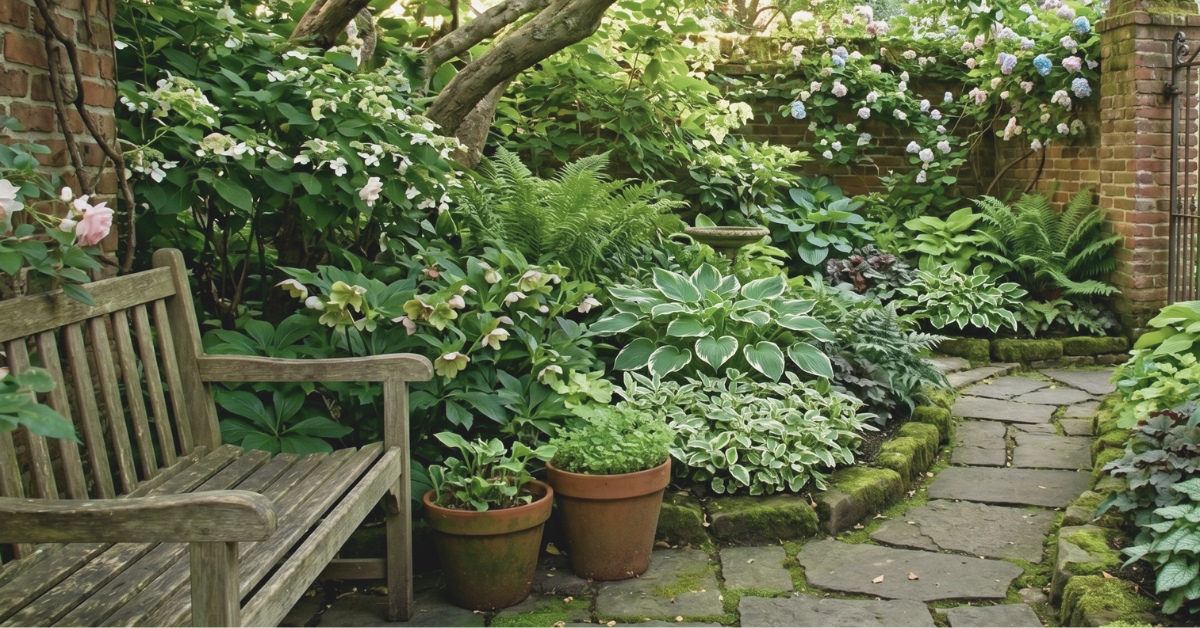
People often say it’s sad or monotonous. Yet, shade is nature’s secret laboratory. Where the sun doesn’t scorch pigments, green unfolds into an endless array of nuances, textures, and reflections. By playing with the foliage, transform your dark corners into a gallery of botanical art where touch matters as much as sight.
Green isn’t a color, it’s a palette
In our gardens we often instinctively reach for color through flowers. But a bloom is fleeting. Foliage, by contrast, is the backbone of your décor for many months. In the shade, free from the harsh light that “crushes” relief, plants deploy ingenious tricks to capture the tiniest particle of light. The result? A visual display of rare sophistication.
Three Shades of Green
Forget the generic “garden green” (a bit British) in shade. You compose with:
- The acid green (or chartreuse): It acts like a spotlight. A plant like Hakonechloa macra (Japanese forest grass) seems lit from within.
- The bluish-green or glaucous: Typical of some Hostas, it brings a soothing depth and an immediate sense of coolness.
- The deep emerald green: Ideal for creating contrasts with brighter areas.
The Symphony of Textures: When the Garden Touches
That’s where the shade garden outperforms the full-sun garden. Without UV onslaught, leaves develop incredible textures to optimize photosynthesis or to protect against humidity.
1. Glossy Leaves: Natural Mirrors
Some plants have a thick, glossy cuticle that reflects light.
- The upside: They capture every ray of moonlight or garden lamp.
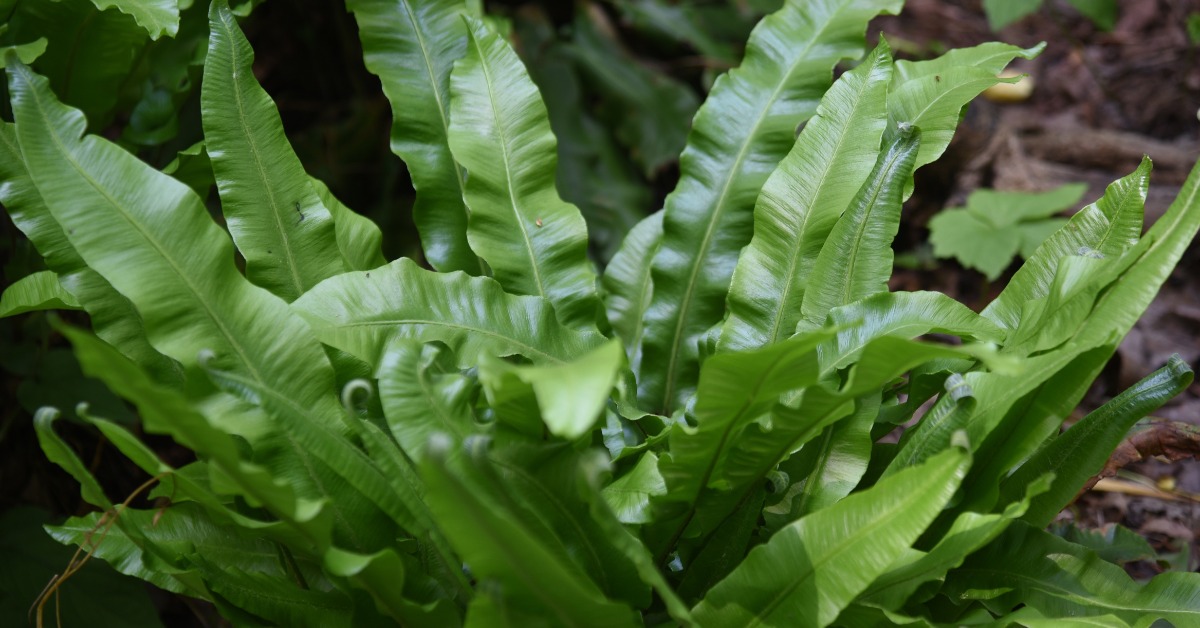
- The stars: Sarcococca or Asplenium scolopendrium (hart’s tongue fern). Their leaves look hand-polished, bringing a clean, luxurious gleam to the darkest corners.
2. The Fuzzy Leaves: The Softness of Velvet
Conversely, some leaves are coated with a fine down (trichomes) that traps dew and creates a matte, almost powdery look.
- The upside: They absorb light rather than reflecting it, creating calm visual zones.
- The stars: Brunnera macrophylla or certain varieties of Stachys. To the touch, the experience is immediate: the garden becomes a sensory refuge.
3. The Cut-Outs: The Play of Shadow Silhouettes
The shape of the leaf is crucial to break the monotony.
- The upside: The lace-like foliage creates movement and lightness.
- The stars: Ferns (Dryopteris, Athyrium) are the lace queens. Their graphic fronds stack and form a relief that the most colorful flowers could never match.
Three Tips to Elevate Your Shade-Foliage
Contrast of forms: Place a broad, round leaf (like Bergenia) right next to a highly dissected fern. The contrast of structure will make each plant more “readable” and spectacular.
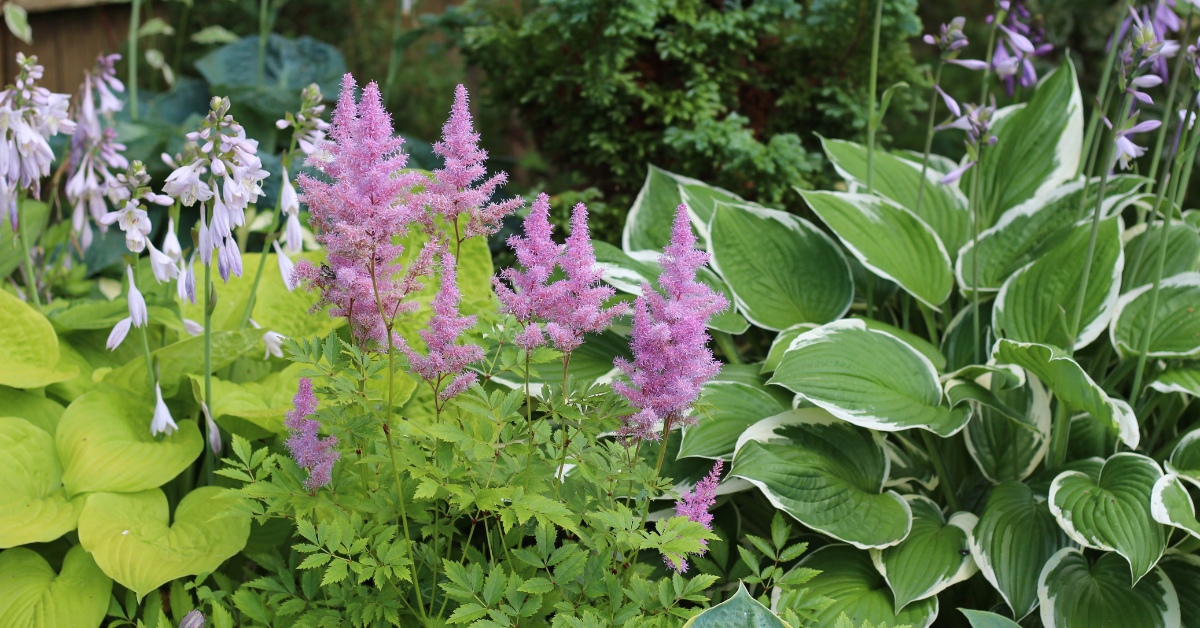
Play with variegation: Leaves edged in white or cream (like Variegated Ivy or Hosta ‘Patriot’) are real light traps. They simulate sun spots where there aren’t any.
The soil matters: For these textures to express themselves, the plant has to be healthy. A layer of decomposed wood mulch or fallen leaves feeds the soil while providing a dark, organic backdrop that makes the vibrant green stand out.
The Shade, the Luxury of Tomorrow
With increasingly scorching summers, the shade garden is no longer a constraint; it’s a gift. It’s the retreat where you read, breathe, and admire a nature that doesn’t sweat, but radiates.
By focusing on green and its textures, you create a space that doesn’t rely on flowers to be beautiful. An elegant, durable, and deeply soothing garden.