
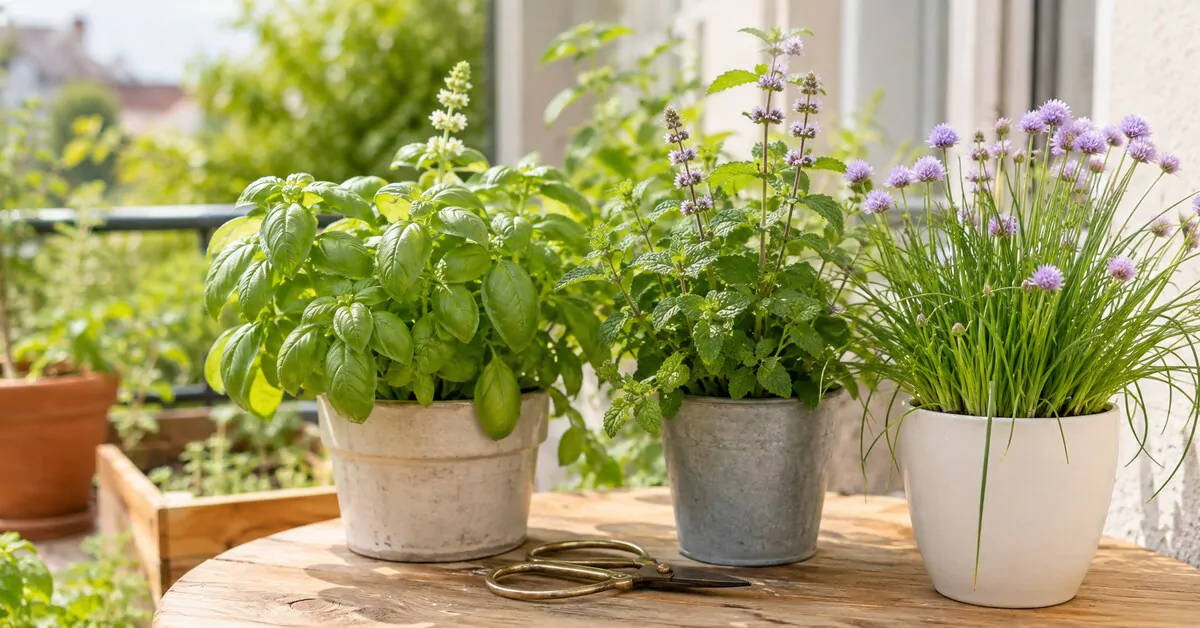
Basil, mint, chives, or cilantro inevitably bolt to flowering. Should you then cut the flowers off aromatic plants? It depends on the plant and on your objective. Removing the flower buds often extends the harvest of leaves. But allowing a few blooms also offers real benefits in the home garden.
Why do herb plants bolt to flowering?
Flowering is part of the plant’s natural life cycle. After producing leaves, it forms flowers, then seeds. It thereby ensures its reproduction.
This phenomenon often appears as the plant reaches maturity. It can also be accelerated by heat, drought, or a pot that is too small. Cilantro and basil bolt particularly quickly during hot periods. (1)
At this stage, the plant devotes more resources to reproduction. It typically produces fewer young leaves. The stems may lengthen and become firmer. In some species, the flavor also evolves.
Does cutting the flowers help preserve tasty leaves?
Yes, especially for herbs grown mainly for their foliage. Regular pruning delays seed formation. It also stimulates branching and keeps the plant more compact.
However, the effect varies by species. A flowering mint remains edible. A chive in bloom isn’t wasted either. Its stems simply become firmer with time. Basil, on the other hand, yields fewer tender leaves after prolonged flowering. Its flavor can also become more bitter. (3)
Cutting the flowers does not indefinitely rejuvenate an annual plant. This intervention extends the harvest, but it does not permanently stall its natural cycle.
Which herb blooms should you cut?
Basil: pinch off the buds as soon as they appear
If you want to harvest a lot of leaves, act quickly. Remove the flowering tip just above a pair of leaves. Two new shoots can then develop at that spot. (2)
Check basil once or twice a week in summer. Regularly harvesting the leaf tips is often enough to keep a bushy growth. Use clean fingers or clean scissors.
Don’t discard the removed flowers. They are edible and their flavor resembles that of the leaves, but more delicate. You can add them to salads, pasta, or vinaigrettes. Also discover how to cook and preserve basil blossoms.
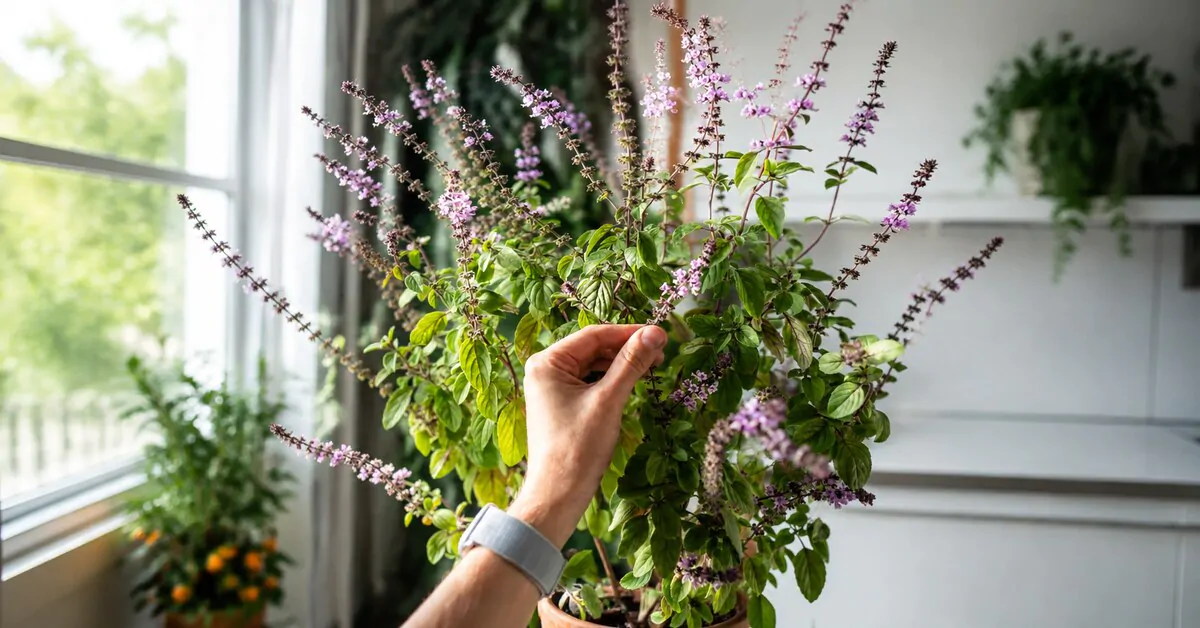
Mint: prune to encourage new growth
Mint forms flower spikes in summer. Its leaves stay edible, but their aroma may seem less delicate. The plant also produces fewer new shoots during flowering.
Cut the flowering stems above a leaf node. If the clump grows tall and sparse, cut it back further after flowering. Then water without soaking the soil. Mint typically comes back quickly.
However, you can leave some spikes. Their small flowers attract bees, bumblebees, and other beneficial insects.
Chives: cut back after flowering to renew the blades
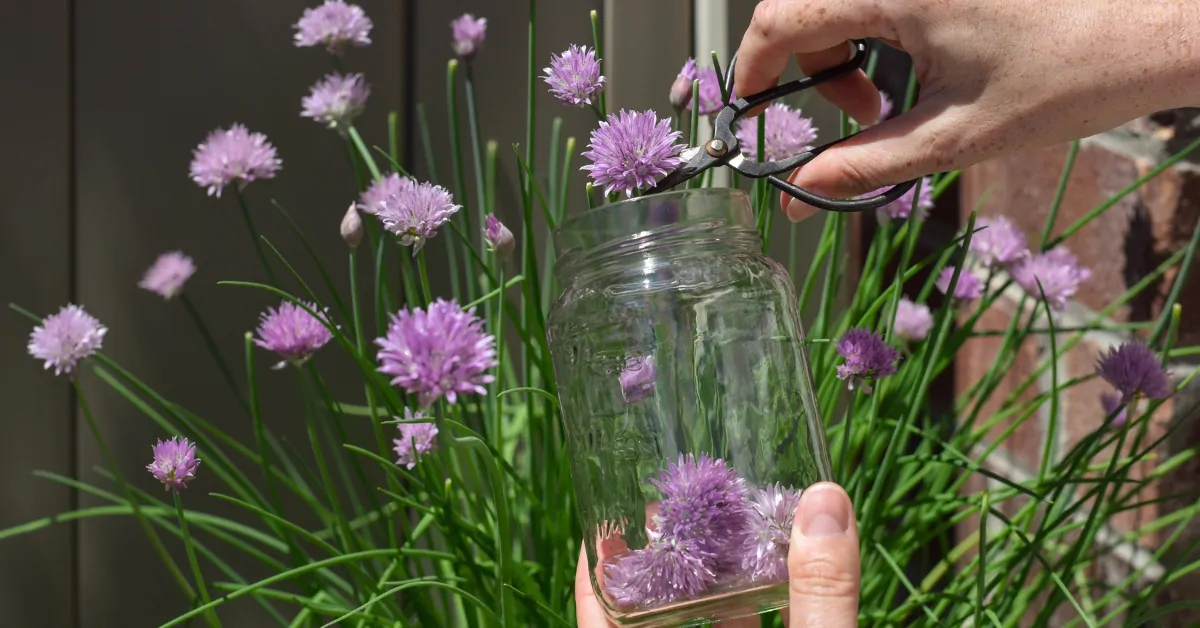
The purple pom-poms of chives are decorative, nectar-rich, and edible. They have a milder onion flavor than the leaves.
You can keep a few flowers for cooking and for pollinators. Remove them before they dry if you want to avoid self-seeding. After flowering, cut back the tired blades a few inches from the soil. A new, softer clump will appear.
To go further, discover our tips for planting, caring for, and harvesting chives.
Cilantro: choose between leaves and seeds
Cilantro bolts to seed quickly when the weather is hot. If you’re growing the plant for its leaves, remove the flowering stems as soon as they form. Also keep the soil cool and place the pot in partial shade during heat waves.
Once seed formation is well underway, pruning may not always be enough. It’s better to start new sowings spaced a few weeks apart.
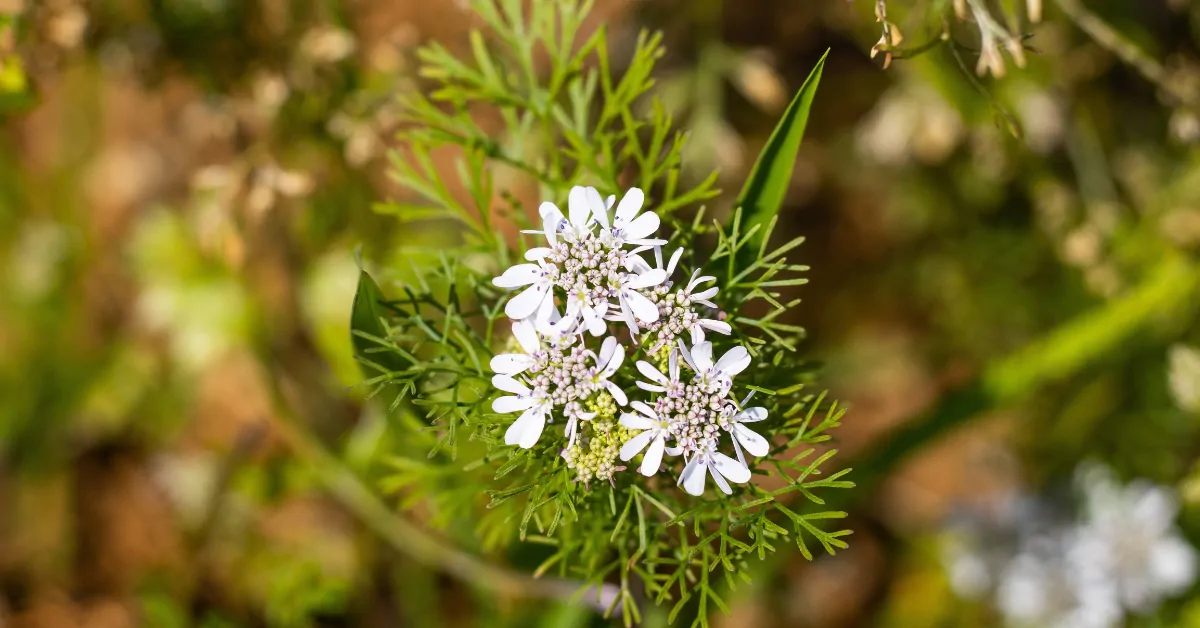
Do you love cilantro seeds? If so, let several plants bloom. Wait for the seeds to turn brown before harvesting and drying them.
Parsley: flowering signals the end of the cycle
Parsley is a biennial plant. It mainly produces leaves in the first year and typically flowers in the next. When the flowering stalk appears, the leaves become scarcer and firmer.
Cutting this stalk slows the process only slightly. Instead, plan a new sowing. You can let one plant go to seed to harvest seeds for later use, without consuming the seeds themselves.
Thyme, rosemary, sage, and oregano: no need to cut everything back
With these perennial aromatics, flowering does not justify immediate pruning. The flowers feed many pollinators. The flowers of thyme, rosemary, sage, and oregano are also edible if the plants haven’t been treated.
Prefer harvesting the leaves before full bloom if you want a very concentrated aroma. Lightly prune thyme and oregano after flowering to keep a compact clump. Avoid cutting deeply into the old wood of rosemary.
How to cut flowers without weakening the plant?
- Act in the morning, after the dew has dried.
- Use clean, sharp scissors.
- Cut just above a pair of leaves or a shoot.
- First remove the flower buds and damaged stems.
- Avoid taking more than one third of a weak plant at once.
- Water at the base after a significant prune, especially in hot weather.
For basil, don’t just remove the flowers. Pinch off the entire tip of the stem. This cut actually promotes branching. You’ll find more tips in our guide to caring for potted basil.
Why let some of your herbs flower?
A productive garden can also welcome flowers. The best solution is often to strike a compromise. Prune most of the plants intended for harvest. Let a few bloom in another corner.
This flowering offers several benefits:
- it provides nectar and pollen for insects;
- it allows harvesting edible flowers;
- it yields seeds for future sowings;
- it adds color and texture to the garden;
- it can encourage self-seeding.
This strategy works particularly well with chives, dill, cilantro, fennel, thyme, and oregano. For basil, keep a flowering plant at the end of the season to harvest its seeds.
What to remember
Cut the flowers from basil, mint, and cilantro if you’re prioritizing leaves. After flowering, cut back the chives to stimulate new blades. Do, however, let part of thyme, oregano, or rosemary bloom. You’ll help pollinators while enjoying edible flowers.
- https://www.rhs.org.uk/herbs/growing
- https://www.rhs.org.uk/herbs/basil/grow-your-own
- https://extension.umn.edu/yard-and-garden/growing-basil