
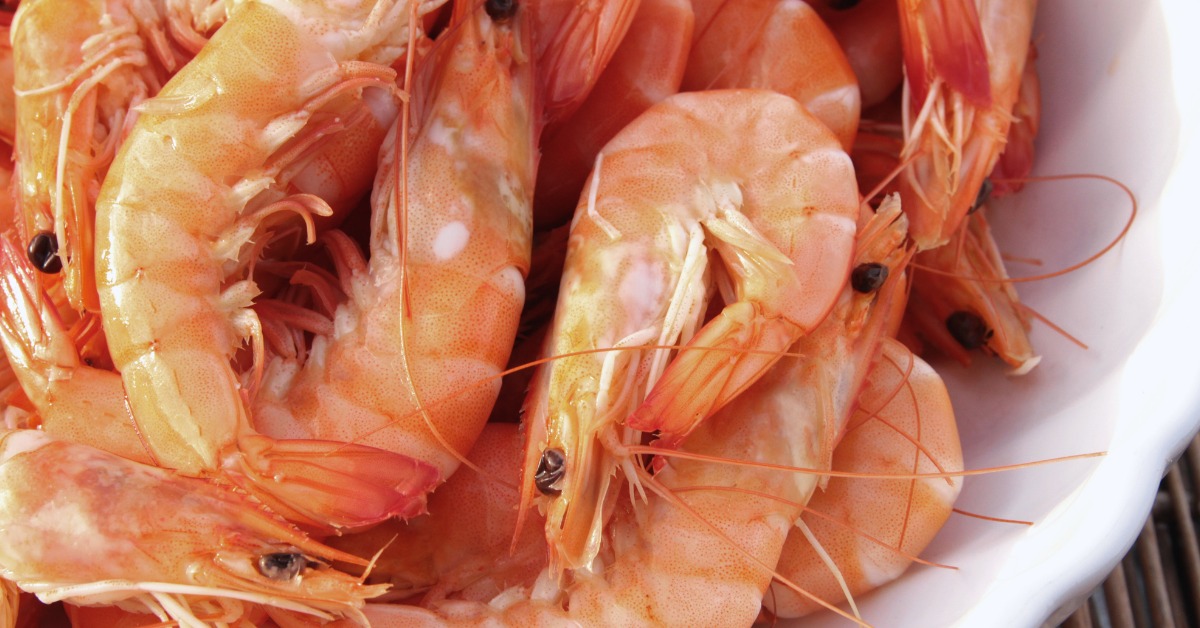
Detected in patients suffering from severe eye inflammation in China, this virus could represent the first documented instance of a marine pathogen causing a persistent ocular condition in humans.
A Shrimp Virus Capable of Infecting the Human Eye
The virus in question, known as “covert mortality nodavirus,” or CMNV, was the subject of a study published in late March 2026 in the scientific journal Nature Microbiology. For years, Chinese ophthalmologists have noted an unusual rise in cases of a condition dubbed “persistent ocular hypertension viral anterior uveitis” (POH-VAU), a form of viral uveitis linked to extremely high eye pressure. Patients reported pain, blurred vision, recurrent inflammation, and a substantial risk of glaucoma and, in some cases, blindness. CMNV was first identified in 2014 in shrimp farms in China. It is known for causing substantial mortality in Asian aquaculture. Until now, public health authorities had considered it not to pose a threat to humans.
Researchers from China analyzed eye tissues from 70 patients diagnosed between January 2022 and April 2025. Using electron microscopy and genetic analyses, they identified viral particles in the infected tissues measuring about 25 nanometers, matching CMNV almost perfectly to the marine animal virus. The genetic sequence found in patients matched 98.96% with that of the animal virus.
The scientists also demonstrated that the virus could cause disease in laboratory mice. Infected animals developed markedly elevated intraocular pressure and inflammatory lesions similar to those seen in human patients. These experiments bolster the animal-to-human transmission hypothesis. Additionally, nearly three-quarters of the patients studied had handled raw seafood or consumed raw aquatic products before symptoms appeared.
How CMNV Works in the Human Eye
The mechanism by which CMNV operates in the eye intrigues researchers because it differs from that of common ocular viruses like herpes simplex virus or varicella-zoster virus. POH-VAU patients were consistently negative for these standard infections, prompting scientists to search for another pathogen. Once introduced into the body—likely through contact with contaminated marine animals or exposure to droplets near the eye—the virus appears to target specific ocular structures. Researchers identified lesions affecting the cornea, the iris, and sometimes the retina. The infection triggers a persistent inflammation of the anterior eye, known as viral anterior uveitis. This inflammatory reaction then causes a substantial rise in intraocular pressure. High pressure can progressively damage the optic nerve and foster the development of irreversible glaucoma.
Clinical observations from Taiwan noted several hallmark signs: corneal deposits, iris atrophy, pain, and recurrent inflammatory episodes. Some patients were resistant to traditional antiviral therapies. Most patients tended to be between 45 and 70 years old. Researchers also observed a link between regions in China heavily involved in aquaculture and the rise in POH-VAU cases.
How serious is this illness?
Experts emphasize that this is not a pandemic, nor a virus that easily transmits between people. At present, identified cases remain limited and concentrated mainly in China. Still, the consequences at the individual level can be severe. According to the study, about one in three patients required glaucoma surgery to control eye pressure. At least one patient permanently lost vision.
Researchers are most worried about the potential global spread of CMNV through aquaculture supply chains. The virus has already been detected in 49 different animal species, including fish, crabs, mollusks, and shrimp, across continents: Asia, Africa, Europe, the Americas, and even Antarctica.
Samples taken from 351 seafood products sold in six Chinese provinces showed positivity rates ranging from 33% to 62%. The global context also fuels concerns. World seafood production reached 223 million tons in 2022. In some Asian and African countries, seafood accounts for more than half of animal-based protein intake.
Is there a treatment for CMNV?
There is currently no specific antiviral treatment for CMNV in humans. Physicians primarily manage the consequences of infection to limit eye damage. Patients typically receive anti-inflammatory drugs, medications to reduce intraocular pressure, and sometimes conventional antivirals, though their effectiveness against this new virus appears limited. In severe cases, surgical intervention may be necessary to prevent optic nerve destruction.
Researchers believe that risk can be mitigated through several straightforward measures. CMNV seems to be heat-sensitive, meaning cooking could neutralize the virus in foods. However, professionals handling raw marine products—particularly in farming, markets, or the broader food industry—appear to be especially exposed.
Scientists therefore recommend wearing gloves when handling raw seafood and improving health surveillance in aquaculture. At present, no international health authority has issued a major alert about consuming cooked seafood.