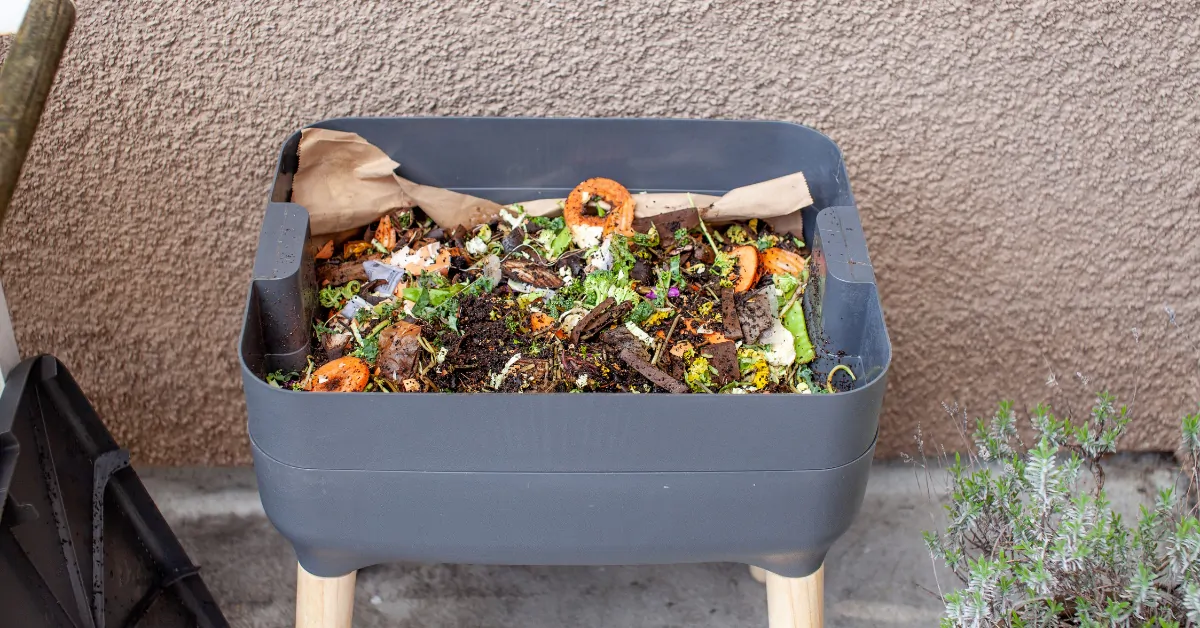
Composting waste in an apartment? Yes, it’s possible, even without a jumbo garden or balcony. Vermicomposting lets you transform part of your kitchen scraps into natural fertilizer thanks to the activity of small, highly efficient worms. When well set up and balanced, it doesn’t stink and takes up only a small footprint.
What is vermicomposting?
Vermicomposting involves breaking down organic waste with composting worms, often Eisenia species. These worms live in the decaying matter and convert peels, coffee grounds, or tea leaves into vermicompost, a nutrient-rich material that feeds plants. Unlike traditional garden compost, a vermicomposter can be set up indoors—in a kitchen, a laundry room, an entryway, or on a sheltered balcony.
Where to install your vermicomposter?
Choose a temperate spot, sheltered from direct sun, frost, and extreme heat. The worms don’t like temperature swings or overly dry environments. On a balcony, place the bin in the shade and bring it indoors during cold snaps or heat waves.
Indoors, a well-maintained vermicomposter won’t emit odors. If a bad odor occurs, it’s often a sign of too much fresh waste, a lack of dry matter, or excessive moisture.
How to get started?
Before adding waste, prepare a bedding with unprinted brown cardboard, newspaper, or coconut fiber slightly moistened. The texture should resemble a wrung-out sponge. Then add the worms and give them a few days to acclimate.
At first, add very small amounts of waste, cut into small pieces. Increase the amounts gradually only when the previous additions are starting to disappear. A vermicomposter works best with steady, regular feedings rather than large, infrequent dumps.
What to remember
- The bin should stay in a temperate, shaded area.
- Waste should be added in small quantities.
- Unprinted brown cardboard helps absorb humidity.
- A bad odor signals an imbalance to correct.
What to put in a vermicomposter?
The worms enjoy tender, finely chopped plant waste. The smaller the pieces, the faster the decomposition.
- Fruit and vegetable peels cut into small pieces
- Coffee grounds and paper filters
- Tea leaves and herbal teas without staples
- Finely ground eggshells
- Small pieces of unprinted brown cardboard
Avoid meats, fish, dairy, prepared foods, fats, and large volumes all at once. Citrus, garlic, onion, and leek should be added sparingly, as they can unbalance the bin.
How to prevent odors and fruit flies?
To limit odors, always alternate moist waste with dry matter. Brown cardboard is your best ally. It absorbs excess moisture and improves aeration of the bin.
To avoid fruit flies, bury the waste under the bedding or cover it with a damp piece of cardboard. Very ripe fruits should be added in small quantities, as they attract small flies.
When to harvest the vermicompost?
After a few months, the vermicompost takes on the look of dark brown potting soil, soft, and uniform. It should smell like forest floor, not trash. You then use it in small quantities, mixed into the potting soil for indoor plants or planters.
The liquid collected from some setups should always be heavily diluted before watering. If it smells bad, it’s best not to use it.
A simple solution to lighten your trash
Vermicomposting in an apartment requires a bit of watching, but it quickly becomes second nature. With a properly sized bin, a few worms, and regular feedings, kitchen waste turns into a useful resource. A great way to cut down on your trash, even in the city, while naturally feeding your plants.