
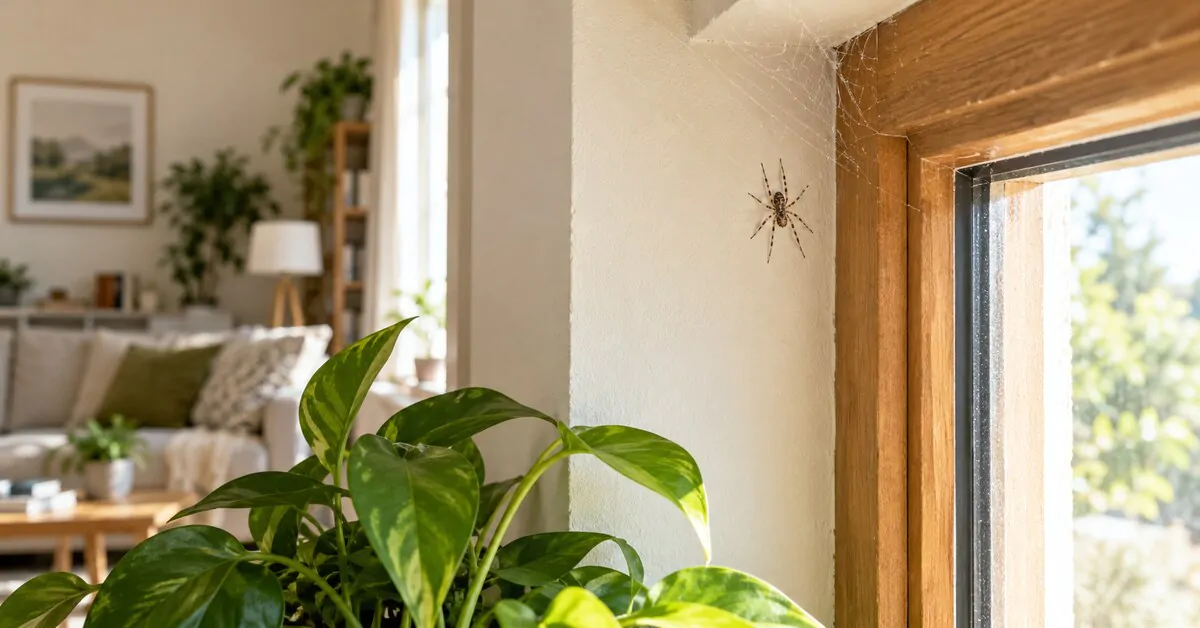
Who, honestly, can claim to love spiders? Aside from a stickily suited superhero played by Tom Holland, they’re rarely popular. Yet these small roommates play a useful role. Before you break out the vacuum or pesticide, it’s worth understanding why they move in and how to relocate them without harm.
What you need to know
- Spiders are arachnids, not insects.
- They catch flies, mosquitoes, gnats, and other small invertebrates found in the home.
- In autumn, males become more visible as they search for a mate.
- A glass and a piece of cardboard are usually enough to relocate a spider without harming it.
Why should you avoid killing spiders indoors?
Like many discreet creatures living around us, spiders contribute to ordinary biodiversity. They belong to the class of arachnids: they have eight legs, while insects have six.
All spiders are predators. Depending on their species, they capture their prey in webs or chase it down. In our homes, their menu can include house flies, mosquitoes, gnats, moths, or even silverfish.
A spider, of course, does not replace a screen door nor good hygiene. It does help regulate the small populations of invertebrates it feeds on. Its presence mainly signals that it can find enough prey to survive.
Most of the time, these tenants hide behind furniture, in a basement, or in a dark corner. Some species even spend their entire life cycle inside buildings. They are not seeking our company or confrontation.
Why do we see more spiders in autumn?
We often hear that they come indoors to escape the cold. The explanation is more nuanced. Many spiders observed indoors were already living there, but remained invisible.
At the end of summer and in autumn, adult males of certain species, particularly funnel-web spiders, leave their retreats to look for a mate. Their movements on walls or the floor make them much easier to notice.
Shelter, quiet, and food
A spider settles where conditions suit it: a quiet spot, a comfortable temperature, and available prey. Basements, garages, attics, window frames, and spaces behind furniture offer many hiding places.
Outdoor or indoor lighting can also play an indirect role. By attracting flying insects near windows, it creates an appealing pantry for their predators. Gaps under doors, cracks, and unscreened windows also facilitate passage.
Are house spiders dangerous?
In the vast majority of cases, spiders found in homes are harmless. We’re talking about a bite, not a sting. It occurs mainly if the spider is pressed against the skin or handled.
Reactions are usually local and mild. That said, avoid overly general statements: not all species carry the same venom, and people can react differently.
If you suspect a bite, rinse the area with water and soap. Apply cold with a cloth, and never place ice directly on the skin. Seek medical advice promptly if there is intense pain, a spreading lesion, dizziness, or trouble breathing. In the latter case, call 911.
How to remove a spider without harming it?
The glass method remains the simplest. Gently cover the spider with a glass or jar, then slide a piece of cardboard underneath. Keep the whole thing closed during the move.
Place the spider in a sheltered spot near the house. In cold periods, a basement, garage, or unheated shed may suit a species accustomed to buildings better than a garden exposed to freezing temperatures.
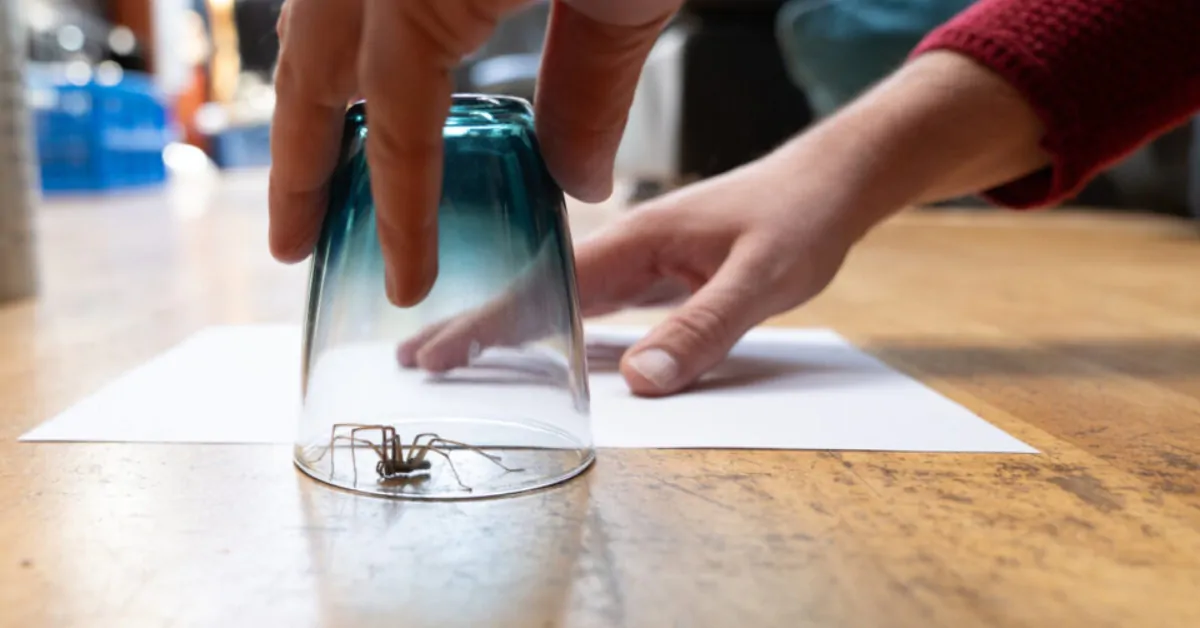
If approaching makes you nervous, there are also long-handled spider catchers. They let you gently grab the animal without direct contact. Avoid picking it up with your bare hands.
The vacuum may seem practical, but the jolt, dehydration, and dust can kill the spider. It’s better to choose a gentle capture.
How to limit their presence naturally?
If spiders become too numerous, start by making your home less accessible and less attractive to their prey. Repair screens, seal cracks, and install a door sweep if needed. You can also reduce lighting near open windows in the evening.
A regular cleaning routine helps remove abandoned webs and limit insects. However, there’s no need to hunt every hidden spider. Above all, avoid broad-spectrum pesticides, which degrade indoor air quality and kill indiscriminately.
What about vinegar, chestnuts, and essential oils?
White vinegar, citrus peels, chestnuts, cedarwood, or cloves are natural repellents. Their effectiveness varies. A strong odor may temporarily deter certain species but won’t stop them from returning.
For a durable approach, start with physical barriers, reducing insects drawn to light, and gentle capture. You can find other tips to keep spiders out of the house without turning your space into a chemical battlefield.
At heart, keeping one or two spiders in a discreet corner can be the most ecological compromise. They don’t pay rent, for sure, but they gladly help with the gnats.