
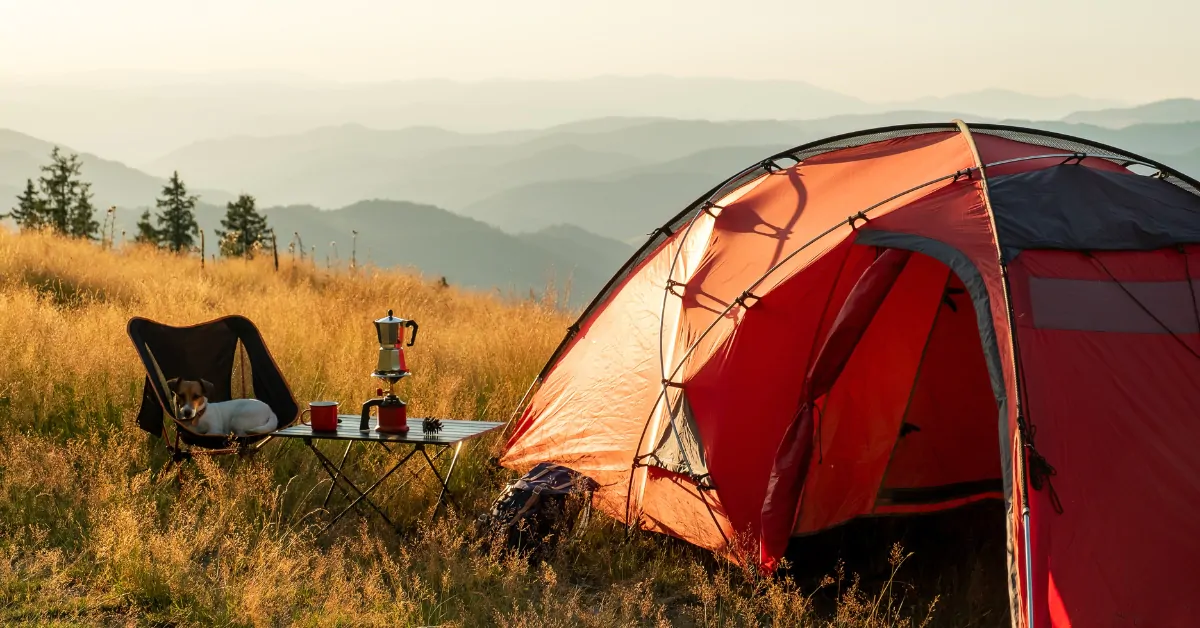
Wild camping attracts many lovers of freedom and the outdoors, but its practice in France is governed by a precise regulatory framework that is worth knowing before you pitch your tent.
A Principle of Freedom, but…
What is the difference between a bivouac and wild camping? The difference mainly rests on the duration of the stay and the type of setup. A bivouac resembles a simple, brief overnight stop (usually a single night). In this case, hikers set up a light camp at sunset to dismantle it the next morning. In contrast, wild camping generally spans several nights in the same place on an undeveloped site. And that applies whether you pitch a tent or park a motor vehicle like a van or a motorhome.
Legally speaking, the Urban Planning Code establishes the principle that camping is freely practicable in France, provided you stay off public roads and obtain the consent of the person who owns or uses the land. Nevertheless, this freedom remains conditioned by civility: the setup must in no way compromise public safety, the tranquility of the area, cleanliness, the preservation of natural landscapes, or the smooth running of nearby agricultural and forestry activities.
Restrictions to Observe
Although the law does not absolutely ban it, it tightly regulates the practice by listing several zones that are entirely off-limits. Thus, except in exceptional cases, you cannot camp on seaside shores, along roads, within a 200-meter radius of water sources used for consumption, or within 500 meters of historic monuments and protected sites. To learn more about these geographical specifics, feel free to consult the comprehensive guide on bivouacking and wild camping and their rules in France. Additionally, municipalities can themselves block wild camping through provisions of their Local Urban Plan (PLU). But this only if the prohibition is clearly posted at the town hall and at access points to the affected areas.
To camp freely but with confidence, you should target areas free from these restrictions by checking local signage or consulting official maps of National and Regional Parks. Note that most of these nature reserves only allow regulated bivouacking. If finding the ideal spot proves difficult, an alternative is to turn to private landowners or campsites that open their private spaces to travelers, a growing trend called collaborative camping—camping at someone else’s place. Internationally, rules vary greatly because there is no unified European legislation. Countries like Sweden, Norway, Finland, or Scotland are particularly welcoming and fully permit wild camping.
A Fine of 1,500 Euros
Beyond the location, the smooth running of your free-spirited stay relies on safety and environmental protection rules. Campers should favor discretion with compact gear and ensure they leave absolutely no trace by taking all their trash with them when they depart. It is also advisable to avoid high-risk zones such as flood-prone areas, at the foot of cliffs, or isolated trees during storms. Also be mindful to limit light and noise nuisances, and check the strict regulations governing campfires.
Careful: ignoring the regulations can be costly since violators face significant fines. Pitching a tent or parking a vehicle in a prohibited location can carry a fine of up to 1,500 euros. The actual amount is usually adjusted based on the nuisance, particularly in cases of environmental damage or abandoned waste. Remember that mayors have the power to order the forcible removal of installations and mobile residences if they are parked outside the designated welcome areas set by the municipality.
And in a motorhome or a converted van?
Travelers in motorhomes or converted vans must make an essential distinction: parking is not camping. A vehicle can generally stop at an authorized spot, like a car, provided it does not impede traffic and you respect local signage. However, as soon as you pull out a table, chairs, an awning, blocks, or you perform an unsanctioned wastewater dump, the stop may be considered a full camping installation. It’s best to favor dedicated areas, campsites, private land with permission, or host platforms. This is also a practical ecological rule: never discharge gray water into nature, avoid fragile zones, and limit your footprint on the landscapes you pass through.