
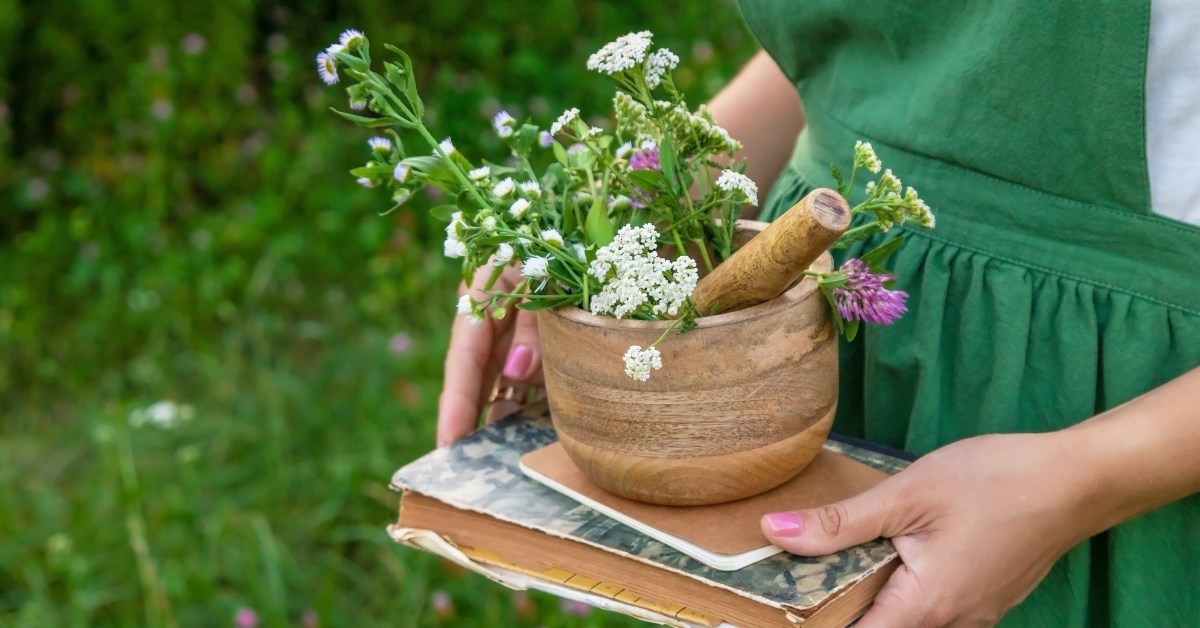
Spring is peeking around the corner, and it’s the perfect time to get moving… Thinking about everything we can plant to treat ourselves with pleasure and to do some good for our well-being. Some garden plants that are easy to grow can also yield ingredients for delicious herbal infusions. A close look at six “herbal tea plants” to gear up for next winter.
6 Herbal Tea Plants to Grow in the Garden
There are plants that you’ll only find in the wild, either because humans haven’t domesticated them or haven’t yet found a real interest in cultivating them. But there is a whole lineup of plants you can easily grow at home to make your own herbal tea; come discover six of them!
Black Elder (Sambucus nigra)
The Black Elder (Sambucus nigra) is a shrub that can reach up to five meters tall and grows quite vigorously. Easy to propagate by cuttings—simply take a rooted shoot from near a mature plant—and the “prince of rubble or lord of ruins” will quickly establish itself wherever you’ve found room for it.
Planting Black Elder
When planting a Black Elder, sunlight is not a concern; it will adapt to any exposure. The same goes for soil type, as long as you provide it with fertile, cool, well-drained soil.
The one real thing to anticipate is that its berries, when they fall to the ground, can stain a paving or a patio.
Benefits of Black Elder Tea
Elderflower tea is a Swiss Army knife against colds and a tonic for the respiratory system. The flavor of the flowers is somewhat unconventional and not very pronounced, so don’t hesitate to pair its blossoms with other herbs to boost both flavor and benefits!
Sweet Violet – Plant it in the Garden to Make Herbal Teas
Violets are perennial plants known to almost everyone and that grow almost everywhere!

Planting Sweet Violet
The Sweet Violet (Viola odorata) can be sown in spring or autumn, provided temperatures stay above 10°C (about 50°F). If temperatures dip lower, you can start the seeds indoors. When the growing season arrives, give them a site in partial shade, since violets thrive in woodland understories.
Benefits of Sweet Violet Tea
While the leaves have mild laxative properties, the flowers themselves hold the most interest for tea. Highly effective and widely recognized for helping fight colds and bronchitis, Sweet Violet flowers can be used in tea whether fresh or dried.
Borage, the Plant That Makes the Garden Happy
The flowers of Borage (Borago officinalis), already beloved for brightening any salad, are also melliferous and serve as a pantry for many pollinators. But that’s not all—these same flowers also have virtues when used in tea!

Planting Borage
While borages can be aggressive by reseeding themselves, they’re easy to keep in check. Planting is very straightforward and requires little instruction, except to water well.
Benefits of Borage Tea
The flowers of Borage are used to ease a cold, a worsening cough, or even a fever. Their flavor is mild and their properties light, so don’t hesitate to blend borages with other herbs to tailor both flavor and benefits to what you’re after.
Rosehip, One of the Garden Tea Plants
The rosehip shrub (Rosa canina) is a shrub that can reach up to two meters in height and is the distant ancestor of some garden roses. Beyond its use in teas as we’ll explore below, the rosehip is particularly effective for supporting biodiversity in your garden. So don’t hesitate to give it a place, though its thorny branches require careful placement.

Planting the Rosehip
As with most shrubs, the planting period is either in autumn or at the very start of spring for this plant that tolerates all soil types.
Often planted in decorative or wild hedges, the rosehip can also be grown in isolation. It will appreciate a good water supply paired with long-lasting mulching (hemp, coconut, etc.).
Benefits of Rosehip Tea
The flowers have mildly laxative properties, while the cynorrhodons (the “hips”) are tonic. The bedégars or “rose sponge,” caused by a gall-inducing insect, also possess tonic and diuretic properties.
Plants for Herbal Tea in the Garden: Lemon Balm
Lemon-scented, Lemon Balm (Melissa officinalis) has been known for its virtues since medieval times in the Arab world, and Europeans only embraced it in the 17th century.

Planting Lemon Balm
Lemon Balm is not particularly demanding as far as cultivation goes and will endure as a perennial when you provide it with fertile, well-drained soil and a spot that’s either sunny or lightly shaded.
Benefits of Lemon Balm Tea
The Lemon Balm tea has broad benefits, from positive effects on the respiratory system to the circulatory system, digestive issues, and even states of nervous tension. Just be sure to harvest the leaves for your teas before the plant flowers to ensure its potency.
Harvesting Chamomile from the Garden to Make Tea
Chamomile (Chamaemelum nobile) self-seeds each year, so you’ll have little trouble keeping it around or simply harvesting year after year at a spot you’ve noted. Ideal for planting in open ground or on a balcony or terrace, chamomile has proven benefits and many appealing uses!

Planting Chamomile
You can split an existing clump in the fall to move it closer to home or multiply the number of places you’ll see it flourish. You can also seed it in early spring in a slightly sandy, well-drained soil and place it in full sun, making sure to water regularly.
Benefits of Chamomile Tea
The calming properties of Chamomile are so well known that many people use it before bed to help them sleep. The plant is also antispasmodic, a digestive aid, and can assist with nervous tension as well.