
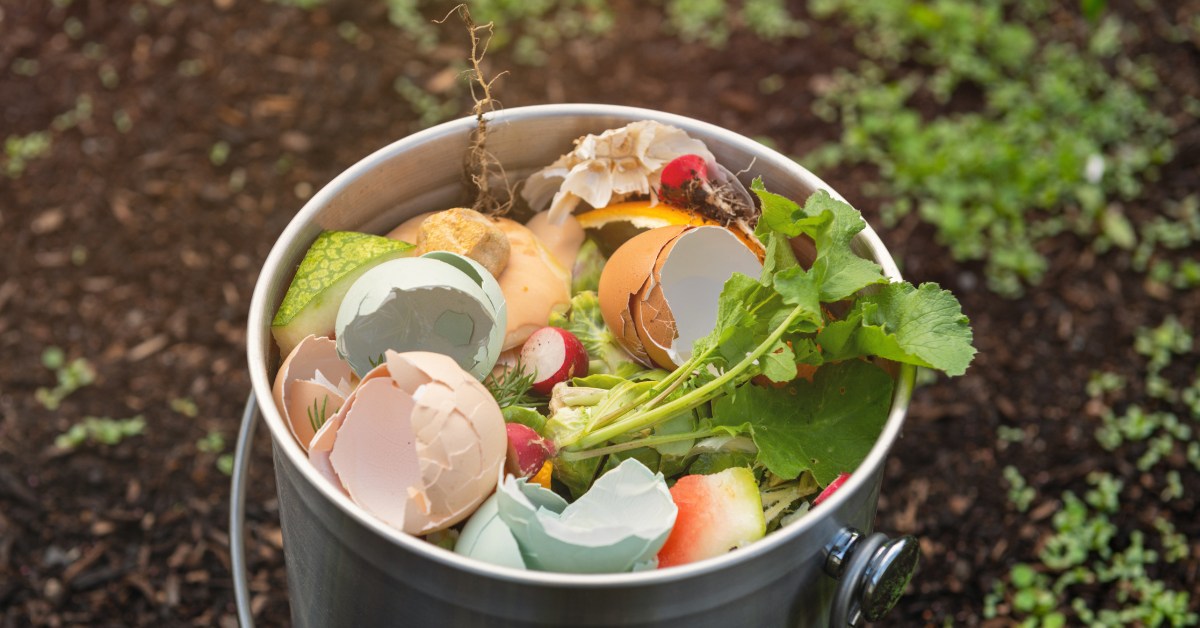
Made from garden and kitchen waste, compost is a natural fertilizer rich in organic matter, nitrogen, phosphorus, etc. Home composting is also a simple activity full of benefits, since it helps reduce the amount of household waste treated by the municipality and thus contributes to environmental preservation. Explanations to get started.
What is compost?
Whether you use a balcony compost bin, an indoor vermicomposter, or a garden compost bin, the principle remains the same. Composting is an operation that consists of degrading organic waste in the presence of air, under controlled conditions. Two phenomena follow one another in a composting process. The first, bringing residues to the state of fresh compost, is an aerobic degradation (the capacity or need for an organism or a micro-organism to develop in ambient air) intense:
- Essentially the decomposition of fresh organic matter at high temperature (50 to 70 °C / 122 to 158 °F) under the action of bacteria;
- By a less sustained degradation, it will transform the fresh compost into mature compost, rich in humus.
This maturation phenomenon, which occurs at a lower temperature (95 to 113 °F / 35 to 45 °C), leads to the biosynthesis of humic compounds by fungi.
The compost or the art of composting
Compost is a rich material produced by billions of microorganisms. It is the result of composting, a natural process that transforms organic matter into a product resembling soil.
The organic matter is decomposed by microorganisms such as bacteria and fungi that transform it into simple elements that feed plants.
Composting, how does it work?
Composting is an important form of recycling that can be done at home. It’s an easy way to reduce by a third the amount of waste produced by households. Composting yields an excellent soil amendment used for gardening and landscaping.
Why compost?
Compost helps improve soil quality and strengthen the soil’s humus stock. Composting improves fertility and promotes soil life. Gardeners can thus use it for all their plantings (vegetable beds, flower borders, trees….
The organisms living in the soil
A healthy soil is active and hosts microorganisms such as bacteria, fungi, and yeast, as well as larger creatures like earthworms. The survival of these organisms depends on the availability of air, water, and nutrients in the soil.

In return, these organisms ensure top-tier recycling. They break down organic matter to release the nutrients necessary for root development and the growth of plants. Furthermore, they mix the soil to improve its aeration, texture, and structure.
Nourishing the soil (and the plants)
A fertile soil contains macro-elements and micro-elements. Plants need both to grow.
The macro-elements include nitrogen (N), phosphorus (P), potassium (K), calcium (Ca), magnesium (Mg), and sulfur (S). These elements provide the main nutrients for plants. The first three, nitrogen, phosphorus, and potassium, are used in large quantities by plants. They all contribute to specific functions such as leaf and stem growth (N), root growth (P and K), the development of flowers and fruits (P), and overall vitality (K).
Plants also need micro-elements that are called trace elements. They include iron (Fe), manganese (Mn), copper (Cu), and zinc (Zn). Their presence in very small quantities is essential to plant life. A balanced and optimal supply of these trace elements has a critical impact, because excesses can harm plants. Compost provides a balanced and reasonable amount of these trace elements(1).

Moreover, this approach has significant value for sustainable development since it promotes the short-circuit recycling of organic matter within its territory. This helps reduce greenhouse gas emissions and combats runoff (organic matter helps retain water in soils).
Two good reasons to start composting
It helps reduce waste and, consequently, the number of garbage trucks on the roads, and it also reduces incineration and thus landfills.
For the garden, making household compost yields a natural and non-polluting fertilizer. In addition, it improves soil quality, supports the growth of plants and flowers, and helps plants develop a healthy root system.
Read the next page: which waste goes into compost?
- Canadian Compost Council