
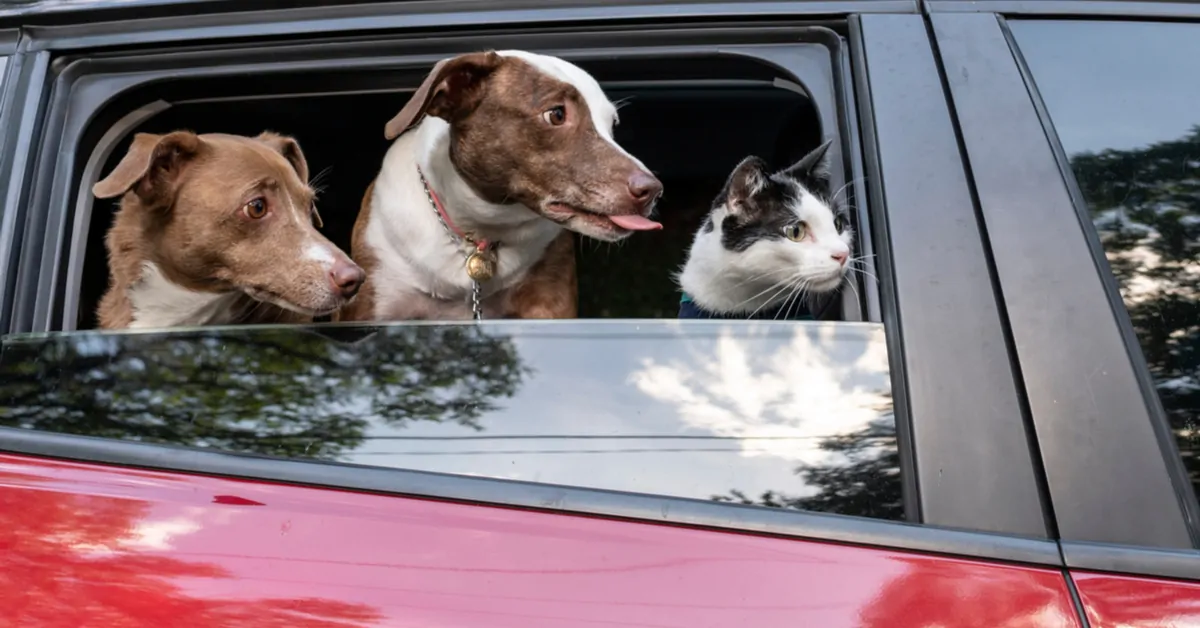
Traveling with your dog or cat requires some preparation. A poorly secured crate, excessive heat, or an animal left loose can quickly turn a trip into a stressful experience.
The ideal approach is to gradually acclimate your companion to the car. Start with a few minutes while parked, then make small trips to a pleasant destination. The car will be associated with a positive experience, and not just visits to the veterinarian.
Traveling with your dog or cat: precautions before departure
To avoid surprises, prepare your pet’s gear before hitting the road. Bring water, a bowl, a leash, waste bags, and a towel. Add an absorbent pad if your companion is prone to accidents.
Also bring their health records, any medications, and the contact details of a veterinarian near your destination. Verify that their identification is up to date in the microchip registry.
For international travel, requirements vary by country. In the European Union, dogs, cats, or ferrets typically must be identified, rabies-vaccinated, and accompanied by a European pet passport.
Avoid a heavy meal right before departure
Motion sickness can cause excessive drooling, nausea, vomiting, or intense restlessness. So avoid giving your pet a large meal in the hours before departure.
The amount of time to fast depends on age, health, and routine. A puppy, kitten, or ill animal should not be fasted without veterinary advice. Always provide fresh water.
How to safely secure your pet in the car?
The highway code does not require a specific device for pets, but the driver must be able to perform all maneuvers without hindrance. The driver’s field of vision must also stay unobstructed.
A dog on the lap, a cat on the dashboard, or an animal near the pedals poses a danger. In a hard brake or collision, an unsecured animal can be violently thrown.
Don’t let your pet roam freely
Even if you know your dog or cat very well, their reactions can be unpredictable. A noise, a sudden stop, or a vehicle passing by can frighten them.
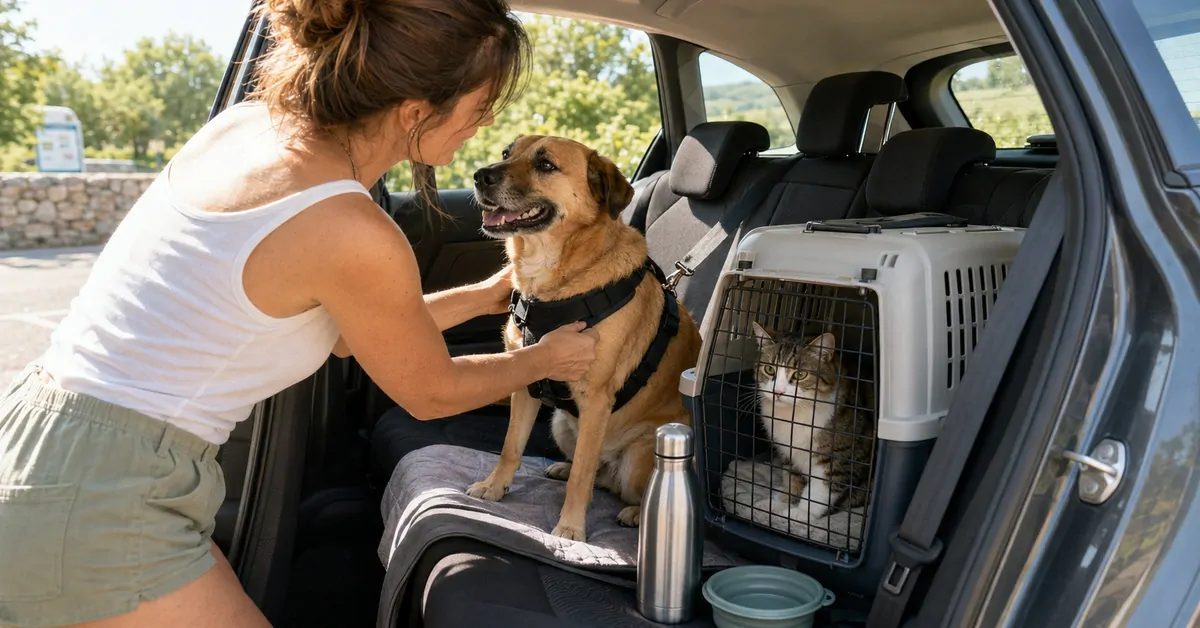
The animal should be placed in a crate that is securely fixed, restrained by a car harness, or behind a suitable partition. The chosen device should fit their size and allow for good ventilation.
For a small dog or cat: a well-secured crate
A small dog or cat travels more calmly in a rigid, well-ventilated transport crate. It should be large enough to permit turning around and lying down.
Place it on the floor behind a front seat or secure it according to the manufacturer’s instructions. Avoid simply placing the crate on a bench seat: it could be hurled forward in a sudden stop.
Lay down a washable pad or towel in the bottom. Add a piece of fabric with a familiar scent, without obstructing ventilation openings.
For a large dog: harness, crate, or a barrier divider
A large dog can ride on the back seat with a suitable automotive harness. It should be attached to the system provided by the manufacturer, not to a simple collar, which could cause injury.
In an SUV or station wagon, a properly fixed crate can be installed in the rear cargo area. A solid barrier or mesh divider also helps keep the dog out of the cabin.
The trunk should remain open toward the cabin, be ventilated, and shielded from direct sun. A pet should never be locked in a fully enclosed trunk.
How to reduce stress and motion sickness?
A car trip can trigger significant anxiety. Some animals pant, meow, tremble, or refuse to enter their crate.
Progressive habituation remains the best initial step. Leave the crate open in the home for several days before departure. Place a familiar blanket inside and calmly reward the animal when it enters.
Avoid loud music, shouting, and sudden temperature changes. Gentle, smooth driving also helps limit nausea.
Do not give any human medication or calming product without a veterinarian’s advice. Even solutions marketed as natural, such as certain ginger-based treats, may not be suitable for all animals. A veterinarian can propose a safe option for nausea or anxiety.
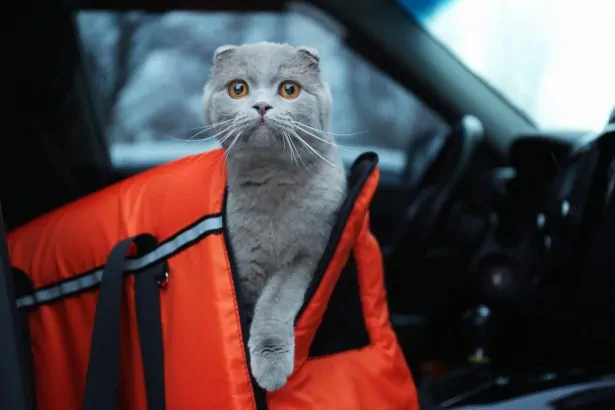
Heat in the car: essential vigilance
Keep the interior at a comfortable temperature. Air conditioning can be used moderately, but avoid blowing cold air directly at the animal.
Install sun shades and regularly check the temperature around the crate or rear compartment. These areas can heat up more than the driver’s seat.
If possible, aim for an early morning or evening departure during hot weather. Keep a supply of fresh water readily accessible.
Very rapid panting, excessive drooling, weakness, vomiting, or loss of balance should alert you. Move the animal to a cooler place, gradually moisten with lukewarm water, and contact a veterinarian immediately.
Take a break about every two hours
Breaks give both the driver and the animal time to rest. Stop in a quiet, safe place roughly every two hours.
Offer fresh water to your companion. For a dog, plan a short walk so they can stretch out and relieve themselves. Attach the leash before opening a door or the tailgate.
Even a normally well-behaved dog can become disoriented at a rest area. Never let them roam freely near traffic.
Should you take the cat out of its crate during the break?
It’s best to keep the cat in its crate for the entire trip. Taking it out increases stress, the risk of scratches, or escape when you open a door.
Offer them water without letting them loose. For a very long trip, provide a crate large enough to accommodate a small litter box, or plan a stop in a completely enclosed and secure space.
Avoid placing kibble in a small crate while the car is moving. It could spill or worsen nausea.
Never leave an animal alone in a car
A few minutes are enough for the temperature inside a parked vehicle to become dangerous. A cracked window, a shaded spot, or a water bowl do not protect against heat stroke.
Never leave your dog or cat alone in the car, not even for a quick errand. This rule also applies when the outside temperature seems moderate.
Upon arrival, check that the animal is okay before you detach it. Open the crate or the door only after you have secured the area and prepared its leash.