

The Barn Owl (Tyto alba), is a owl renowned for its distinctive face and whose hunting abilities rival those of its raptor peers. Living very close to us, it is not, however, truly well known by the public.
Grab your binoculars and head out at dusk to discover this amazing owl that keeps flying above our heads without us even noticing! Getting to know it better is the best way to protect this majestic member of our ordinary biodiversity.
Barn Owl Basics
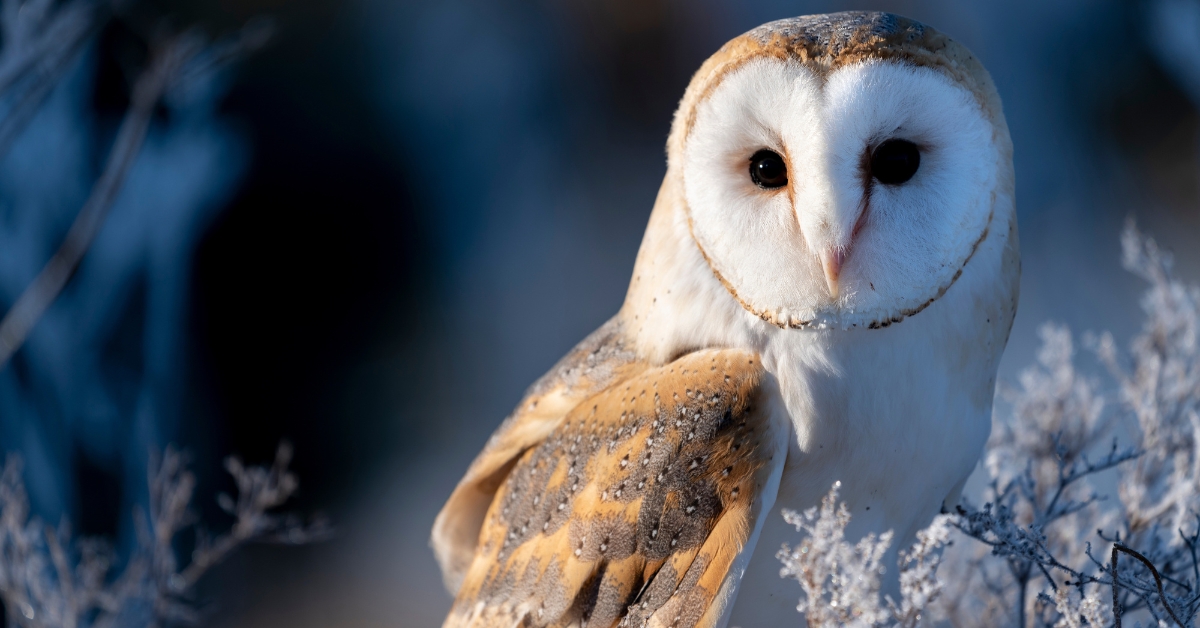
The species’ distinctive facial disk is white, framed by a brown heart-shaped rim in which two dark eyes sit that are hard to ignore. Measuring about 40 cm in length and with a wingspan just under a meter, the Barn Owl is a medium-sized raptor.
Capable of nesting up to 1,500 m above sea level, the species is not at all present in our main ranges, namely the Alps, the Pyrenees, and the Massif Central.
The Barn Owl does not build a nest and instead finds, starting in February, a site that is secure enough to raise its young (such as a church steeple…)
Remarkably, this bird can have a second clutch in the same year, provided abundant food is available. It even, but far less commonly, may have a third clutch.
With an average of about 6 eggs per clutch and a gap of roughly 3 months between hatching and fledging, years with three broods must be exhausting for the pairs that undertake the effort!
Barn Owl Traits
Like all birds of prey, Barn Owls regurgitate pellets (two per day) made up of everything they cannot digest. These pellets are incredibly effective tools for understanding what these animals eat. They therefore form the subject of both studies and educational workshops that you might be able to join!
We now clearly know what the Barn Owl of church steeples consumes, regardless of the habitat it frequents: from meadows to cities, and moors alike.
The voles represent the largest portion of its diet. This places the Barn Owl squarely among the agricultural helpers… especially since its second-favorite prey is another agricultural ally: the shrew.
Mice and voles also regularly fall prey to its talons, which is less common for reptiles, frogs, and other large insects.
Threats facing the Barn Owl
Even though this raptor has a decent reproductive rate—as noted above—it still faces numerous threats. Consider them if we want to secure a future for the Barn Owl.
Vehicle Collisions
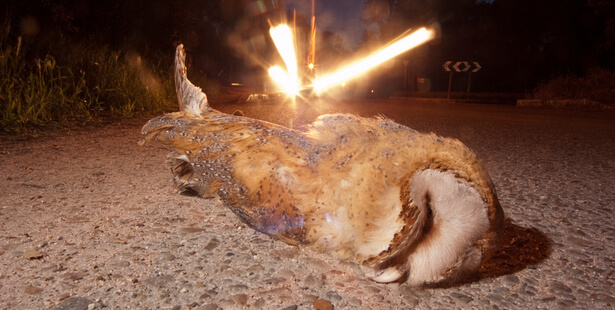
This is the leading cause of mortality for these nocturnal birds. In fact, road collisions account for about half of the species’ mortality rate!
Building Renovation
There is, by far, not enough consideration of biodiversity when talking about the built environment. The builders and project sponsors often rely on associations to avoid backlash, but there is a long way to go before seeking expert input from planning and engineering teams becomes standard practice…
Buildings are closed more and more, especially for energy reasons, without adequately accounting for the biodiversity loss that results.
Chemicals
Barn Owls are part of a food chain in which they play a key role, particularly given the quantity of prey they ingest.
By consuming prey that is poisoned, or carrying chemical residues, owls accumulate these substances in their bodies. Over years of such exposure, issues like cancer, infertility, energy deficits, or genetic degeneration become serious concerns.
How to Help Barn Owls
Know better to protect better… This holds true for all forms of life, both animal and plant. If we don’t understand how a species works, how can we save it?
Walking down a street and hearing the Barn Owl’s distinctive cry as you point it out to passersby already raises awareness among our fellow citizens that the species is present.
Beyond these everyday acts that can make a real difference, you can also submit presence reports to nature protection organizations. They centralize certain data of this kind (some also resell this data to fund their work). You can, for example, reach out to your local wildlife rescue or conservation group.