
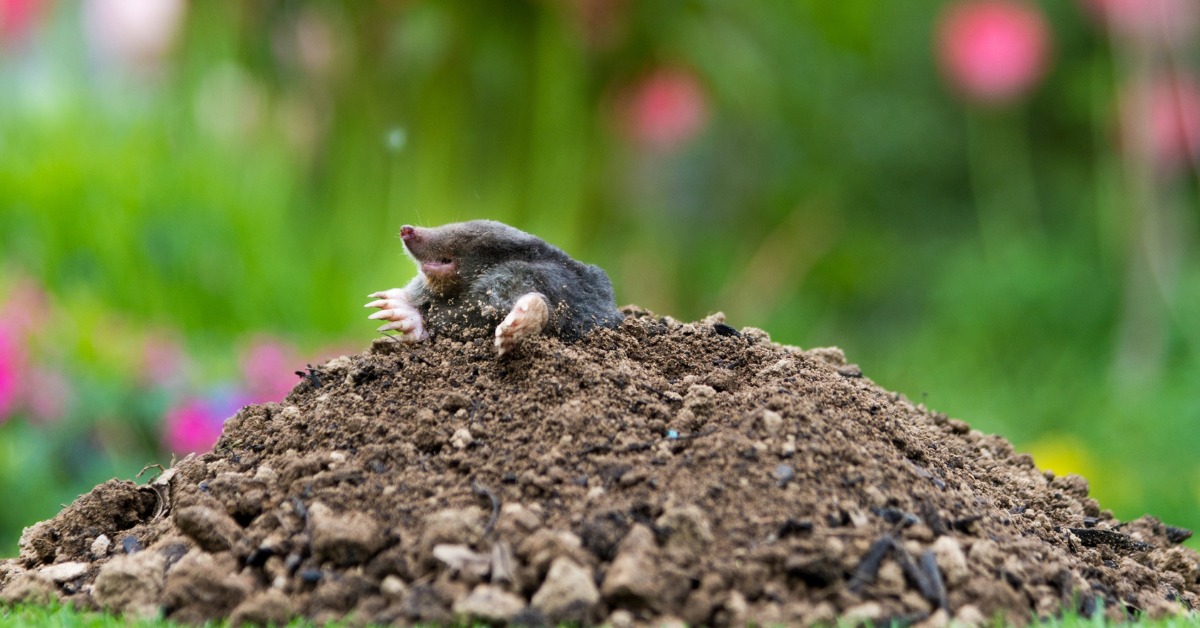
If you’re looking for an anti-mole plant, you’ve come to the right place. Rather than trying, often futilely, to kill them, repelling them is certainly the most effective solution if moles are bothering your garden.
Is the mole harmful to the garden?
The only real drawback to having a mole in your garden is obviously the mounds it forms as it tunnels through the soil. That doesn’t justify turning yourself into Versailles’ mole catcher at the first mole you see. Admittedly, it’s not trivial, but you should understand that beyond that, the mole is actually very good news.
On the one hand, a bit like the hedgehog, it tells you that your soil is healthy. On the other hand it can rid you of a good number of insects because, even if it mainly feeds on earthworms, it doesn’t hesitate to prey on other living creatures in your soil. But the mole also aerates your soil in depth thanks to the tunnels it digs.
It yields you well-aerated soil… Don’t hesitate to take the soil it produces and put it in your containers!
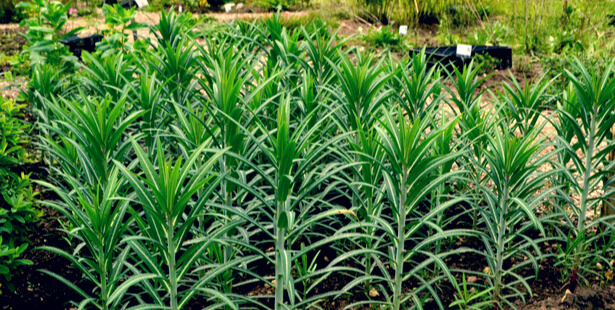
A mole-fighting plant: caper spurge
The champion when it comes to anti-mole plants is certainly the caper spurge (Euphorbia lathyris), which, besides being effective, is particularly easy to grow.
However, to put things in context, the caper spurge is not repellent by itself, it’s one of those features: the latex it produces. This latex is also irritating to humans, so handle with care when using it.
The caper spurge is also relatively invasive, which warrants careful consideration of its placement. Perhaps in a separate bed to avoid crossing paths while you weed?
Anyway, once you have enough, put on gloves and break off stems of caper spurge that you will then place directly into the mole tunnels. Disturbed – that’s putting it mildly – the moles will go looking for another place to settle.
Black elderberry: a complementary natural solution
Black elderberry is a bit magical given all the uses one can make of it.
But it isn’t a plant to repel moles on its own; you actually make a purin using its leaves and pour this purin, diluted to 10%, directly into the mole tunnels, which the moles will not tolerate and will retreat.
Other plants reputed to repel moles
Other plants are regularly cited as natural mole repellents. Their effectiveness varies, however, depending on garden size, the number of moles present, and the density of plantings.
The imperial fritillary
The imperial fritillary (Fritillaria imperialis) is reputed to emit an odor that moles do not much enjoy. Its advantage: it also provides a spectacular spring bloom.
Incarvillea
The Incarvillea (Incarvillea delavayi) is also known for its repellent properties. This perennial with decorative flowers can be planted in borders or near sensitive areas of the garden.
Castor bean: a plant to avoid with children and pets
Castor bean is sometimes listed among mole-repellent plants. But caution: this plant is extremely toxic, especially its seeds. Cultivation is not recommended in gardens frequented by children or pets.
How to naturally limit moles in the garden
Repellent plants can be helpful, but they rarely work alone. To durably reduce moles, it’s better to combine several gentle methods.
Regular vibrations in the soil, frequent mowing of the lawn, or installing underground barriers around the vegetable garden can also reduce their presence.

This guide aims to present the most useful insects, birds, mammals, reptiles and amphibians for the garden, to fight pests, to improve soil, to create a particular ecosystem, to restore balance, etc.
Discover more on Cultura.com