
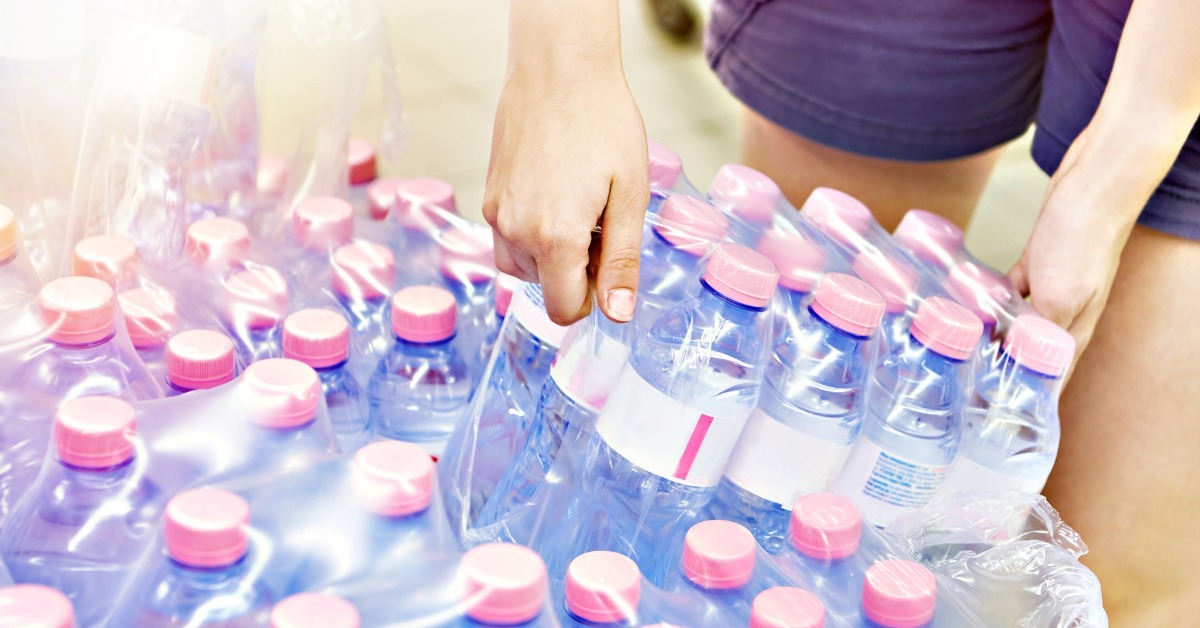
The lack of effort by large-scale retailers to reduce the use of plastic packaging is among the most alarming issues today.
Plastic Bottles Are Everywhere
Despite the targets set by France’s Climate and Resilience Law and the AGEC (Anti-Waste and Circular Economy) law, grocery stores struggle to meet their commitments, still overwhelmingly favoring single-use plastic and relegating eco-friendly alternatives to a secondary position. This is the finding of the joint investigation conducted by Que Choisir Ensemble and No Plastic In My Sea.
The first issue raised concerns the ubiquity of plastic bottles, which account for nearly 40% of single-use packaging in large supermarkets. Despite the legal obligation to reduce the presence of these bottles by 50% by 2030, virtually all chains, with Biocoop as the notable exception, have implemented no plan to reach this objective, and sales continue to rise.
Data Is Nearly Nonexistent
Moreover, the bulk offer has undergone a significant decline in conventional stores, its share dropping from 57% in 2023 to 38% in 2026. In contrast, overpackaging is surging, as 91% of organic fruits and vegetables are sold packaged through traditional supply chains, while “fresh-cut” products wrapped in plastic proliferate, fueling a disposable economy. This joint investigation also highlights the failure of the 20% reduction target for plastic packaging set by Decree 3R.
Data provided by retailers, often patchy or nonexistent, reveal a lack of willingness to tackle the most polluting shelves (beverages and food) and that reuse remains in its infancy (touching at most 10% of stores depending on the chain). To address these shortcomings, the associations are issuing a series of urgent demands: a quantified plan to phase out plastics by 2040 from retailers, for the government to enshrine reduction targets, and for eco-organizations to implement stronger incentives to encourage reuse.