
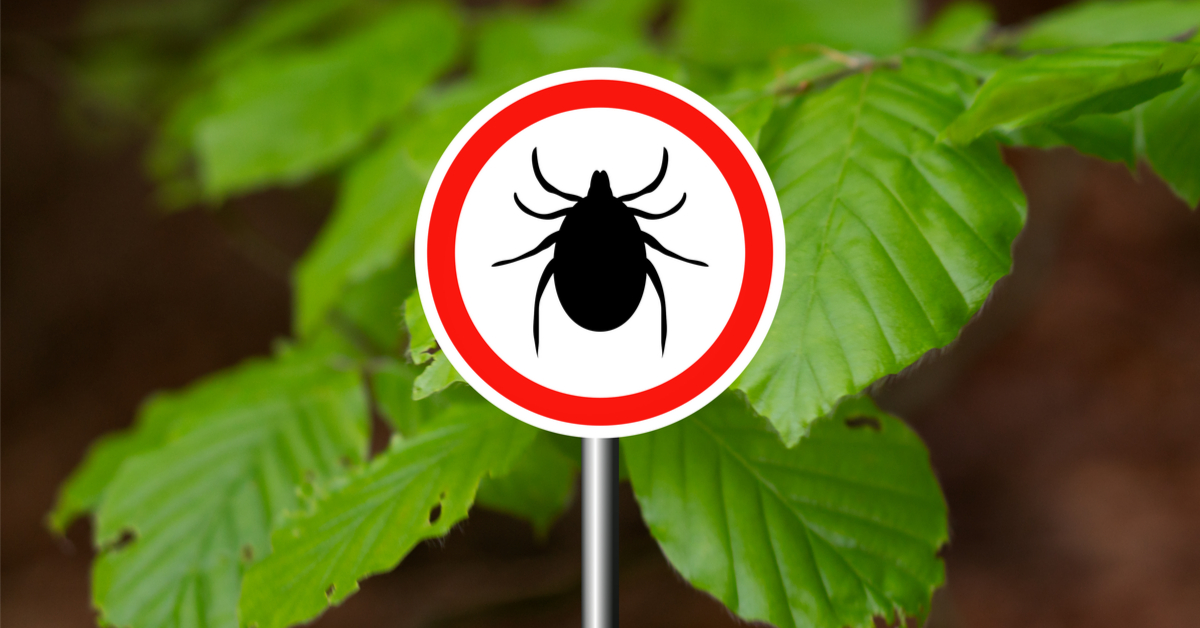
This year, with a milder winter, the tick season began very early and the number of people bitten is rising. Caution is warranted since a tick bite can transmit several infectious diseases to humans, including Lyme disease, also known as Lyme borreliosis, a serious condition.
Be Extremely Vigilant About Ticks
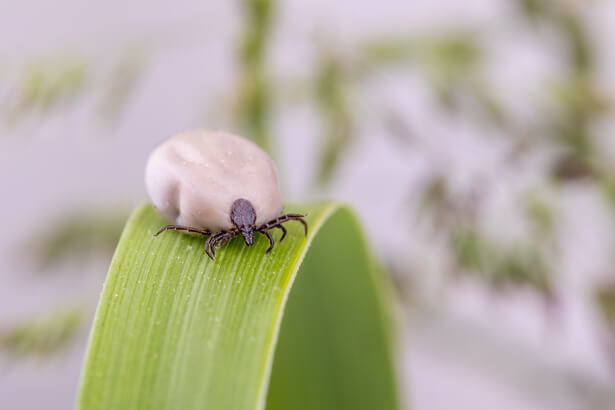
Ticks are arachnids of the parasitic type, that latch on with their mouthparts (head) and suck the blood from their hosts to feed. They are commonly found on animals: livestock but also, of course, the cats and dogs that frequently bring fleas and ticks home from walks.
But humans are not left out and can easily pick them up as well. We may then end up with a small brownish or slightly beige bump usually in skin folds, typically on the lower limbs: the bite is painless and does not itch, but it must be detected quickly because ticks carry infections, the best known being .
Ticks progress through three life stages: as a larva (barely visible to the naked eye) after hatching, then a nymph, and then the adult stage. To molt to the next form, ticks must feed on blood: they locate a host, literally vampirizing it for dozens of hours, then detach and fall to the ground to molt or lay eggs in the case of adult females.
Ticks are found mainly in grassy areas and woods. The most common species, the Ixodes ricinus, is accustomed to damp forests and seeks shelter among leaf litter, ferns, tall grasses and wood piles that it especially loves, where it patiently waits for a prey to bite.
Ticks live mainly on the ground or on low branches, so they climb onto humans and animals via their legs.
In addition to its parasitic nuisance, the tick is hematophagous and a potential vector for diseases. The arachnid is feared because it can carry two pathogens: the bacterium causing Lyme borreliosis and the virus responsible for tick-borne encephalitis (TBE). For these reasons, it is wise to stay very vigilant after a forest walk.
The Prevention Steps Against Ticks
On any forest outing, protect your arms and legs by wearing light-colored, long-sleeved clothing that covers the legs, but also your arms and neck, along with closed-toe shoes.
Avoid lying directly on the ground even if you need to rest: spread a blanket or mat and avoid contact with vegetation. There are also repellents available.
When you return from your walk, inspect your body thoroughly because tick bites, being painless, can go unnoticed. Ticks typically favor warm, moist areas like the crook of the knee, the armpits, and other skin folds.
Essential Oils to Repel Ticks
Commercial repellents contain DEET, but we now know to beware of this molecule. Several recent studies (2019) have shown that certain essential oils provide good results in quickly deterring ticks from the clothing.
Case in point: essential oils of oregano and spearmint (Mentha spicata), rosemary essential oil, as well as a blend of essential oils of Eucalyptus globulus and ginger, notably for the tick Rhipicephalus bursa.
In Case of a Bite, Use a Tick Remover
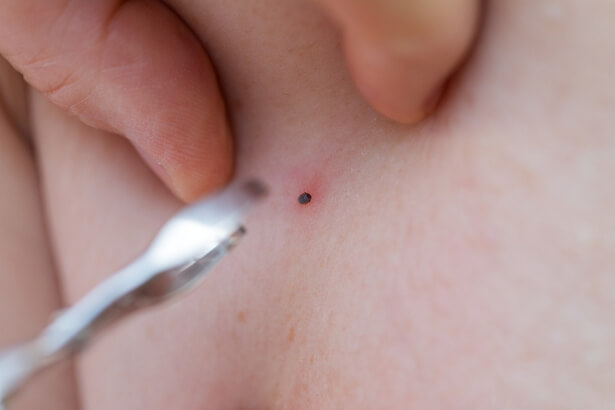
If you discover a tick bite, act quickly with a tick remover purchased at a pharmacy or with a pair of tweezers: grab the tick as close to the skin as possible and pull it out by twisting it counterclockwise, making sure no part of the tick remains embedded.
Contrary to common belief, it is not advised to sedate the tick before removal: do not apply products such as alcohol before the procedure as this can raise the risk of infection. Monitor the bite area for a month for redness that could indicate an infection.
Watch for Lyme Disease
The best known zoonosis transmitted by ticks is Lyme disease, and its consequences, if not diagnosed and treated, can be dangerous. In the majority of cases, actual infection occurs after the tick has fed for at least 24 hours: if it has been attached for less than 6 hours, the risk is almost zero.
The most characteristic symptom of this disease is erythema migrans appearing in the weeks following the bite and which can develop over several years. This skin rash, roughly three to five centimeters in diameter, bright red with a white center, is painless and expands centrifugally. Fever, pain in large joints, headaches follow and can evolve into neurological problems, meningitis, or even facial palsy, and in some cases, heart problems (fainting, palpitations…).
Timely antibiotic treatment is needed for a quick recovery; otherwise all these symptoms are likely to gradually worsen, becoming chronic even years after the infection, which can prove fatal for the infected person.
- https://doi.org/10.1007/s10493-019-00422-z
- https://doi.org/10.1007/s10493-019-00373-5
- https://www.ncbi.nlm.nih.gov/pmc/articles/PMC6885137/