
Half of the species identified as threatened in France escape any legal protection. This troubling reality, revealed by a new AXA Climate study published on May 6, 2026, runs deep questions about the effectiveness of our legal toolkit in the face of biodiversity erosion. Only 43% of species identified as threatened under the International Union for Conservation of Nature (IUCN) scientific criteria receive regulatory protection.
This systematic analysis reveals a persistent and worrying gap between clearly established scientific urgency and the timid French legal response. This deficit is mainly due to the administrative slowness of processes for revising lists of protected species, which often take several years to incorporate new scientific data. As Rémy Poncet, head of Innovation at AXA Climate, explains: « We remain somewhat surprised by the scale of the figure. It reflects scientific knowledge that evolves infinitely faster than the legal framework. »
Worrisome Geographical and Taxonomic Disparities
The AXA Climate study reveals stark territorial inequalities in protecting threatened species. Metropolitan France and Corsica, which host 1,445 threatened species, legally protect only 34%, ranking third-worst among the analyzed territories. This uneven landscape stems from conservation policies historically focused on flagship species rather than a holistic ecosystem-based approach. Overseas territories, benefiting from specific regulations and a more recent awareness of biodiversity issues, show noticeably higher protection rates.
Even more telling is the taxonomic analysis, which reveals an implicit hierarchy of life that mirrors our cultural and scientific biases. Vertebrates enjoy near-complete coverage: 95% of threatened birds, reptiles, and mammals are protected, while amphibians reach 88% coverage. In contrast, invertebrates suffer glaring neglect, with only 6% of threatened insects protected by law. This asymmetry reflects a lack of understanding of the ecosystem services provided by these discreet yet essential species.
The Pollinator Blind Spot: An Underestimated Systemic Risk
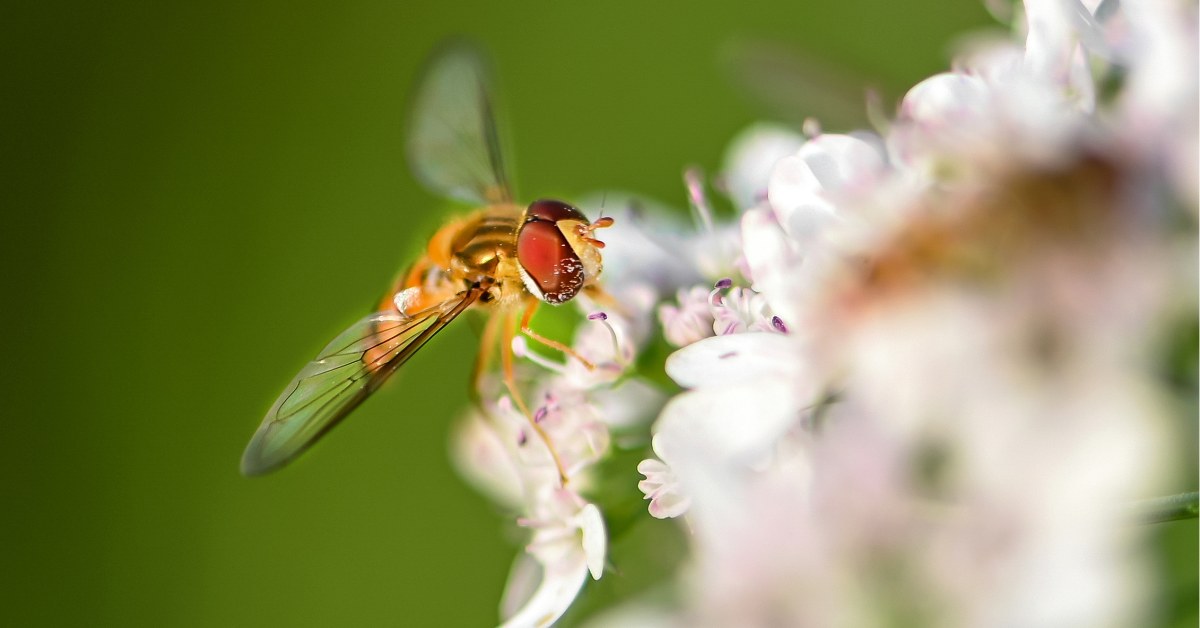
This protection asymmetry shows a troubling legal blind spot regarding fundamental ecological stakes. The syrphid flies––pollinating hoverflies often overlooked by the public––perfectly illustrate this crucial issue. As the second group of pollinators after bees, these insects contribute to the pollination of about 72% of the world’s food crops, with an economic value estimated at €275 billion ($300 billion) annually.
Yet, 37% of the 890 European syrphid species are currently threatened with extinction, and more than a quarter are already feeling the devastating effects of habitat changes linked to climate change. This situation perfectly illustrates what Antoine Denoix, CEO of AXA Climate, calls a “blind spot” in our conservation policies: A major challenge is to convince businesses to care about biodiversity beyond merely planting trees.
The Interdependence of Ecosystems: A Legal Approach to Rethink
The study masterfully highlights the complex interdependence of ecosystems, fundamentally challenging France’s fragmented environmental law approach. The European beaver, the first protected mammal in France in 1909, demonstrates the cascading benefits of conserving a single species. Its strict protection has helped maintain wetlands that support pollinators, creating a virtuous ecological loop whose benefits ripple throughout the ecosystem.
This interconnection underscores the limits of a legal framework that targets primarily charismatic species. France has traditionally prioritized the protection of visible and symbolic species at the expense of less flashy but ecologically crucial organisms. As the AXA Climate research team aptly notes: Many sectors, including agriculture, rely on ecosystem functions sustained by species neglected by current regulation.
The Urgency of a Legislative Overhaul
This study arrives at a moment when France, at the Montreal COP15 biodiversity conference, solemnly committed to protecting 30% of its land and sea by 2030. This ambitious target seems difficult to achieve without a deep and courageous rewrite of the French environmental statute. The data revealed by this study underscore the urgency of this transformation.
The fundamental challenge lies in the legislature’s ability to intelligently anticipate scientific evolution rather than passively endure it. Protecting threatened species can no longer be reactive and fragmented; it must imperatively adopt a forward-looking view that encompasses all ecosystem services in their complexity. As the AXA Climate study bluntly summarizes: The current legislative framework remains insufficient in the face of the scale of ecological risks. This glaring inadequacy calls into question not only the effectiveness of our public environmental policies but also our collective ability to safeguard the biological foundations of our economy and society.