If you’re lucky enough to have a garden or a patch of land, you love gardening, and you also plan to grow your own fruits and vegetables in an organic vegetable garden, then don’t forget the flowers. They are valuable allies against pests, and they also attract pollinators who will protect your harvest. Here are our tips for mastering this plant partnership.
Alternating flowers and vegetables: a well-known permaculture technique in the vegetable garden
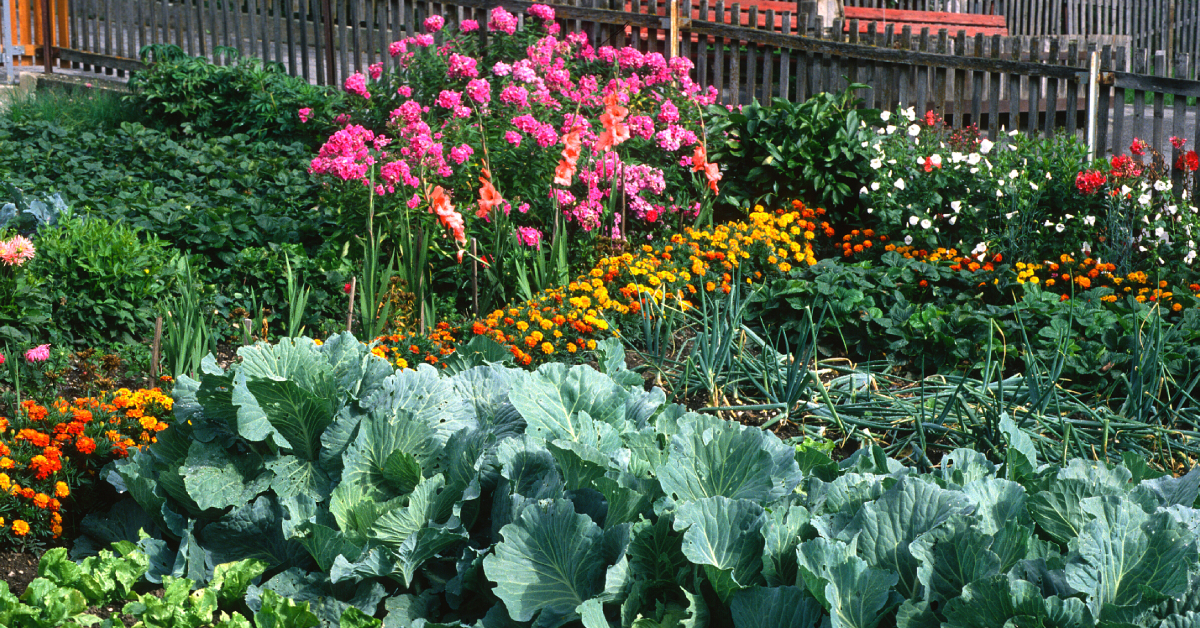
Eco-friendly gardening enthusiasts have used it for centuries, because it has proven its effectiveness: the alternation of flowers and vegetables in the garden. A technique that helps improve yields by naturally protecting crops, while giving the vegetable garden a colorful touch that’s far from unpleasant.
But beyond aesthetics, the value of flowers lies in their interaction with biodiversity: some attract natural allies, others repel pests. By choosing the right flowers, you can achieve a protective effect, which obviously reduces the need for phytosanitary products. For health and the environment, there’s nothing better, because nature does all the work!
That said, you still need to choose your varieties according to the desired effect. Some companion flowers prove more formidable than others against intruders.
Flowers to plant according to the vegetables you’re growing
While there are real treatises on plant companionship that enthusiasts can browse through, here is a selection of essential flowers tailored to the vegetables in your garden.
For tomato lovers who crave authentic flavors, plant marigolds (Tagetes) between the rows to repel soil-borne pests, especially nematodes, while keeping whiteflies away.
If you’re planting potatoes, the main challenge remains the Colorado potato beetle, a beetle that devours the leaves. It can be effectively repelled by planting flax, but also castor bean along the border of cultivation to create a protective barrier.
Fans of peppers and hot peppers will opt for borage. This nectar-producing plant notably repels slugs and improves pollination by attracting bees and bumblebees. Not to mention that borage is an edible plant, used in many Southern French recipes for its iodine-like taste.
Achillea millefolium, for its part, strengthens the overall health of the garden by attracting ladybugs. The “ladybird,” besides being pretty and lucky, is a predator fond of aphids, which it will dine on, thus protecting your young shoots.
However, when planting, you should still leave a little space between the plants to avoid crowding your vegetables’ roots and to ensure good air circulation.