
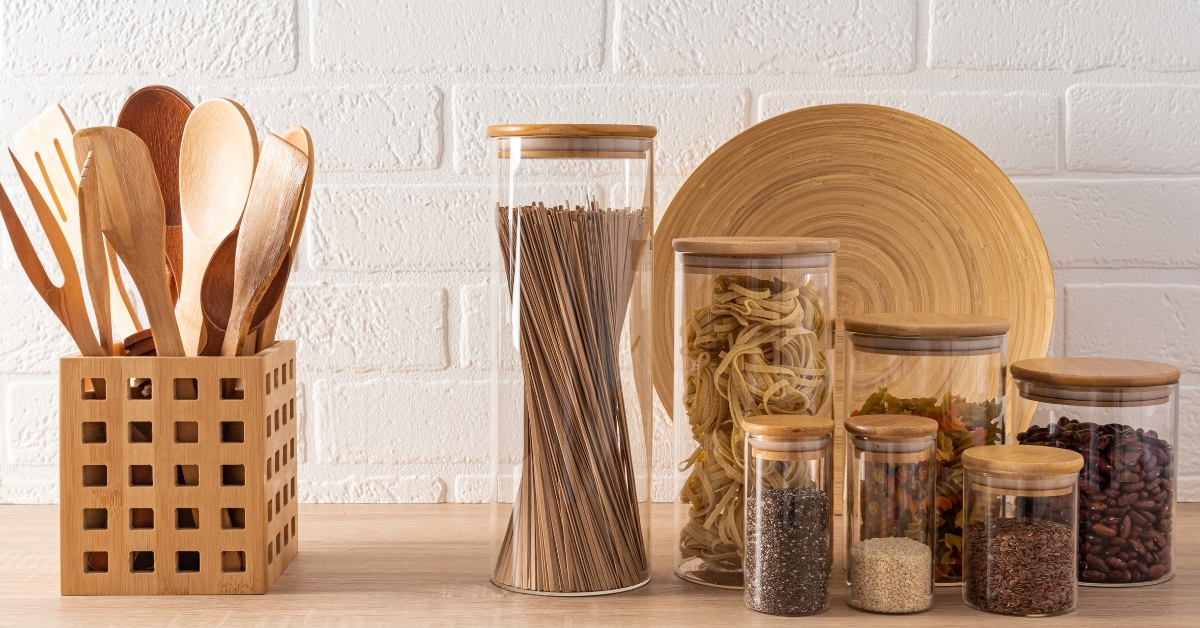
Dishware, packaging, bioplastics… In the face of the tsunami of plastic waste, China is turning to a plant-based alternative: bamboo.
Bamboo: A Public Policy in China
Confronted with the environmental crisis of plastic waste, China has embarked on a strategic transformation across every sector of its industry. Its secret weapon: the famed bamboo, a genuine industrial alternative that goes far beyond being merely the panda’s favorite snack… Once confined to traditional crafts or construction, this fast-growing plant is redefining its status to become a credible successor to fossil plastics. A promising path in the global effort to curb microplastic accumulation.
To carry this ambition, the Chinese state has even structured a formal public policy called “Bamboo Instead of Plastic.” Launched in 2023, this three-year action plan aims to build a complete industrial chain, spanning forest management to the manufacture of consumer products. With a quarter of the world’s bamboo forests on its soil, China has the capacity to turn this natural resource into an economic pillar already worth tens of billions of dollars.
Exceptional Physical Properties
This transition is already taking shape on the ground through pilot cities like Yibin or Anji County. Local authorities are promoting the rapid replacement of disposable items (hotel dishware, packaging) with bamboo substitutes. The aim is to prove that moving from prototype to everyday use is feasible by integrating bamboo into a variety of application scenarios. Even in automotive interior design!
Beyond its fast growth, bamboo’s appeal lies notably in its exceptional physical properties: mechanical strength, biodegradability, and rapid renewability. Unlike some current bioplastics that remain fragile or costly, bamboo offers a rare versatility. It can even be incorporated into sophisticated composite materials capable of technically rivaling petroleum-based polymers.
Beware the Miracle Solution
China’s scientific research has meanwhile taken another step forward with the invention of the “BM-plastic”, a molecular bioplastic derived from bamboo cellulose. This high-performance material outperforms the strength of some plastics and aluminum, while being recyclable and biodegradable in fifty days. Its expected production cost and its low energy footprint during manufacturing make it a serious contender for heavy industrial uses, such as electronics or construction.
Nevertheless, bamboo is not a miracle solution either. To be truly eco-friendly, its production must notably avoid the traps of intensive monoculture and polluting chemical additives. Above all, the transition to bamboo should not serve as an alibi for maintaining a throw-away model. Reducing plastic pollution starts primarily by consuming and discarding less.