
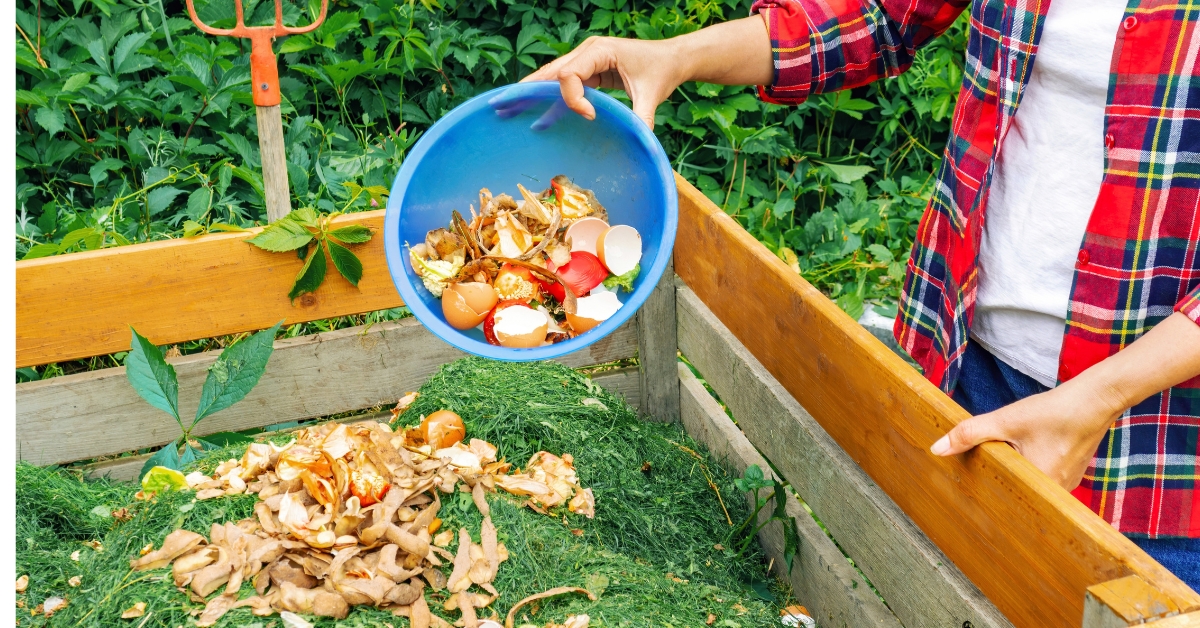
With spring returning and warmer temperatures, composting activity picks up—and it sometimes attracts guests we’d rather do without: fruit flies. These tiny insects can quickly swarm around the bin, then slip into the kitchen or indoor plants. Fortunately, a very simple natural trick helps limit the invasion without any chemical insecticides.
Discover why this phenomenon occurs and how to make a powerful, 100% eco-friendly trap to restore healthy, balanced composting.
Why do fruit flies invade compost in spring?
In spring, rising temperatures speed up the decomposition of organic matter in compost bins. Fruit peels, sugary leftovers, and moisture create a environment particularly favorable to drosophila (vinegar flies) and soil gnats (sciarids).
A natural phenomenon that signals an imbalance
This phenomenon is completely normal: a living compost pile works, heats up, and turns waste into fertile matter. The problem arises when the bin’s balance goes off. Too many wet scraps, too few dry materials, a poorly closed lid, or fruit residues left exposed on the surface can be enough to attract a real colony.
Risk of spreading inside the home
Fruit flies don’t always stay outside. They take advantage of any opening to enter the house, especially the kitchen, and may then shelter in the moist soil of indoor plants. Once established, they become much harder to dislodge and can disrupt daily life.
ConsoGlobe expert’s take: Don’t confuse fruit flies with fungus gnats (sciarids) that lay eggs in plant roots. If the natural treatment remains similar, indoor causes are often linked to overwatering.
The cider vinegar trap against fruit flies
No need to rush to chemical insecticides harmful to the environment and garden biodiversity. To quickly reduce their presence, there is a simple, affordable, and 100% biodegradable home remedy.
The recipe for the fruit-fly trap
What you’ll need:
- A small saucer or a shallow bowl
- A little warm water
- Two tablespoons apple cider vinegar
- A few drops of eco-friendly dish soap
Preparation steps:
Simply pour the warm water into the dish, add the apple cider vinegar, and then a few drops of dish soap. Stir gently, taking care not to foam too much, then place the dish near the infested area.
Why does this grandma’s trick work?
Apple cider vinegar releases a fermentation odor that irresistibly attracts fruit flies, much like overripe fruit or decomposing scraps. The insects approach the dish and settle on the surface of the liquid.
The dish soap plays a crucial physical role: it reduces the surface tension of the water. Normally, a tiny insect can walk on the water’s surface. But with a few drops of soap, that resistance disappears instantly: the fruit flies sink and drown.
How to use it: where to place the trap for maximum effectiveness?
To make the trap truly useful, place the dish right at the base of the composter, near the bin’s opening, or on the rim if you have an apartment vermicomposter. The goal is to attract the fruit flies before they lay eggs in fresh waste.
If the insects have already invaded your indoors, you can place a dish near the trash, the fruit bowl, or the affected houseplants.
Warning: As water evaporates with sun, heat, or wind, refresh the mixture every two to three days. In case of heavy infestation, empty the dish daily and prepare a new solution until the colony noticeably diminishes. Keep it out of reach of children and pets.
Rebalancing the compost to prevent a return of insects
The vinegar trap helps quickly reduce the adult fruit-fly population, but it doesn’t address the root cause of the problem. To prevent another invasion, you must rebalance what you add to the bin.
The golden rule: always cover wet materials
Fruit flies love wet, sugary, and poorly covered materials. After adding fruit or vegetable scraps, immediately cover them with dry, carbon-rich materials:
- Plain, unprinted cardboard torn into pieces
- Cellulose egg cartons cut into pieces
- Dry leaves or fine twigs
- Chips or sawdust from untreated wood
This dry layer acts as a physical barrier: it limits odor emissions, absorbs excess moisture, and makes the compost much less attractive to egg-laying insects. It also improves overall aeration of the bin, promoting healthy aerobic decomposition.
Everyday preventive habits
- Get the proportions right: always alternate green waste (wet, nitrogen-rich like coffee grounds or greens) with brown materials (dry and carbon-rich).
- Aerate the bin: make a habit of regularly turning the compost with a pitchfork or aeration rod, especially in spring and summer. This agitation breaks up nests and prevents ammonia pockets.
- Bury attractive waste: avoid leaving spoiled fruit or very sugary scraps on the surface. Scrape the compost to bury them toward the center of the bin.
Risk of spreading inside the house
Fruit flies don’t always stay outside. They take advantage of the slightest opening to enter the home, especially the kitchen, and can then shelter in the moist soil of indoor plants. Once established, they’re much harder to dislodge. If the invasion has already crossed your doorstep, check out our specific, natural solutions to fight fruit flies in your home and quickly restore a healthy indoor space.
Bonus: zero-waste alternative to repel fruit flies
Looking for a strictly preventive and curative solution without using a water dish? Consider baking soda or essential oils.
With a light spray around the lid of the composter, peppermint essential oil or rose-scented geranium (a few drops diluted in water with a little black soap) acts as an excellent natural repellent. It’s a perfect tip for embracing a zero-waste approach while protecting your garden’s ecosystem.