
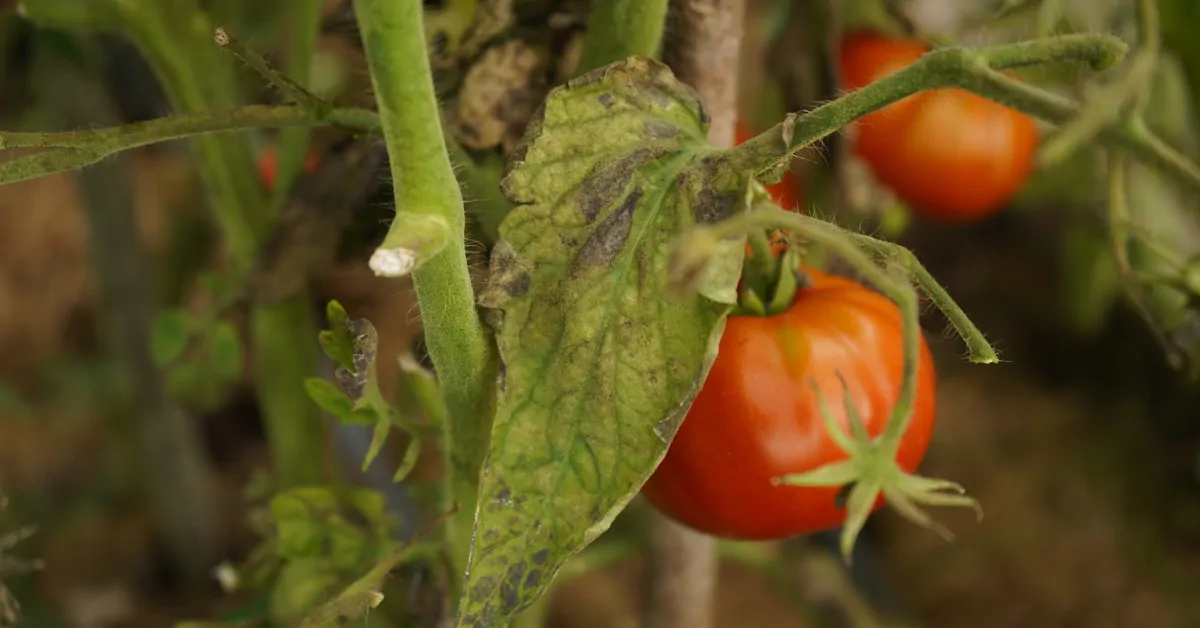
With the right information, growing tomatoes isn’t particularly complicated. However, it’s essential to know your main enemies as harvest approaches: late blight, early blight, blossom-end rot, gray mold, cracking, and powdery mildew.
Fighting and Preventing Tomato Diseases: Late Blight
Some outbreaks are so fast that there’s not much you can do. That’s why staying informed remains the best way to prevent tomato diseases, especially for the next season.
Tomato Late Blight
Late blight is arguably the most dreaded tomato disease. It tends to appear when the weather is cool, humid, and rainy.
Some years, all plants can wither within just a few days.
Late Blight Symptoms
The appearance of symptoms can be rapid. It is therefore important to recognize them quickly.
Translucent spots appear on the leaves. They are quickly followed by black necrosis, often accompanied by wilting. When the central vein blackens, the outbreak is already far advanced.
Ways to Fight Late Blight
Late blight on tomatoes is caused by Phytophthora infestans, an oomycete. This microorganism loves water and moisture. It can survive in plant debris and take advantage of favorable conditions to reappear.
The first reflex is to systematically remove all contaminated leaves. Do not put them in compost unless the pile reaches sufficiently high temperatures. Also avoid leaving them in the garden, as they can become contamination sources.
Clean your tools after pruning. Do not move from a diseased plant to a healthy one with the same pruner without disinfecting it.
As a preventive measure, you can also opt for tomato plants that are more resistant or tolerant to diseases.
Tomato Early Blight
Early blight is a fungal disease. It thrives at temperatures between 18 and 25 °C and can develop with relatively low humidity. Simple dew can sometimes be enough.
Early Blight Symptoms
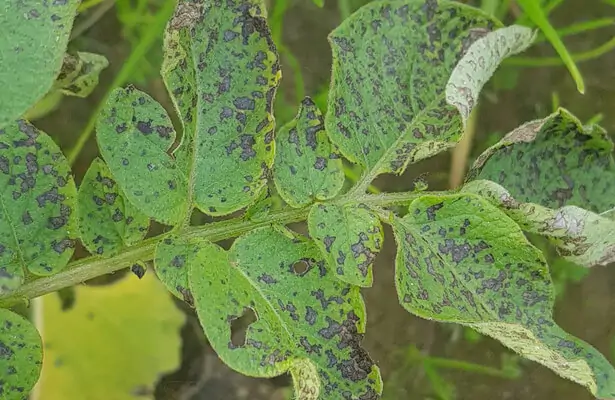
Often confused with late blight in its early stages, early blight is characterized by brown spots on the leaves. They can be surrounded by a yellow halo and form concentric rings.
Flowers, stems, and even green fruits can also be affected. The lesions take on a gray-brown color.
Early blight infections are sometimes accompanied by other fungi. This speeds up the decline of the plants.
Ways to Fight Early Blight
Early blight is best fought with prevention. Like late blight, minimize the spread of the fungus. Wash your hands, clean tools, don’t compost infected waste, and remove infected parts.
Also prefer varieties known to be more tolerant when your garden is regularly affected.
If you detect the disease, promptly remove the affected leaves. A preventative application of horsetail extract can help plants resist better. Bordeaux mixture can also be used within the limits of the product, especially before a rainy period.
If your plants are affected but you can still harvest fruits, pick them carefully. Remove infected fruits. Place the remaining ones in a crate, on newspaper, spaced apart.
Blossom-End Rot or “Black End” Rot: a False Tomato Disease
Blossom-end rot, often called “black end rot,” is sometimes mistaken for early blight. Yet it appears at the fruit end, whereas early blight often affects other areas.
Blossom-End Rot Symptoms
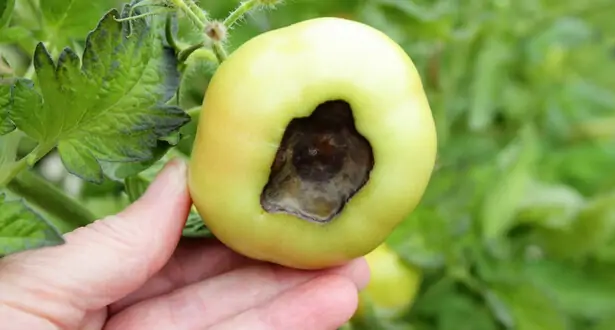
A black spot appears at the bottom of the fruit, no matter what stage of ripening it’s in. This spot is dark, often soft to the touch, and may crack.
A fruit cut in half can also show internal necrosis. The damage can be more extensive than the visible exterior spot suggests.
Ways to Fight Blossom-End Rot
Blossom-end rot is not a contagious disease. It does not directly endanger the tomato plant, but it can compromise part of the harvest.
The phenomenon is linked to a poor transport of calcium to the fruits. This often happens when watering is irregular, when the soil dries out, or when the roots are stressed.
The priority is to stabilize soil moisture. Water regularly, without excess, and generously mulch around the plants. Also avoid excessive nitrogen, which favors foliage growth over fruit development.
Crushed eggshells can slowly enrich the soil with calcium. However, they do not act as an immediate remedy. To limit blossom-end rot, keeping irrigation regular remains the most effective measure.
Tomato Gray Mold (Botrytis)
Gray mold, or botrytis, is caused by the fungus Botrytis cinerea. It isn’t always the most common disease in the home garden, but once it takes hold, it can be very hard to control.
Gray Mold Symptoms
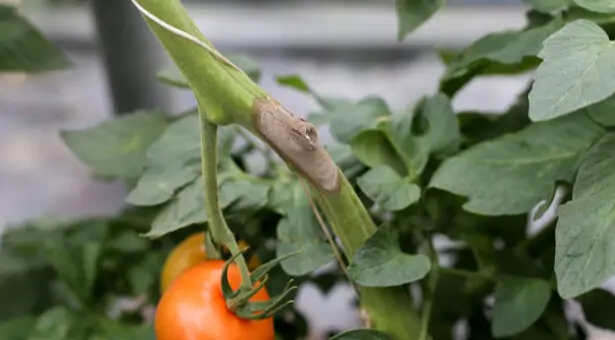
Light brown to beige spots appear on the tomato plant. They can then be covered with a grayish down, characteristic of this disease.
The damaged parts, weakened stems, and poorly ventilated areas are often the first to be affected.
Ways to Fight Gray Mold
This fungus develops more easily in poorly ventilated environments. Greenhouses kept closed too often and plants crowded together promote its appearance.
Respect planting distances. Ventilate greenhouses regularly and avoid letting leaves touch the soil.
If gray mold takes hold, remove infected parts at the first signs. If some plants are too affected, remove them to prevent contamination of others.
Do not leave any plant debris on the ground. Gray mold could develop there and recontaminate healthy plants.
Tomato Cracking
Tomato cracking occurs mainly just before harvest. It isn’t a disease per se. However, the cracks become ideal entry points for fungi.
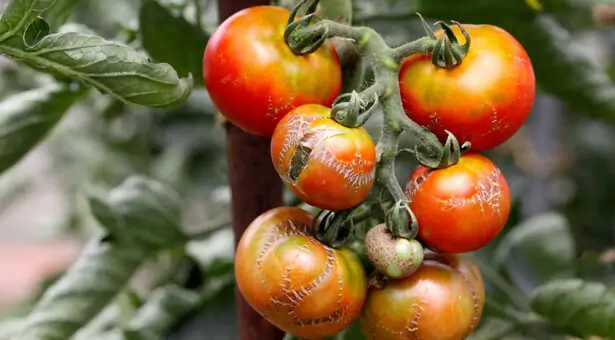
Cracking Symptoms
Cracks of varying depths usually appear near the blossom end. They can also form opposite the fruit.
These cracks can be circular or longitudinal. Some heal with a scar that will have to be removed when consuming.
Ways to Fight Tomato Cracking
Some varieties are more susceptible than others. Old-fashioned, thin-skinned tomatoes, such as Noire de Crimée or Pineapple, can crack more easily.
The phenomenon often appears after a cycle of drought followed by heavy watering. The plant stores a lot of water in its fruits, which can cause them to crack.
Mulch around your plants to maintain more regular moisture around the roots. This reduces the drastic swings between drought and excess water.
Water more regularly, without wetting the leaves. Aim the watering to about 12 inches (30 cm) around the plant, where the absorbing roots develop.
At the start of the season, don’t overwater young plants. This encourages their roots to grow deeper, making them more resilient to summer droughts.
Tomato Powdery Mildew
Powdery mildew is a well-known fungus among gardeners. It mainly affects squash, but it can also touch tomatoes. It remains relatively rare on this crop.
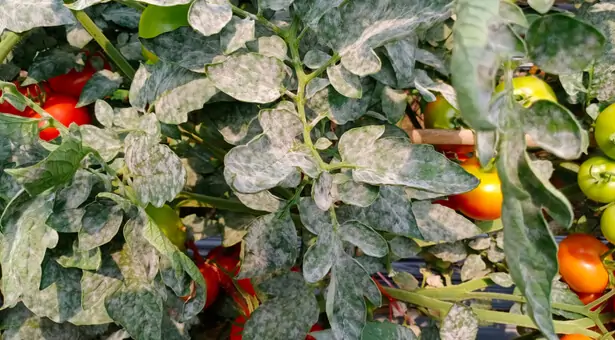
Powdery Mildew Symptoms
Powdery mildew is recognizable by a white, powdery coating on the leaves. The spots widen and can spread rapidly.
Once powdery mildew is established, the leaves begin to dry, then brown.
Ways to Fight Powdery Mildew
The best prevention is to avoid overly crowded plants and excess humidity. Always water at the base and ventilate crops well under cover.
A horsetail decoction can be used preventively, especially if the crops were affected in previous years.
If symptoms appear, promptly remove the infected leaves. Do not leave any plant debris on the ground, as it can carry the disease from one year to the next.
What to remember
- Always water tomatoes at the base, never on the foliage.
- Mulch the soil to limit moisture fluctuations.
- Aerate greenhouses and space plants adequately.
- Remove infected leaves and fruits quickly.
- Avoid putting contaminated debris in household compost.