
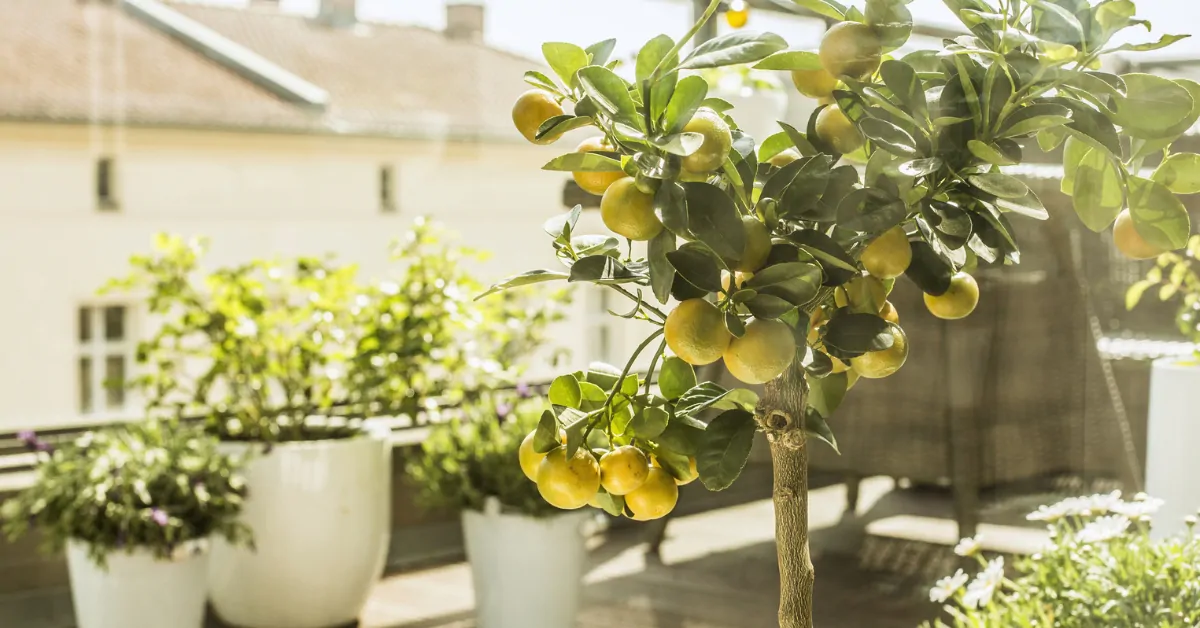
Growing a lemon tree in a pot on your balcony the way you would an orange tree in the garden requires a bit of upfront research: these citrus trees do have their own little quirks. Planting, care, pruning, and winter protection will soon hold no secrets for you.
Tips for planting lemon trees or orange trees, in-ground or in pots
After you’ve germinated your citrus seeds, once they’ve grown to a sufficient size, it’s time to transplant them.
In-ground
Choose a sunny spot for them, not necessarily exposed to sun all day, and preferably sheltered from the wind—especially if you live in a windy area. Locations near a wall are ideal because the heat of the day will be reflected back to the plant at night.
Wait until spring, and when you’re certain the last frost has passed, dig a hole twice the size of the root system.
Water thoroughly at planting and apply a good layer of mulch to prevent the soil from hardening too quickly, which would make root establishment more difficult. You can also optionally add a surface layer of compost.
In a pot
As with in-ground planting, you can’t imagine a lemon tree or orange tree thriving for a long time in a pot unless you find it a sunny, wind-sheltered spot. On balconies, lemon trees and potted orange trees are often invited guests.
Choose the largest pot you can manage and line the bottom with 10‑mm diameter clay balls or gravel. Add a layer of good-quality potting soil, place your lemon tree or citrus plant on top, then backfill with soil to fill the pot completely.
Tamp down firmly after planting and water thoroughly but don’t leave water standing in the saucer.
How to care for your lemon tree or orange tree
Watering
The care for a lemon tree or orange tree is the same whether in a pot or in the ground and centers on one thing above all: watering correctly year-round. Make sure the plant’s roots stay moist without becoming waterlogged.
A mulch, whether in a pot or in-ground, can help you retain moisture more easily and thus promote your plant’s growth.
Fertilizing
In both cases, lemon trees and orange trees are very hungry for fertilizer and typically need feeding about every two weeks during the growing season.
Repotting
Plan to repot roughly every three years, using a pot that is at least one third larger in volume. Do repotting in February, gently loosening the root ball.
Pruning
Wait until the end of winter dormancy to ruthlessly remove branches that bother you. Pruning a lemon tree or an orange tree is done at this time of year because it helps ramify the young wood and keeps your citrus tree compact.
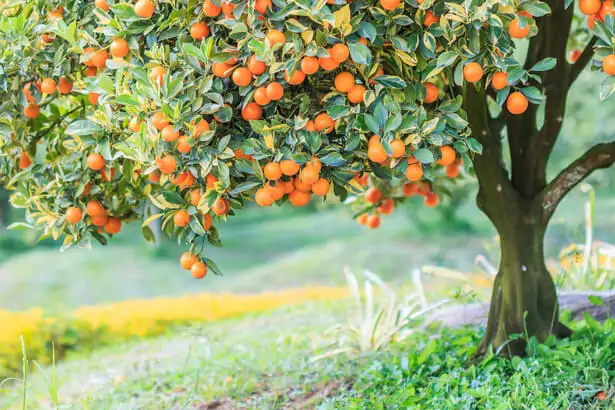
Preparing winter for your lemon tree or orange tree
In-ground
If you’re in a region that’s very cold in the mountains or in the north of the country, you’ve taken a risk planting a citrus tree in the ground, as they are sensitive there.
Nevertheless, you can protect it as much as possible by, for example, covering it with straw up to the height of the leaves and then surrounding it with a winter protective veil you can buy commercially.
If the winter is dry, also make sure it always has some water to drink, but don’t overdo it; in frost, that water can actually “burn” its roots.
In a pot
Potted plants face far tougher conditions than those in-ground once the bad season arrives. You’ll therefore need to place your lemon tree or orange tree indoors in a cool, bright spot.
Also respect its vegetative rest or winter dormancy cycle by watering sparingly, perhaps about once a month. This will be your last practical step to help your citrus during the season: insert your finger into the soil and water only when the entire depth of the soil is dry.