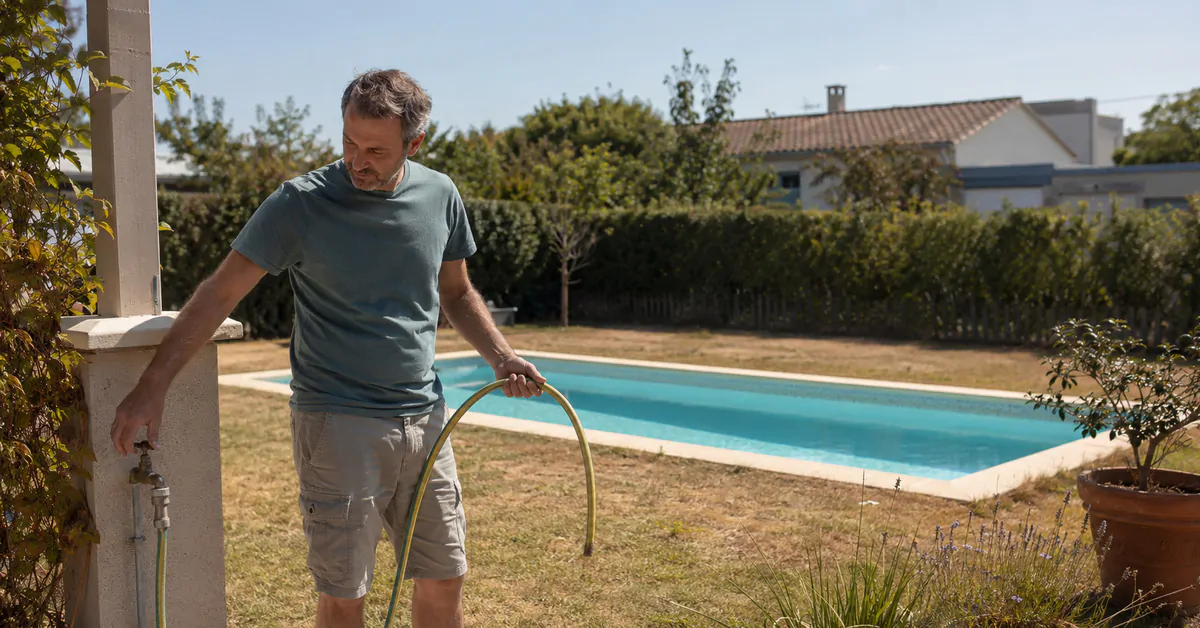
These measures illustrate growing pressure on the water resource, intensified by heat waves that are becoming more frequent.
Stricter water restrictions to protect the water supply
In July 2026, many people in France discovered that filling their swimming pool is no longer automatically allowed. In several departments, the prefects have tightened water-use restrictions to preserve reserves intended for drinking water supply, natural habitats and activities deemed priority. The limits vary from one territory to another depending on river conditions, groundwater levels and weather forecasts.
More than half of groundwater monitoring points show levels below seasonal norms. In several dozen departments, authorities have thus been forced to implement alert or crisis measures to safeguard the most fragile resources. In Doubs, all alert zones were raised to reinforced alert to limit withdrawals. In Ardèche, authorities also tightened restrictions after several weeks marked by high temperatures and a lack of precipitation. Other departments have made similar decisions, illustrating a growing mobilization of public authorities in response to the evolution of drought.
To determine whether a town is affected, authorities encourage individuals to consult the national portal VigiEau, which lists measures applicable locally. Rules can change rapidly depending on the hydro-meteorological situation. A use that is allowed one week can be prohibited a few days later if conditions continue to worsen, notes the Ministry for the Ecological Transition.
Pools: bans vary by the level of drought
Not all municipalities are subject to the same rules. French regulations specify four successive levels of severity: watch, alert, reinforced alert and crisis. Each level imposes increasing limitations on water use. In the watch phase, authorities primarily call for conservation. When the alert level is breached, some non-essential uses begin to be restricted. From reinforced alert, the constraints become much stricter. Finally, at the crisis stage, only uses deemed indispensable remain authorized, notably water for human consumption, health, civil security or animal watering.
Filling a private pool is precisely among the uses that may be prohibited. Under prefectural orders, the ban may apply to both initial filling and a major topping-up of the pool. Some exemptions exist for newly constructed pools or when work began before the measures were published, but they remain tightly regulated and vary by department.
The defiance of prefectural orders is not harmless. Violators face fines of up to €1,500. Beyond the financial penalty, authorities emphasize the need to adopt responsible behaviors to avoid worsening tensions on the resource.
Restrictions do not only affect pools. Depending on the alert level, they can also limit garden watering, car washing, cleaning terraces or even agricultural irrigation at certain times of the day. The objective is always the same: reduce withdrawals when natural reserves decline faster than they can be replenished.
Pools, drought and climate change: a mounting pressure
If these prefectural orders are multiplying, it’s because drought is no longer an exceptional phenomenon. For several years, France has faced sequences of rainfall shortages, sometimes starting as early as late winter, followed by unusually early heat waves. This succession of events gradually reduces river flows and slows the recharge of underground aquifers.
The National Hydrological Situation Bulletin published by Eaufrance in July 2026 illustrates this trend. June showed a national rainfall deficit of 45%, making it the sixth driest June on record since 1959. At the same time, the national average temperature reached 22.8 °C, or about 73.0 °F, an anomaly of +3.8 °C (+6.8 °F) compared with the climate normals for 1991–2020.
These weather conditions accelerate soil evaporation and increase water needs for crops as well as households. Heat events also drive higher consumption tied to summer leisure, notably for garden or pool maintenance. Yet, this rise in demand comes precisely when the available water resources are shrinking the most.