
Societal expectations are now very high on this issue, and it would be difficult for a presidential candidate to settle for a minimal program on environmental questions.
Environment Is Now the Fourth Major Concern for the French
This marks a historic turning point: environmental protection has moved from 8th to 4th place among the concerns of the French, with 32% of those surveyed now placing it among their top three priorities, according to the latest Ipsos-BVA-Cesi barometer for La Tribune Dimanche, conducted from July 15 to 17, 2026. It also shows that the environment sits just behind crime levels (34%), the future of the social protection system (39%), and purchasing power (47%), the latter being the ultimate concern according to this barometer.
In the run-up to the presidential election, citizens expect coherent answers, combining mitigation of greenhouse gas emissions with adaptation to unavoidable impacts. They expect that health preventive protocols be strengthened, that vulnerable populations be better protected, and that patterns of consumption and production be transformed. For any candidate in 2027, the challenge is to sustain this collective mobilization beyond the immediate emotional response, in order to build durable resilience to the climate shocks to come.
Heatwaves, Drought, and Wildfires: Summer 2026 Proved Harsh for the French
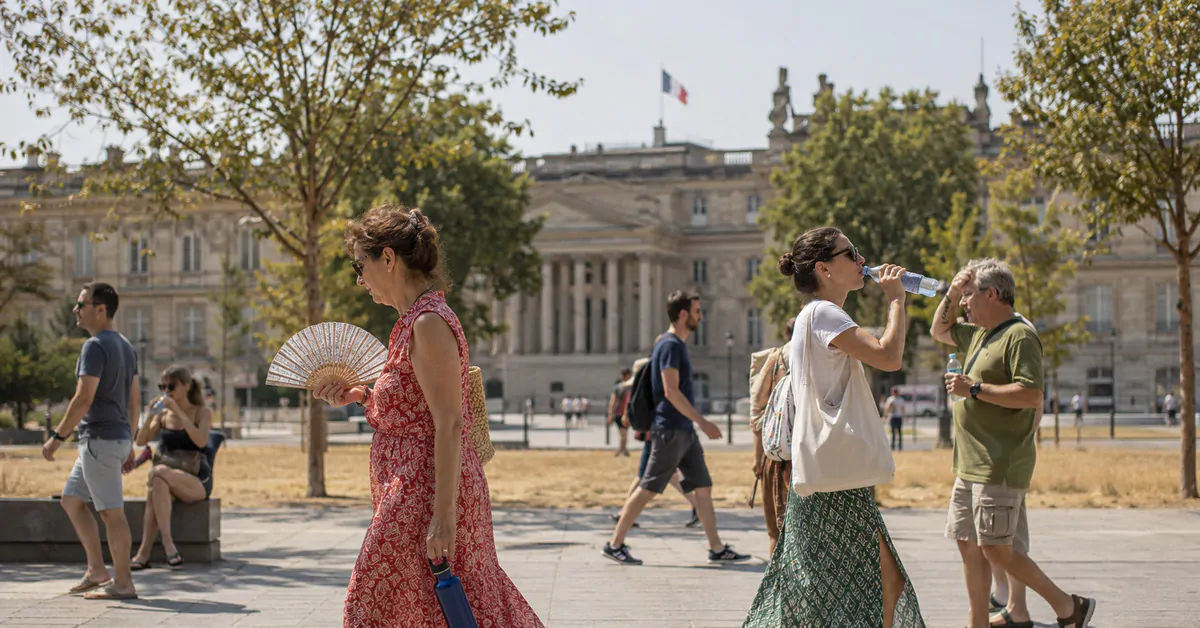
The June-July 2026 heat wave will be etched in the memory of the French. Several cities recorded temperatures never observed since the 2003 heat wave, the event that caused nearly 15,000 deaths. The intensity and duration of the 2026 episode exceeded projections for this decade. Thermometers showed readings above 40°C in many regions, turning urban areas into veritable ovens. This phenomenon, we have just lived through, is explained by the combination of a persistent anticyclone and a mass of Saharan air moving northward, all amplified by global warming which increases the frequency and intensity of these extreme events.
The heat wave did not come alone. The soils dried out by weeks without precipitation favored the outbreak of multiple fires across the country. Droughts and wildfires accompanied the heat episodes, creating a cascading chain of natural disasters. Groundwater levels reached critical points, forcing dozens of municipalities to ration drinking water. Farmers saw crops burn in the fields, while forest ecosystems faced unprecedented water stress.
Excess Mortality, Hospitalizations, and School Closures: The Human Toll
Health consequences appeared quickly. Emergency departments recorded a significant rise in admissions for dehydration, heat stroke, and cardiac decompensation. Excess mortality particularly affected the elderly and chronically ill. Schools had to close in several counties, unable to guarantee decent conditions for students.
Thousands of homes, poorly insulated and lacking air conditioning, became uninhabitable. Hospitals operated under strain, mobilizing additional staff to cope with the surge of patients. These tangible impacts turned a measurable metric (temperature) into a lived collective experience, leaving a lasting mark on public consciousness.