
Herbs have accompanied humans for millennia. They perfume dishes, attract pollinators, and fit easily into both a garden bed and a balcony. Among them, chives are one of the easiest to grow.
This perennial comes back every spring and requires little maintenance. Sun exposure, watering, harvesting, flowering: here’s how to plant chives and keep tender, flavorful leaves.
What you should know
- Chives thrive in fertile, cool, well-drained soil.
- They grow in sun or light shade, in a garden bed or in pots.
- Regular watering helps keep the leaves tender.
- Its flowers are edible and highly attractive to pollinators.
How to plant chives?
Chives, or Allium schoenoprasum, belong to the same family as garlic, onion, and leek. Its green leaves are slender, hollow, and cylindrical. Their flavor resembles onion, but milder.
This herb can be installed in a vegetable garden, a window box, or an herb spiral. It enjoys sun, but tolerates a bit of partial shade, especially in very hot regions.
When to sow or plant chives?
Sowing is generally done in spring, from March to May, when the danger of heavy frosts has passed. Depending on the climate, you can also sow under cover a few weeks earlier.
You can also buy a young plant in a pot. This option is faster and lets you start harvesting before the seeds have germinated.
To multiply an already well-developed clump, divide its crown in spring or early autumn. This operation, performed every three or four years, revives the plant.
Planting chives in the ground
Choose loose, fertile, and well-drained soil. Before planting, mix in a small amount of mature compost. However, avoid excessive fertilizer applications, which can promote foliage at the expense of flavor.
Space the plants about 8 to 12 inches apart. Plant them without burying the crown, lightly firm the soil, then water generously.
During the first weeks, keep the soil moderately moist. A young plant that lacks water will have more difficulty taking root.
Planting chives on a balcony
Chives grow very well in a pot. Choose a container with drainage holes, deep enough and at least 6 to 8 inches in diameter for one plant.
Use a high-quality potting mix rich in organic matter. You can place a few clay pebbles or gravel at the bottom of the pot, and don’t forget to keep the drainage holes clear.
Water generously after planting. Then never let water stagnate in the saucer: excess moisture can promote root rot.
A small pot dries out quickly in summer. If you have enough space, opt for a larger container. The soil will retain moisture longer.
Tip for small spaces
Pair chives with parsley, thyme, or mint in a large planter. However, keep mint in a separate pot, as it can quickly become invasive.
How to care for a clump of chives?
Chives are hardy and low-maintenance. A few simple practices are enough to keep a dense, productive clump for many years.
Watering without waterlogging the soil
Water when the soil surface begins to dry, especially during hot periods. In pots, needs are higher than in the ground.
The substrate should stay moist, but never waterlogged. A prolonged drought makes the leaves tougher. Conversely, constant moisture can cause the roots to rot.
A light mulch helps limit evaporation. It also reduces competition from unwanted weeds around the plant.
Should you cut the chive flowers?
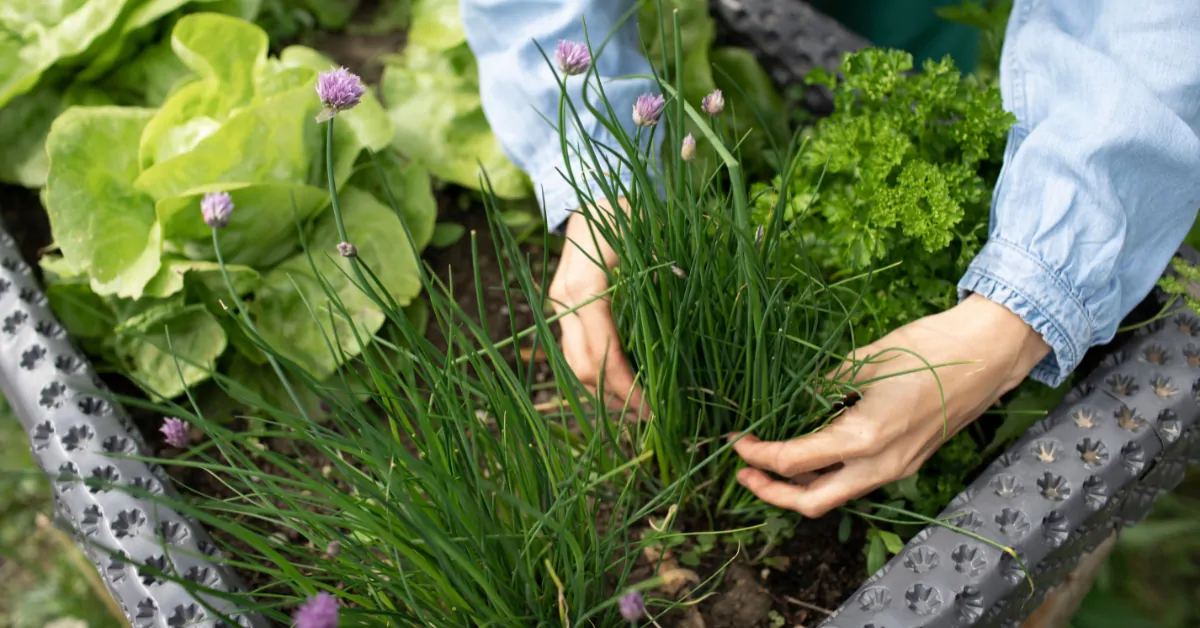
In late spring, chives produce pretty purple flowers. They provide nectar for pollinating insects and are also edible.
You can let a few flowers bloom for the bees. Cut the others as they appear if you want to prioritize tender leaf production.
When crumbled, the flowers add a slightly peppery note and decorative touch to salads, omelets, or crostini. Like all edible flowers, they should be clean and untreated.
Preparing chives for winter
When the foliage yellows and dries, cut the clump a few inches from the ground. In the ground, a light mulch protects the crown in regions with harsh winters.
Chives are perennial: they go dormant during the cold season, then regrow in spring. Pots can stay outside, provided they aren’t constantly waterlogged.
When and how to harvest chives?
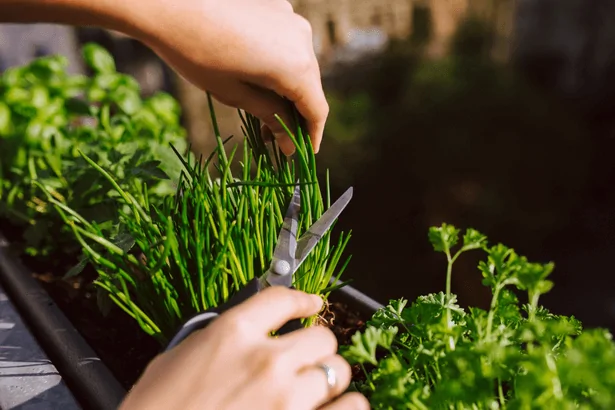
Harvest begins when the leaves reach about 6 inches tall. Use clean scissors and cut a few inches from the soil.
Take the outer leaves as you need them. Avoid pulling stalks one by one, or you may damage the clump.
A full harvest can also stimulate new growth. However, don’t harvest too aggressively from a young plant that was just established.
How to use chives in cooking?
Chives are best enjoyed raw or added at the end of cooking. Prolonged heat quickly dulls their aroma.
After washing and drying, snip them with scissors. They readily elevate:
- salads and raw vegetables;
- potatoes and roasted vegetables;
- omelets and scrambled eggs;
- cold soups and sauces;
- cream cheese and vegetable-based spreads.
Like other aromatics, they add depth to dishes without multiplying sauces or salt. When used in small amounts, they should be regarded primarily as a condiment, not a remedy.
How to store chives?
In the refrigerator, fresh chives keep only for a few days. Wrap them in a slightly damp cloth or place them in a closed container without packing them tightly.
To keep them longer, chop the leaves and freeze them in a small container. You can also portion them into an ice cube tray with a little water or oil.
Freezing slightly changes the texture but preserves chives better than drying, which can strip much of their aroma.
Another option is to make chive butter. Mix chopped leaves into softened butter, roll it, then refrigerate or freeze. A vegan alternative can be made with a suitable margarine.