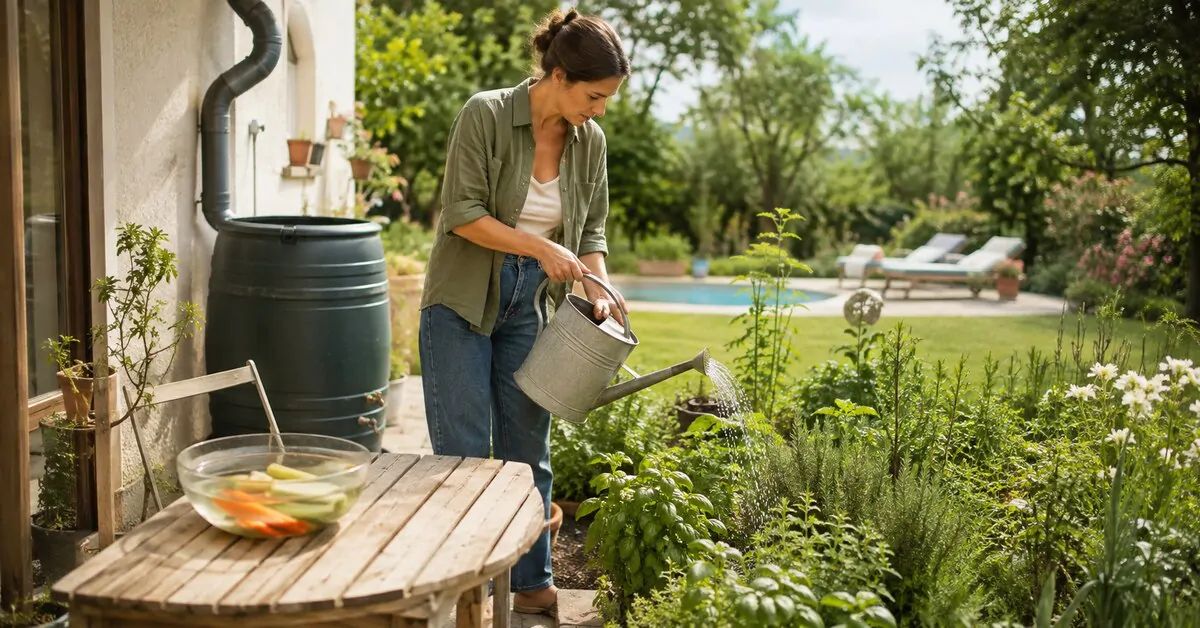
Potable water isn’t always necessary for watering plants. Cooking water, rainwater, or certain pool waters can sometimes be captured. You just need to know which to use. Salt, chlorine, household cleaners, or microbes can turn a good eco-friendly idea into a false green gesture. Here’s how to collect water for watering without weakening the plants or polluting the soil.
Why collect water for watering?
In summer, the garden’s water needs rise precisely when the water resource becomes more fragile. Collecting water helps limit the use of potable water. This habit also reduces the volumes sent into the sewer system. It puts to good use water that would otherwise be discarded.
Not all domestic waters are created equal. Some can be used directly. Others require a few precautions. Several should be kept out of irrigation.
- Cooking water can be used to water potted plants, flowers, and the vegetable garden. It should be cool, unsalted, and free from grease.
- Rainwater is suitable for the garden, the vegetable beds, and shrubs. It should be stored in a closed tank and regularly maintained.
- Rinsing water from fruits and vegetables can be poured at the base of plants. It should contain neither soap nor household cleaners.
- Pool water may eventually water the lawn and some ornamental plants. It must be dechlorinated and checked before use.
Using cooking water to water plants
The water used in cooking can easily enjoy a second life. Simply place a container under the strainer when draining foods. Then wait for it to cool completely. Water that is still hot can burn roots and destroy beneficial soil organisms.
What cooking waters can be reused?
You can recover water used to cook the following:
- non-salted vegetables;
- potatoes;
- pasta or rice without salt;
- eggs;
- vegetables steamed.
The pasta, rice, or potato cooking water contains starch. Use it in moderation. Very cloudy water can leave a deposit in the soil and promote bad odors.
Dilute it with an equal amount of plain water. Pour it directly at the base of the plants, avoiding wetting their foliage.
Vegetable cooking water may contain some minerals. It should not, however, replace compost or a genuine nutrient input.
Which cooking waters should be avoided?
Never use water containing:
- salt;
- oil or butter;
- a sauce or industrial stock;
- vinegar;
- large amounts of spices;
- meat or fish residues.
Salt builds up in the soil. It disrupts the plant roots’ water uptake and can scorch plants.
Fats reduce air exchange in the soil. Food residues can also attract insects and rodents.
Use cooking water within the day. Do not store it for several days at room temperature.
Rainwater, the best free reserve for the garden
Rainwater is well suited for watering. It does not contain the chlorine used to disinfect municipal water.
In the United States, collected rainwater can be used to water gardens, vegetable plots, and private green spaces. It should never be drunk, used for cooking, or for washing dishes.
One millimeter of rain falling on one square meter represents about one liter of water. A 100 m² roof can receive about 1,000 liters during a 10 mm rainfall. Losses in the system reduce the actual stored volume, however.
How to install a rainwater collector?
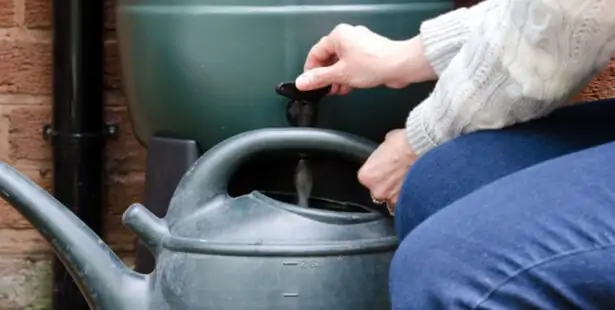
A small tank connected to a downspout is enough to start. Choose an opaque model to limit algae growth.
The collector should include:
- a well-fitting lid;
- a leaf-trapping filter;
- a screen on the openings;
- a overflow directed away from foundations;
- a faucet placed above the bottom of the tank.
Clean gutters and the filter regularly. Also check for mud, unusual odors, or dead animals.
Poorly sealed reservoirs can become breeding grounds for tiger mosquitoes. Some municipalities require lids or protective devices.
Can you water the vegetable garden with rainwater?
Yes, but it’s better to water the soil rather than the vegetables. Avoid spraying water on salads, berries, or tomatoes ready to harvest.
Always wash vegetables with potable water before consuming. This precaution remains important, as the water may have encountered fecal matter or dirt on the roof.
Avoid water from roofs containing lead or asbestos. Do not collect runoff from a terrace or driveway that is frequented by vehicles.
What to remember
Rainwater is ideal for the garden, but it is not potable. Store it in a closed, opaque, and filtered tank. In the vegetable garden, water the soil preferably.
Can you recover pool water for watering?
Pool water can amount to tens of cubic meters. It might seem logical to reuse it when draining.
But this water is not neutral. It can contain chlorine, bromine, a stabilizer, algaecides, or pH adjusters.
Wait for the disinfectant to disappear
Stop all treatment before harvesting the water. Let it rest in the open air and check the disinfectant level with a test strip.
A simple rest doesn’t fix all problems. Chlorine stabilizer, some algaecides, and salts do not evaporate.
Do not use water:
- from a salt-treated pool;
- after a recent shock treatment;
- if it contains an algaecide or a flocculant;
- if its pH is very imbalanced;
- if it is green, murky, or foul-smelling.
Set aside properly dechlorinated water for lawns, hedges, and hardy ornamental plants. Dilute it and distribute it across several areas.
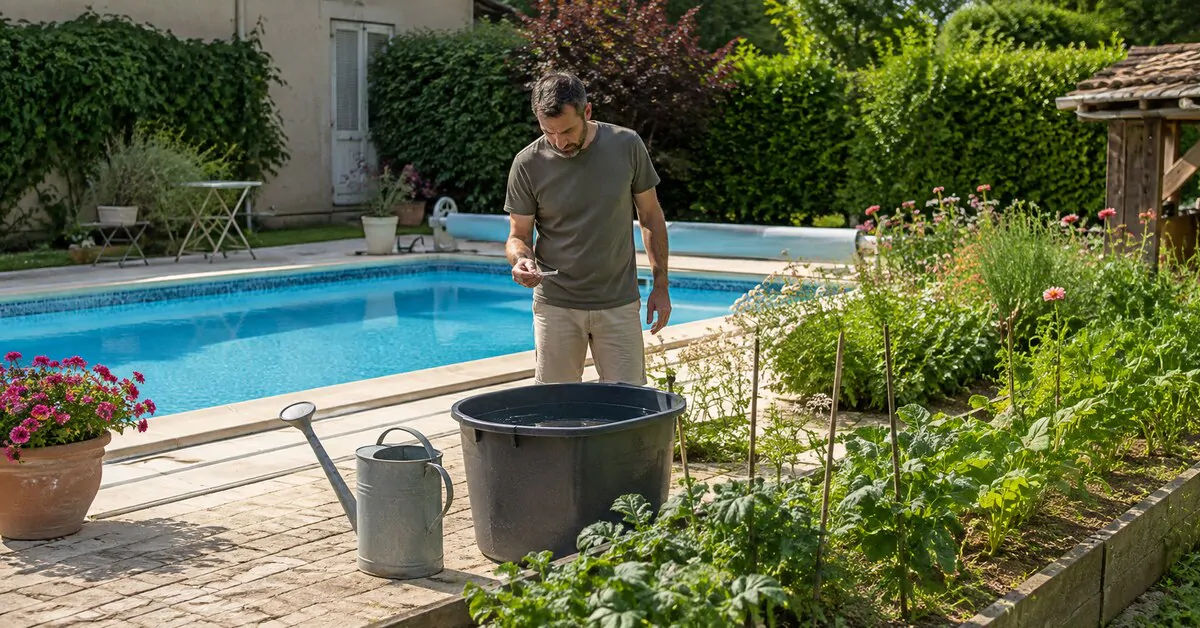
As a precaution, avoid using it on the vegetable garden, young plants, or potted plants. Drainage water from ponds cannot be freely discharged into the public network. A permit from the municipality may be required. Check with your city hall or sanitation service before any major drain.
Other waters easy to recover around the house
Several gallons of clean water go down the drain daily. A few well-placed basins let you capture them.
You can notably save:
- water used to wash fruits and vegetables;
- water from an unfinished carafe;
- refill water from a pet bowl;
- cold water that runs before hot water arrives;
- water from defrosting the refrigerator.
These waters can be poured into a watering can. Use them promptly to avoid stagnation.
However, don’t water with dishwater. It contains fats, detergents, and food residues. Avoid waters containing laundry detergent, chlorine bleach, or disinfectants. Even a product marketed as natural can alter the soil.
How to water less while protecting your plants?
Collecting water is useful. Reducing the garden’s needs is just as important.
Water early in the morning or in the evening, depending on local restrictions. Direct the water to the roots and avoid repeated surface wetting.
A thick mulch slows evaporation. It also protects the soil from heat and limits the growth of unwanted weeds.
You can use:
- fallen leaves;
- straw;
- wood chips;
- dried grass clippings;
- garden-appropriate chips.
Drip irrigation delivers water slowly at the plant base. Oyas (clay irrigation jars) are also an interesting solution for vegetable gardens and large containers. The practice also advocates mulching, drip irrigation, and choosing drought-tolerant plants.
Finally, collected water does not automatically excuse you from restrictions. Rules vary depending on the water source and the local alert level. Check your address on VigiEau before watering.
Prioritize rainwater, rinse water, and unsalted cooking water. Be much more cautious with pool water. Refuse any water containing salt, cleaners, or treatment products.
Read also
- These 10 actions truly cut your water use
- Heatwave and gardening: 12 tips to fight drought in the garden