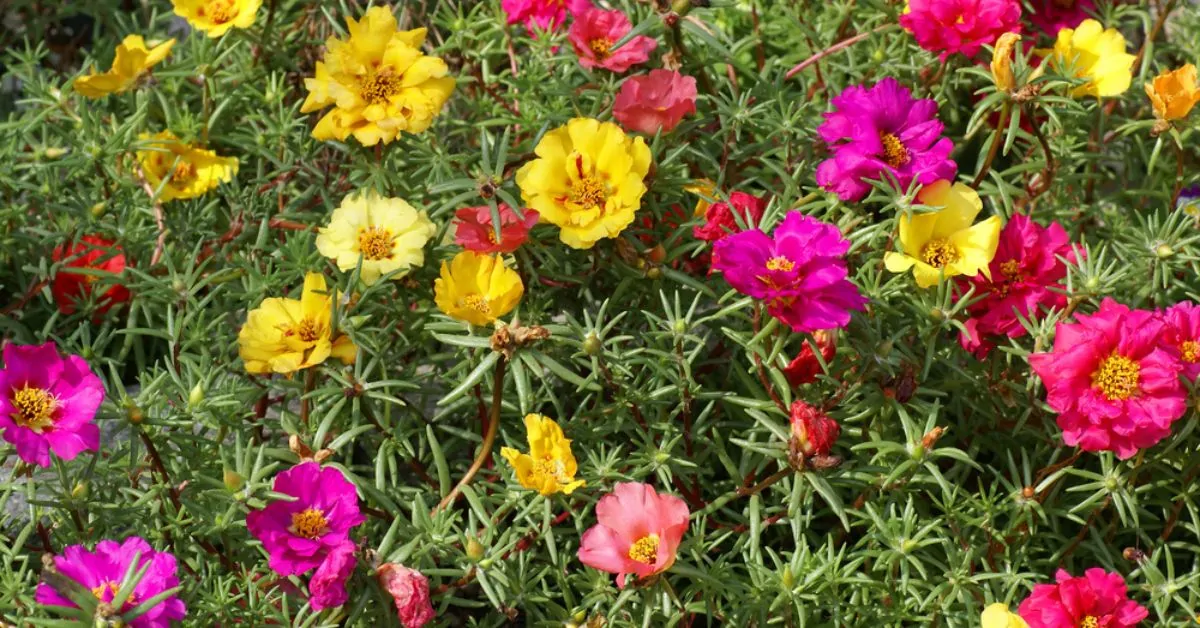
Finding a flower that can thrive on a simple windowsill or a south-facing balcony, without demanding special care, can be a real challenge. The ornamental portulaca ticks all the boxes: colorful, hardy, and surprisingly easy to propagate.
What exactly is ornamental portulaca?
Under this name there are actually several very different plants:
- Wild portulaca (Portulaca oleracea): often mistaken for a weed, whereas it is an edible plant rich in omega-3, with edible flowers to boot.
- Large-flower portulaca (Portulaca grandiflora): the most common ornamental variety, annual, with single or double flowers in bright colors (pink, orange, yellow, white, magenta).
- Perennial portulaca: less common, it comes back for several years in milder-winter regions and forms a persistent mat.
The two ornamental varieties are, themselves, not edible — that’s the price you pay for such spectacular blooms.
How to plant ornamental portulaca: steps to follow
- March sowing: broadcast in a window box covered with a clear lid (mini-greenhouse effect).
- Pricking out into seedling pots as soon as the young plants reach about 3 cm.
- Final placement in late April / early May, once any risk of frost has passed.
- A poor, very well-drained substrate: a standard potting mix enriched with sand or clay balls works perfectly. A too-rich soil will encourage foliage growth at the expense of flowers.
Care: the secret to abundant blooming
- Maximum sunlight: portulaca loves heat and does not fear the most exposed spots.
- Water sparingly: about once every ten days, only when the soil is completely dry.
- Don’t use nitrogen-rich fertilizer, as it promotes foliage rather than flowers.
- No pruning needed, unless you want to remove spent blooms to prolong flowering.
Contrary to popular belief, portulaca is not entirely drought-free: it’s precisely this light water stress, not excessive or constant, that triggers and sustains its bloom.
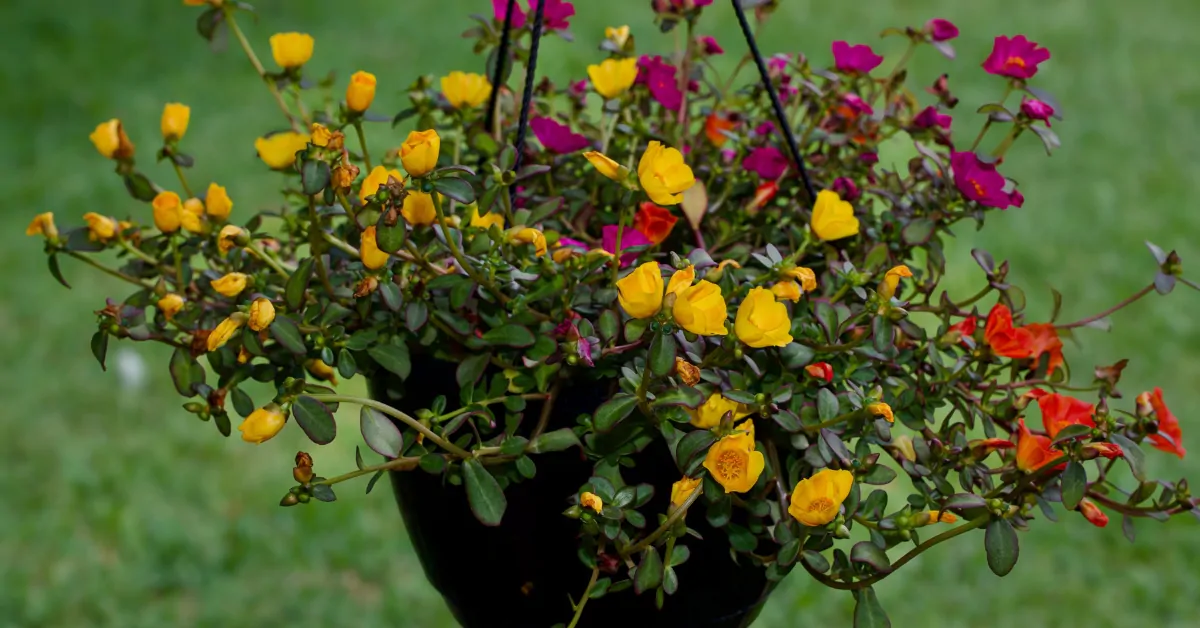
Common mistakes that keep portulaca from blooming
- Too much shade: without at least 6 hours of direct sun, the flowers stay sparse and barely open.
- Too frequent watering: roots rot quickly in soggy soil.
- A pot without drainage holes: standing water is the plant’s worst enemy.
- Potting up too late: a portulaca confined in a cramped pot tends to wear out and bloom less.
Propagation of ornamental portulaca
The pot should be repotted every 2 to 3 years, between April and July. Three methods let you obtain new plants:
By seeds (collecting seeds)
- Let the flowers wither and form seeds.
- Keep an eye on them — they drop quickly once ripe.
- Store them away from light and moisture, in an airtight bag, until March of the following year.
By clump division
For perennial varieties that gain mass over time: when repotting, simply take a clump with its roots and set it into a new pot. Two portulacas in minutes.
By cuttings
- Cut a healthy, well-developed branch.
- Let it dry in the air for 48 hours so the cut heals.
- Plant it in slightly moist potting mix.
- Expect roots to appear in about two weeks.
A pretty cutting idea to give away around you once the season settles in.
Ornamental portulaca: the most frequent questions
- Is ornamental portulaca frost-resistant? No, the ornamental varieties are sensitive to cold and are grown as annuals in most US regions.
- Can it be grown indoors? It prefers the outdoors, where light and air circulation are optimal; indoors it withers due to insufficient light.
- Is it toxic to cats and dogs? Some Portulaca species contain oxalates that can be toxic to dogs and cats. As a precaution, keep the plant out of reach and contact a veterinarian if ingested.
- Why do my flowers close in the afternoon? This is normal: portulaca flowers open in the sun and naturally close later in the day or during cloudy weather.
Also read
10 drought-tolerant flowers for a garden that stays colorful despite dry spells
Cultivating a drought-tolerant garden: 10 best practices