
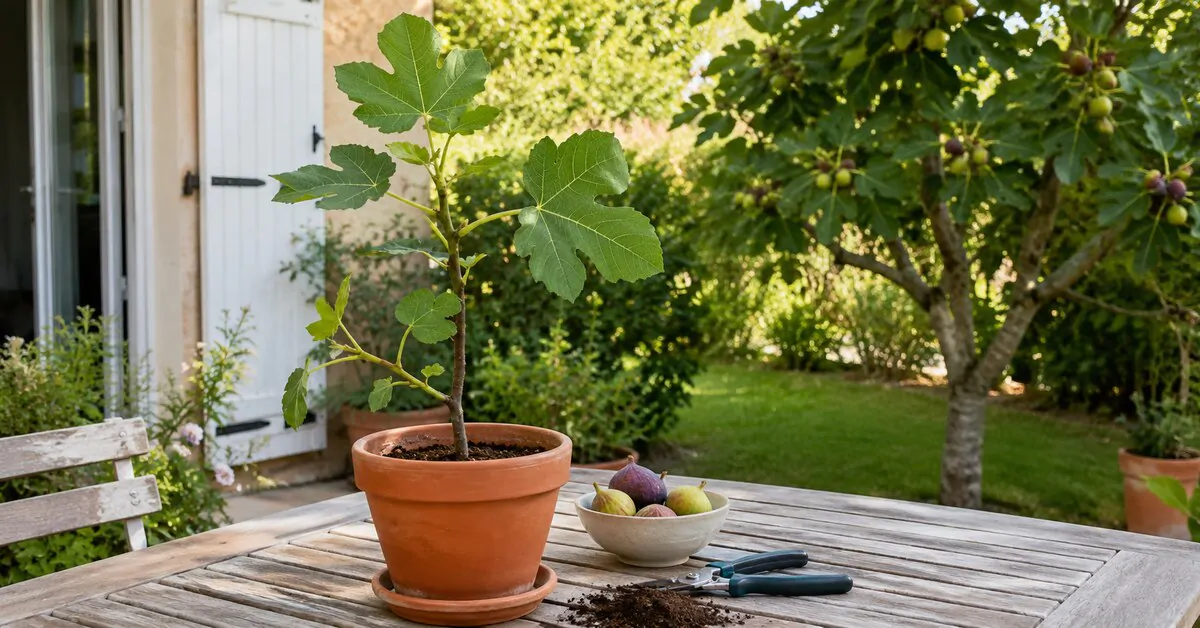
The fig tree instantly brings a Mediterranean scent to the garden. Generous, decorative, and relatively undemanding once established, this fruit tree can also be propagated at home. Two methods are possible: sow the seeds of a fig or take a cutting.
Growing a fig tree from a fig is nevertheless a fairly unpredictable experience. Seeds are not always fertile, and the new tree will not necessarily reproduce the original variety. To obtain a fig tree that is identical to the mother tree more quickly, cuttings remain the most reliable solution.
Can you really grow a fig tree from a fig?
Yes, it is possible to germinate some seeds recovered from a ripe fig. This method is especially suited to curious gardeners who want to watch a tree grow from its very first days.
It does, however, have several limitations. Some fig varieties ripen without fertilization. Their seeds can therefore be sterile. A commercially bought fig does not guarantee viable seeds.
Furthermore, seed propagation mixes genetic material. The young fig tree will be different from the tree that produced the fig. Its vigor, cold hardiness, and the quality of its fruits will remain unknown for several years.
Note: seed propagation does not faithfully reproduce a fig variety. If you love the fruits of a particular tree, prefer taking a cutting instead.
How to collect and sow fig seeds?
Choose a ripe fig, preferably from a local tree that regularly produces fruit. Cut it in half, then delicately remove the pulp containing the tiny seeds.
Place this pulp in a container filled with water and stir gently. Then pass the mixture through a very fine sieve. Rinse the seeds to remove as much pulp as possible. Let them dry for a few hours on absorbent paper.
Prepare a pot with drainage containing a light seed-starting mix. You can add a bit of sand or perlite to improve drainage.
Distribute the seeds on the surface, then cover them with a very fine layer of substrate. They should not be buried deeply.
Moisten with a spray bottle to avoid moving the seeds. Place the pot in a bright and warm spot, ideally around 68–77 °F (20–25 °C). The substrate should stay slightly moist, not soggy.
How long does it take to get a shoot?
Germination can take a few weeks, but not all seeds will sprout. A mini-greenhouse or a clear lid helps maintain humidity. Be sure to air daily to limit mold.
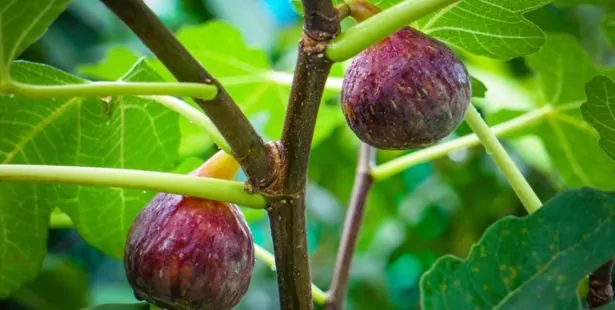
When the seedlings have several true leaves, transplant them separately into small pots. Handle their roots carefully, as they remain fragile.
Gradually set the young fig trees outdoors as temperatures become mild enough. Avoid exposing them to full sun right away, which could burn their leaves.
Bouturing a fig tree: the simplest and most reliable method
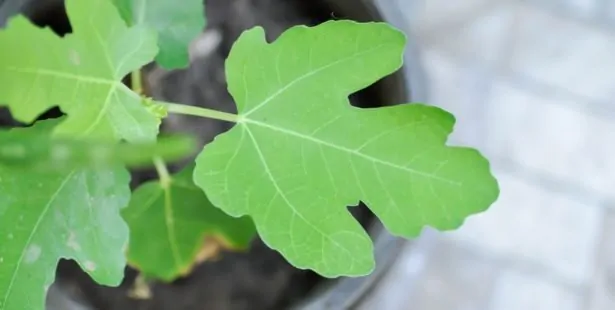
The cutting method consists of making the roots grow from a piece of branch. The new tree then has the same genetic characteristics as the original fig tree.
You thus know in advance the color, flavor, and ripening period of its figs. Of course, this depends on selecting a healthy, productive tree for the cut.
When to take a fig cutting?
The woody cutting is usually done from late fall to late winter, when the tree has shed its leaves. Avoid freezing days.
You can also try a cutting on a still-leaved stem at the end of spring or in summer. This will require closer moisture monitoring.
How to prepare the cutting?
Choose a healthy, vigorous, well‑moulted shoot—that is, sufficiently woody. Take a segment about 20 cm long, roughly the thickness of a pencil and bearing several buds.
Use a clean, sharp pruning tool. Make the lower cut just below a node and the upper cut just above a bud. Be sure to note the orientation of the branch so you don’t plant it upside down.
For a winter cutting, proceed as follows:
- Fill a perforated pot with a mix of potting soil and sand or perlite;
- Insert about two-thirds of the cutting into the substrate;
- Leave at least one bud above the soil;
- Gently firm the soil around the stem;
- Water lightly, then allow the excess water to drain.
Place the pot in a bright, cool space protected from strong frost. The substrate should stay barely moist. Excess water would promote rot before roots appear.
How to take a fig cutting in summer?
For a summer cutting, remove the leaves from the lower part of the stem. Keep one or two leaves at the top, potentially reducing their surface area if they are large.
A cut plastic bottle can serve as a mini-greenhouse. It maintains a humid atmosphere around the cutting. Place the pot in light, but not direct sun, then air regularly.
The appearance of new leaves is an encouraging sign, but does not by itself prove that the roots are well developed. Wait until you feel slight resistance when gently tugging on the stem before considering repotting.
Waste-prevention tip: take advantage of a winter pruning done by a neighbor to obtain a few twigs. Collect them only with the owner’s permission and from a healthy tree.
How to care for a young fig tree?
Whether from a germination or a cutting, a young fig tree requires more attention than a well-established one.
Gradually place it in full sun, in fertile and well-drained soil. A warm location, sheltered from cold winds and positioned against a south- or southwest-facing wall suits it particularly well in cooler regions.
Water regularly during its first year, especially in pots and during dry periods. However, allow the surface of the potting mix to dry slightly between waterings. A tray constantly full of water can suffocate the roots.
A mulch reduces evaporation and protects the root system. Do not press mulch directly against the trunk to reduce rot risk.
In winter, move young plants in pots to a bright, cool, frost-free space. In the ground, protect the base with a thick layer of mulch. A wintering veil can be useful during the first years in regions with severe winters.
Avoid heavy pruning on a very young plant. Simply remove dead wood or damaged branches. Too much pruning would delay establishment.
Precaution: fig stems and leaves release a white latex that can irritate the skin and eyes. Wear gloves when taking cuttings and wash your tools carefully.
Seed or cutting: which method to choose?
Seed propagation is for those who enjoy experimenting and watching a unique tree come to life. It requires a lot of patience, with no guarantee of future fruiting.
Cutting propagation yields more predictable results. It preserves the traits of a local cultivar, adapted to the climate and already known for good figs. It is therefore the technique to favor when quickly creating a new fruit tree.
A third option exists: layering. It involves lying a low-growing branch against the ground, then burying part of it until roots appear. The branch can then be separated from the mother plant.
Whichever method you choose, don’t rush the harvest. A young fig tree must first develop its roots and frame. With good exposure and a little care, it will then accompany the garden for many years.
Read also
4 ways to use fig leaves for their benefits