
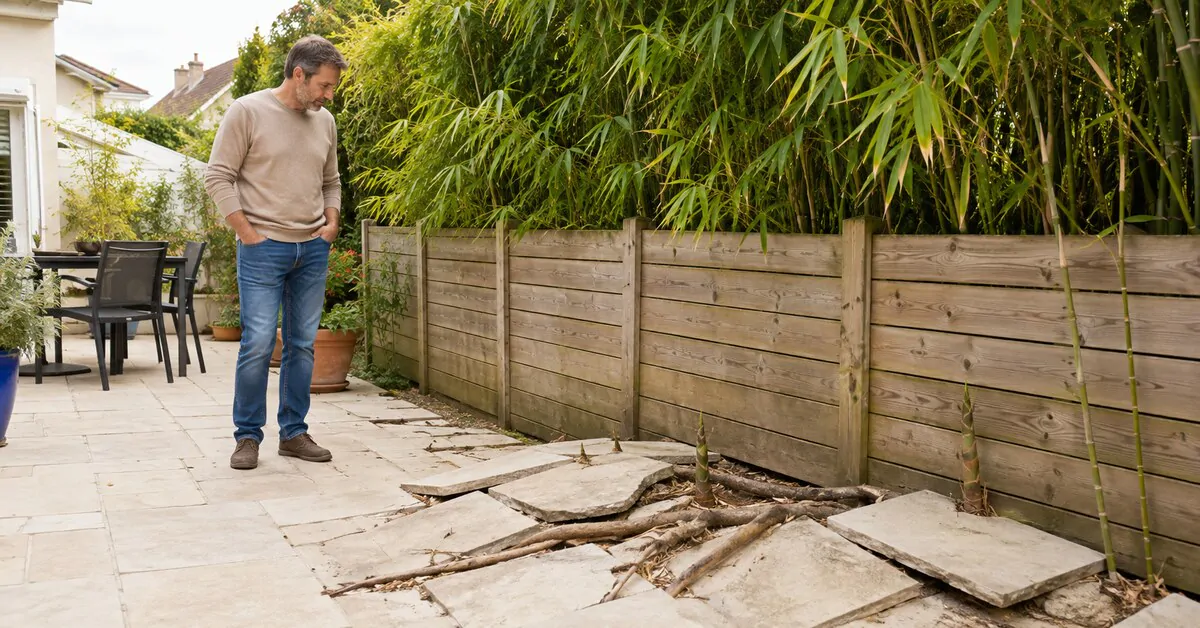
A hedge that overgrows, bamboo spreading beneath a fence, roots lifting a patio or damaging a utility line: a neighbor’s plants can become a real headache. But who is supposed to intervene? And especially, who pays when damage occurs?
Branches and roots: different rules
In American property law there is a clear distinction between branches and roots. When a branch from a neighboring property overhangs your land, you may request that the neighbor trim it back. In principle, you cannot take it upon yourself to cut it off.
For roots, creeping vines, or twigs that cross the boundary underground, the rule is different. In many states, the owner of the invaded land may trim them back, but only up to the boundary of their own property.
This rule also applies to particularly invasive plants, such as certain bamboos. Their rhizomes—underground stems capable of producing new shoots—can travel several feet and easily cross a fence or property line.
In case of damage, the neighbor is responsible
Having the authority to cut roots does not mean you must bear the consequences of their presence alone. If the roots of a tree, hedge, or bamboo cause damage on your property, the owner of the vegetation may be liable for those damages.
Case law is longstanding on this point. In U.S. courts, it is generally recognized that a neighbor can be held responsible for damage caused by the roots of their trees on a neighbor’s property, even when those trees were planted in compliance with local setbacks or other regulations.
Practically speaking, if roots crack a wall, lift a patio, damage a fence, a utility line, or garden equipment, the owner responsible for the vegetation can be asked to repair or compensate for the damage. However, they must be able to demonstrate that the damage was indeed caused by the neighboring plantings.
That is often where the main difficulty lies. Before undertaking major work or seeking compensation, it is wise to gather evidence. Photos, estimates, a property inspection, or the opinion of a professional can help establish the source of the problem. When damages are substantial or disputed, an expert appraisal can be especially useful.
Evidence and estimates to avoid disputes
The cost of the work can also become a point of contention. The fact that you are allowed to trim roots that cross the boundary does not automatically mean that every project you undertake will be reimbursed by the neighbor. If heavy intervention is required—such as trenching or repairing a damaged structure—it is best to document the situation and obtain multiple quotes before acting.
In practice, the amicable solution is usually the simplest. Inform the neighbor in writing, share the observed facts, and request their involvement. This approach can sometimes resolve the issue quickly. If the neighbor refuses or does not respond, a formal notice or demand letter can be sent.
If no agreement is possible, mediation or a neutral dispute-resolution service can help find a free or low-cost path to a solution. As a last resort, you may file a civil claim in the appropriate court to seek compensation for damages or to stop the nuisance.
One thing to remember: when a planting remains on the neighbor’s land but its roots extend onto your property, you have the right to trim them back to your boundary. And if those roots cause damage, the owner may be held responsible.