
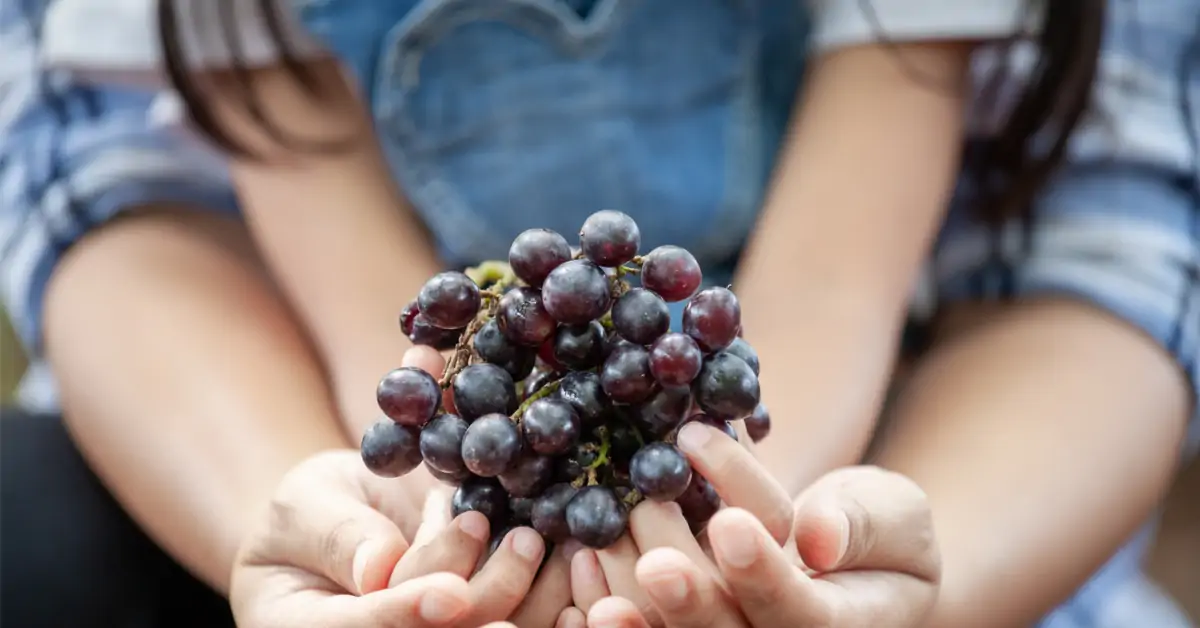
To accompany a cheese board, brighten a fruit salad, or snack at any time of day, grapes are highly loved in France. They are also widely grown across the country for anyone who wants to eat locally. Germinating a grape seed lets you watch a vine take root and, with a lot of patience, hope to harvest your own bunches.
However, a vine grown from a seed will not faithfully reproduce the variety of the grape you tasted. The color, the flavor, and the size of its future fruit can hold some surprises!
Key takeaways
- Choose several seeds from fully ripe grapes that contain real seeds.
- A cold stratification of 8 to 12 weeks helps break their dormancy.
- A vine grown from seed will not necessarily bear the same grapes as the parent plant.
- Several years will be required before a first harvest might occur.
Before germinating a grape seed
Not all grapes are created equal… That goes without saying, especially in France, but it’s worth saying anyway. Think about how you plan to use your eventual harvest.
Do you want fresh grapes to eat, to use in recipes, or to dry? Your preferences, your climate, and the space you have should also come into play.
There’s no point in growing too many grapevines and thus producing more grapes than you can consume. A single well-tended vine can already take up several feet of space and yield many clusters.
Choose the right grape variety
The so-called “table grapes” are generally not the same as those used for winemaking. This obviously depends on your tastes and what you expect from a harvest.
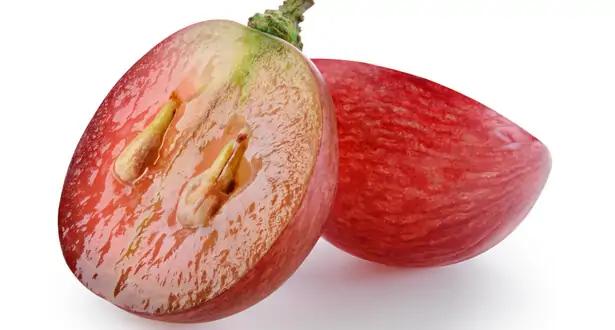
Muscat, Chasselas, Italia, or Alphonse Lavallée are among the well-known table varieties. Choose especially ripe grapes with fully formed seeds. Seedless varieties marketed as “seedless” are generally not suitable for this experiment.
A surprise vine
The seed results from fertilization. The young vine therefore carries a genetic heritage different from that of the parent plant that produced the grape. Its fruits may be smaller, more acidic, or simply different. To faithfully reproduce a variety, opt for a cutting or a grafted plant purchased from a nursery.
Choose the grapes that best suit you. Just make sure your soil and climate are suitable for growing grapevines.
Grapes – Did you know?
The French grape season runs mainly from August to October. In 2024, France produced 47,359 tons of table grapes. About 70% of that production came from the Southeast.
The clusters intended for sale as table grapes are harvested carefully to preserve the berries and their bloom, the thin whitish film naturally present on their skin.
How to germinate a grape seed?
Once your grapes have been properly enjoyed and their seeds set aside, keep about ten or so to maximize your chances of growing a young vine.
Before starting the seed germination process, carefully clean the seeds to remove any pulp. That pulp could promote mold growth.
You can then place them in a bowl of water. Seeds that sink are often the best-formed. This test remains indicative: a floating seed is not necessarily unable to germinate.
Rinse them with clean water, then gently dry them with a clean cloth.
Place the grape seeds in a moist setup
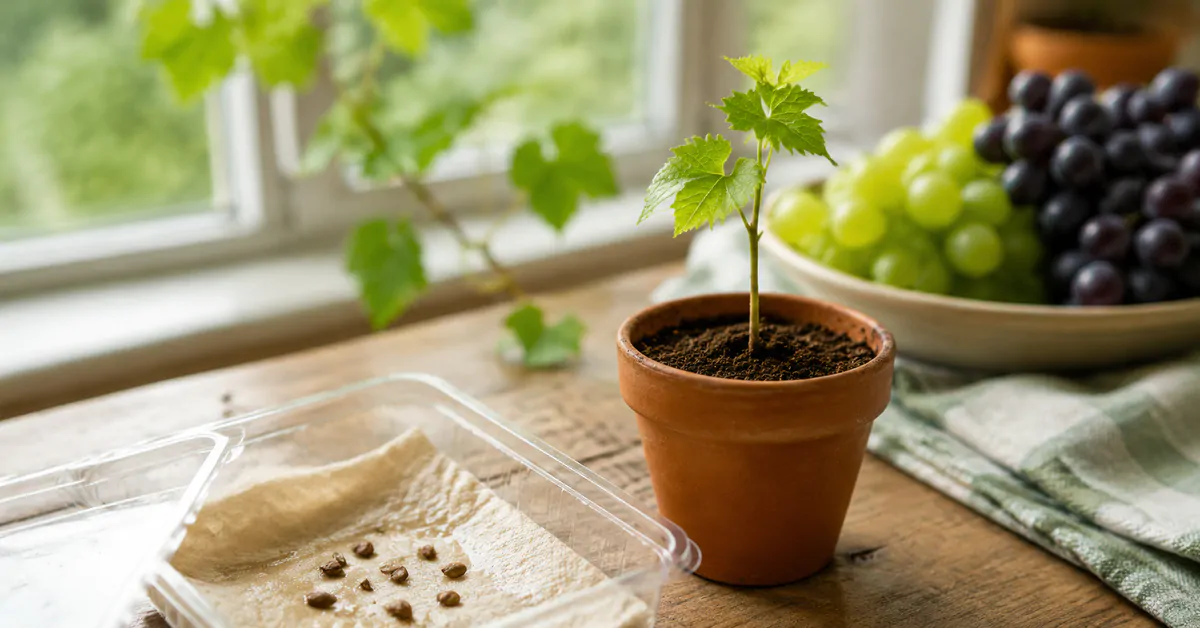
Grab a small dish or an airtight container. Place the seeds between two sheets of paper towel or lightly dampened cotton.
The setup should stay moist, but never soaking wet. Excess water and poor airflow would encourage mold.
You can spread the seeds across several containers. If one develops mold, you’ll limit the risk of losing all of them.
Another method is to place the seeds in a bit of clean sand, perlite, or a slightly damp seed-starting potting mix. These options are preferable to peat, the extraction of which harms natural habitats that store a lot of carbon.
Tip – Germinating is one thing, planning the planting is another! A grapevine is a vigorous climber that can quickly become invasive if not managed.
So you’ll need to reserve it a sunny spot and a sturdy support. Plan for roughly 1.5 to 2.5 meters of width so it can develop.
Chill the seeds in the refrigerator
Nuts, seeds, and other kernels have a protective coating. This coating responds to the seasons and external conditions, allowing or preventing germination of the seedling.
In the case of grape seeds, a period of moist cold helps to lift this dormancy. This process, called cold stratification, artificially reproduces winter conditions.
Place the seeds in the refrigerator’s vegetable drawer, ideally at a temperature between 2 and 5 °C, for 8 to 12 weeks. Check regularly that the medium stays slightly moist.
If you see mold, rinse the seeds gently and replace the medium immediately.
Then a warm spell for the seeds
After this cold period, take out your container(s). Place them in a bright spot, away from direct, hot sunlight, at a temperature around 20 to 25 °C (68–77°F).
Keep the medium moist and regularly monitor the seeds. Depending on variety, freshness, and storage conditions, germination can take two to eight weeks. Some seeds will not germinate, even if all steps are followed.
Transplant germinated seeds into pots
Young seedlings are very fragile. As soon as a small root appears, prepare a pot with drainage holes about 10 to 15 centimeters in diameter. Fill it with a light seed-starting mix, possibly mixed with a bit of sand.
Clay pebbles or small gravel can be placed at the bottom, but a drainage hole remains essential to prevent water from stagnating.
Handle the germinated seed with great care, avoiding touching or pinching its tender root. Place it in a small hole, root facing downward, then cover with about one centimeter of potting mix.
Water with a fine mist and place the pot in a bright location. The soil should stay moist, but not waterlogged.
Tip
When the roots begin to occupy the entire pot, repot the young vine into a deeper container. Gradually increase its sun exposure to avoid burning its leaves.
How to plant a germinated grape seed in the ground?
Let your vine grow until it reaches about 25 to 30 centimeters (10–12 inches) tall. Before planting it outside, gradually acclimate it to outdoor conditions for one to two weeks.
Planting can be done in spring, after the last frosts. An autumn planting is possible in milder regions if the young plant is already vigorous and well lignified.
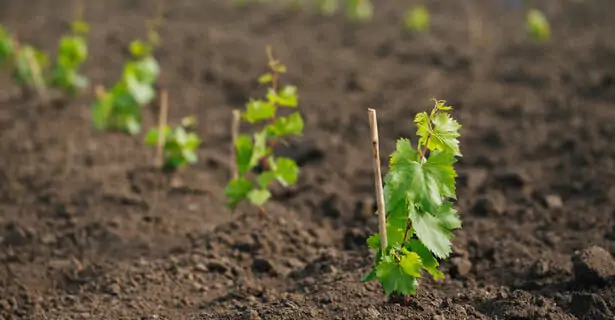
Choose a location that gets as much sun as possible. The soil should be well drained, and the vine should not be too crowded by other plants.
Quickly install a stake, trellis, or sturdy wires. Water regularly during the first year, especially in dry periods, without letting water stagnate around the roots.
How long before you get grapes?
You’ll still need several more years of patience before hoping to harvest the first fruits. A vine grown from a seed may start bearing fruit after four to seven years, sometimes longer.
The quality of the clusters is never guaranteed. The young vine may also be more susceptible to certain diseases or phylloxera than a grafted plant selected by a nursery.
That said, the experience is still enthralling. What a joy to see a vigorous plant grow from a simple seed popped from your plate!
Also read
How to germinate a prune pit