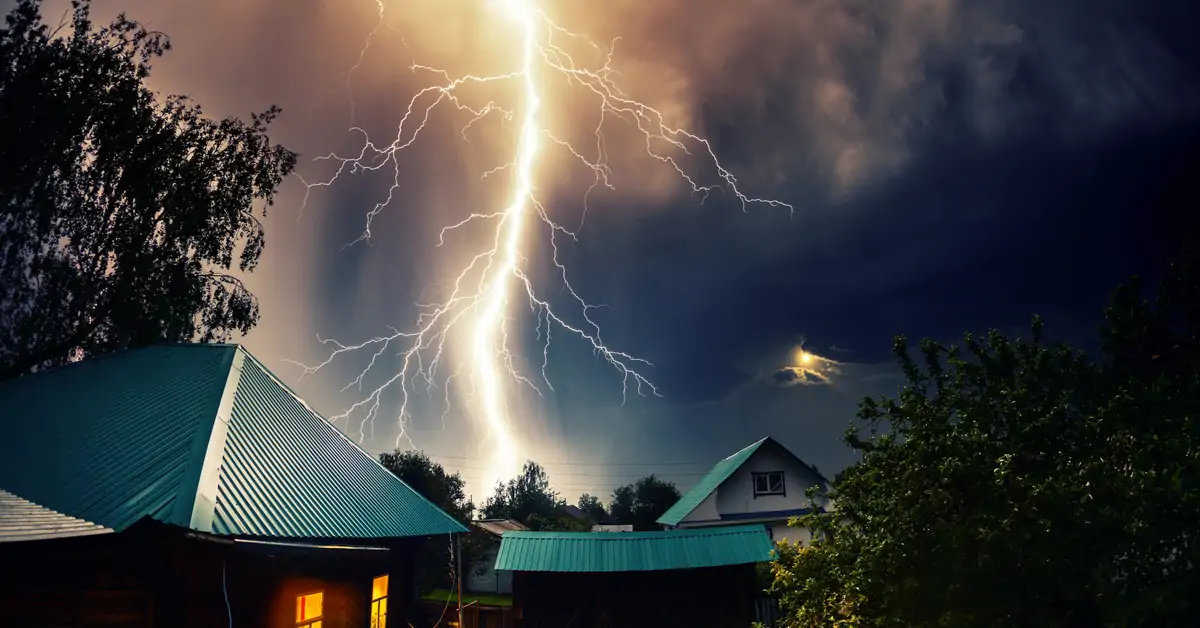
Hail, strong gusts, lightning and heavy rainfall can cause damage in just minutes. To protect your home before a storm, you don’t need to uproot your life. Fifteen minutes are often enough to shelter the most exposed items, secure the garden, and move the car away from danger zones. Here are the priority actions to take, without putting yourself at risk.
What to keep in mind
• Bring in or secure anything that the wind could carry away.
• Close doors, windows and shutters before the storm arrives.
• Unplug sensitive electronics while the lightning is still distant.
• Park the car under a solid shelter, away from trees and low-lying areas.
• Never go up on a roof when wind or rain begins.
Thunderstorms on August 26: 12 counties under orange alert
The National Weather Service forecast expects a marked deterioration on Wednesday, August 26, 2026. Locally strong storms are expected to affect the western part of the country later in the day. They may be accompanied by hail, powerful gusts and runoff. Winds could briefly reach 120 km/h (about 75 mph) in the Ariège high country. (1)
In its 6:00 a.m. bulletin, Meteo-France places 12 departments under orange alert for thunderstorms beginning at 6:00 p.m.: Charente, Charente-Maritime, Ille-et-Vilaine, Indre-et-Loire, Loir-et-Cher, Loire-Atlantique, Maine-et-Loire, Mayenne, Sarthe, Deux-Sèvres, Vendée and Vienne. (2)
The situation remains fluid. Additional thunderstorm bursts are possible on August 27 and 28. Always check the Meteo-France vigilance map just before you publish or travel.
You have 15 minutes: the storm prep checklist
Start with lightweight objects and electrical gear. Don’t try to save everything. As soon as thunder roars nearby, take shelter in a sturdy building.
The first five minutes: securing the balcony, patio and garden
A light chair, umbrella or an empty watering can can become a projectile in strong gusts.
- Bring in chairs, cushions, toys, lanterns, tools and decorations.
- Close umbrellas. Place them on the ground or indoors.
- Lower hanging planters and pots perched on a ledge.
- Group heavy pots against a sheltered wall, without blocking an exit.
- Lock the shed, greenhouse and storage chests.
- Remove floating pool accessories.
- Bring pets indoors for their safety.
Don’t rush to lay out a large tarp. If not firmly fixed, it catches the wind and can tear or fly away.
The next five minutes: protect the house and appliances
Close windows, doors and shutters. Also check skylights. Move fragile items and expensive devices away from openings.
Unplug computers, televisions, the Internet router and other sensitive equipment. Also disconnect antenna cables if you can do so safely. Do this before the storm gets close. Do not touch outlets when lightning strikes nearby.
A switched-off power strip is not always a substitute for a physical unplug. A surge protector can limit some damage but does not provide absolute protection.
Meteo-France recommends avoiding the use of electrical devices during an orange-alert storm situation. Seek shelter in a sturdy building and minimize movement. (3)
The final five minutes: preventing runoff
Remove leaves that clog grates, gutters and accessible drainage from the ground. Move boxes, hazardous products and devices placed in a basement or other low-lying area.
Store valuables out of reach of rising water. Close doors to basements. If water starts to rise, do not go down to a basement or underground garage.
Never climb onto the roof to clear a gutter. Plan this task in advance, in calm weather and with proper equipment.
Protecting your garden from hail and strong gusts
In the vegetable patch, young plants and ripe fruits are especially vulnerable. If the storm stays distant, quickly harvest tomatoes, zucchini and any fruit ready for picking.
A hail shield can limit damage. It must be attached to a sturdy frame and leave space above the plants. Placing it directly on crops risks crushing them under the weight of hailstones.
Tie tall stems to sturdy stakes. Lay down small movable supports. Do not prune a tree in a rush: branches, ladders and conductive tools increase danger.
Once thunder is audible, stop outdoor work. Move away from trees, metal fences, waterways and high ground.
Car under hail: where to park?
The best option is a closed garage or a solid covered parking area. If that’s not possible, choose an open space away from trees, signs, power lines and objects that could fall.
Avoid low spots and parking areas exposed to flooding. A hail-protected area isn’t safe if it can quickly fill with water.
If you have a hail cover, install it before the first gusts. Don’t use a blanket simply wedged in the doors. It can blow away and create a danger.
If a storm catches you on the road:
- slow down gradually and increase following distances;
- switch on headlights appropriate for visibility;
- don’t stop under a tree or on a roadway;
- never drive through a road, even partially, that’s flooded;
- if you can stop safely, stay in the vehicle.
During the storm: safety comes first, before property
Stay indoors and away from windows. Avoid showers, baths and prolonged contact with plumbing. Use the phone only if necessary.
Don’t go outside to fetch a forgotten pot or to close a shutter. Never work on a roof. In case of a power outage, use a battery-powered light rather than candles.
If runoff threatens the home, go upstairs. Do not use elevators. Follow the authorities’ instructions and keep emergency numbers accessible: 911.
After the storm: check things carefully, not hastily
Wait for the storm to fully pass before going outside. Watch for weakened branches, loose tiles and cables on the ground. Never touch a live wire, even if it seems deenergized.
Take photographs of the damages before moving items, unless there is immediate danger. Keep damaged goods and receipts. Then contact your insurer according to your policy terms.
In the garden, restore plants only when conditions are safe again. Remove broken parts with clean tools. Do not immediately fertilize stressed plants.
How to protect your garden from hail and respond after the storm?
What to do to protect yourself from thunderstorms and lightning?
Smart garden practices after heavy rain
- https://meteofrance.com/actualites/meteo-nouvelle-forte-degradation-orageuse-sur-louest-mercredi
- https://vigilance.meteofrance.fr/fr/vigilance-accessible
- https://vigilance.meteofrance.fr/fr/orages