
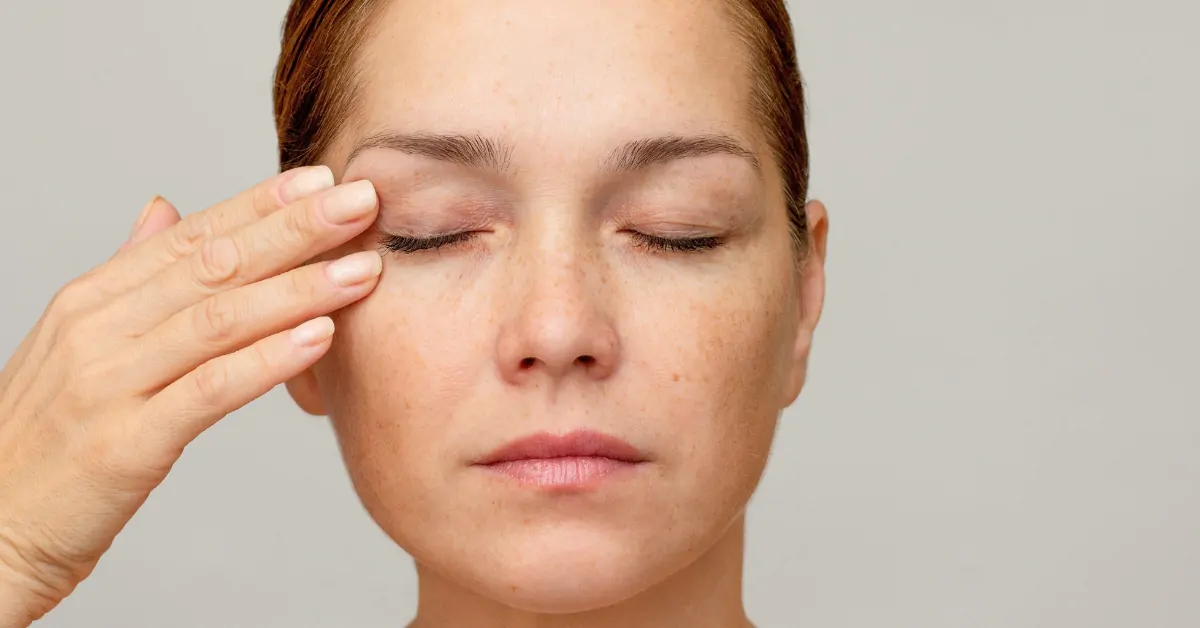
Is your eyelid twitching or fluttering without warning? While this phenomenon is usually harmless, it can quickly become annoying. Fatigue, stress, excessive caffeine, or dry eye sit among the most common causes. A few simple steps are usually enough to calm these little spasms.
Eyelid twitching: is your body telling you to stop?
Some bodily movements are uncontrollable or nearly so. This is the case with sneezing, hiccups, but also eyelids that jump or tremble.
This phenomenon is called eyelid myokymia. It corresponds to small involuntary contractions of the eyelid muscle. It usually affects one eye, most often the lower eyelid.
These contractions can last a few seconds or a few minutes. They sometimes recur for several days before disappearing spontaneously.
Myokymia is different from benign fasciculation syndrome. The latter can affect several muscles in the body and be accompanied by cramps. In the vast majority of cases, an eyelid that twitches occasionally remains harmless.
Fatigue, stress, caffeine: the most common causes
When the eyelid starts to flutter, the body is often asking for a break. Lack of sleep and fatigue are two very common triggers.
Stress and anxiety can also promote these contractions. When the phenomenon appears during a busy period, it can be helpful to slow down and adopt a few habits to better manage your anxiety.
Caffeine stimulates the nervous system. An excess of coffee, tea, energy drinks or caffeinated sodas can therefore sustain the tremors. Alcohol and nicotine are also among possible factors.
It isn’t necessarily necessary to completely cut out your morning coffee. Try instead to gradually reduce the amount over a few days to observe how it evolves.
The screens and visual fatigue in play
Long days spent in front of a computer or a phone tire the eyes. In front of a screen, we also tend to blink less often. The surface of the eye then dries out more easily.
To rest your eyes, look regularly into the distance and make a point of blinking on purpose. A break away from screens can do good for both eyes and the brain.
Bright light, wind, pollution, irritation, or dry eyes can also trigger eyelid myokymia. If you wear contact lenses or feel tingling, seek advice from a pharmacist, a doctor, or an ophthalmologist.
How to calm a twitching eyelid?
The tremor usually goes away on its own within a few days. In the meantime, several simple steps can help:
- get enough sleep and establish regular sleep schedules;
- temporarily cut back on coffee, tea, and energy drinks;
- limit alcohol and nicotine;
- take regular breaks from screens;
- avoid rubbing the eyes;
- try to reduce stress with walking, breathing, or a relaxing activity.
Intense physical activity can sometimes precede fasciculations, especially when tired or dehydrated. It’s usually not the sport itself that’s the problem, but the lack of recovery.
The Practical Tip
For a few days, track your sleep, your caffeine intake, and the time spent in front of screens. You’ll more easily identify the trigger.
Eyelid twitch: should you take magnesium?
The eyelid twitch is often associated, in popular imagination, with a magnesium deficiency. Yet, this isolated symptom is not enough to diagnose a deficiency.
A supplementation should therefore not become a reflex. An excessive intake can cause digestive troubles and certain precautions are warranted, especially in case of kidney disease.
If a deficiency is suspected, seek advice from your doctor or pharmacist. Do not stop a prescribed treatment, even if you think it might promote tremors.
Nevertheless, you can favor a varied diet including legumes, whole grains, nuts, seeds, and dark chocolate. Also discover foods naturally rich in magnesium.
To learn more about symptoms and precautions, also check our dossier devoted to magnesium deficiency.

When should eyelid twitching worry you?
Occasional eyelid myokymia is generally not worrisome. However, it’s best to seek medical advice if the contractions last more than two weeks or become more frequent.
Also seek medical advice if:
- the eyelid closes completely with each contraction;
- you have difficulty opening the eye;
- the eyelid droops or seems weak;
- the eye is red, swollen, painful, or draining;
- spasms spread to the cheek or other parts of the face;
- you feel weakness, stiffness, or contractions elsewhere in the body.
Attention
A sudden weakness on one side of the face, speech trouble, or a sudden loss of vision requires urgent medical care.
Myokymia, blepharospasm, and hemifacial spasm: what are the differences?
Blepharospasm is a rare disorder causing repetitive contractions, often in both eyes. The eyelids may close involuntarily and interfere with daily activities.
Hemifacial spasm involves several muscles on one side of the face. It can begin around the eye before spreading to the cheek or the mouth.
Some neurological diseases can occasionally accompany eye spasms. However, a twitching eyelid alone and sporadically is usually not a sign of a neurological disease. These conditions typically come with other symptoms.