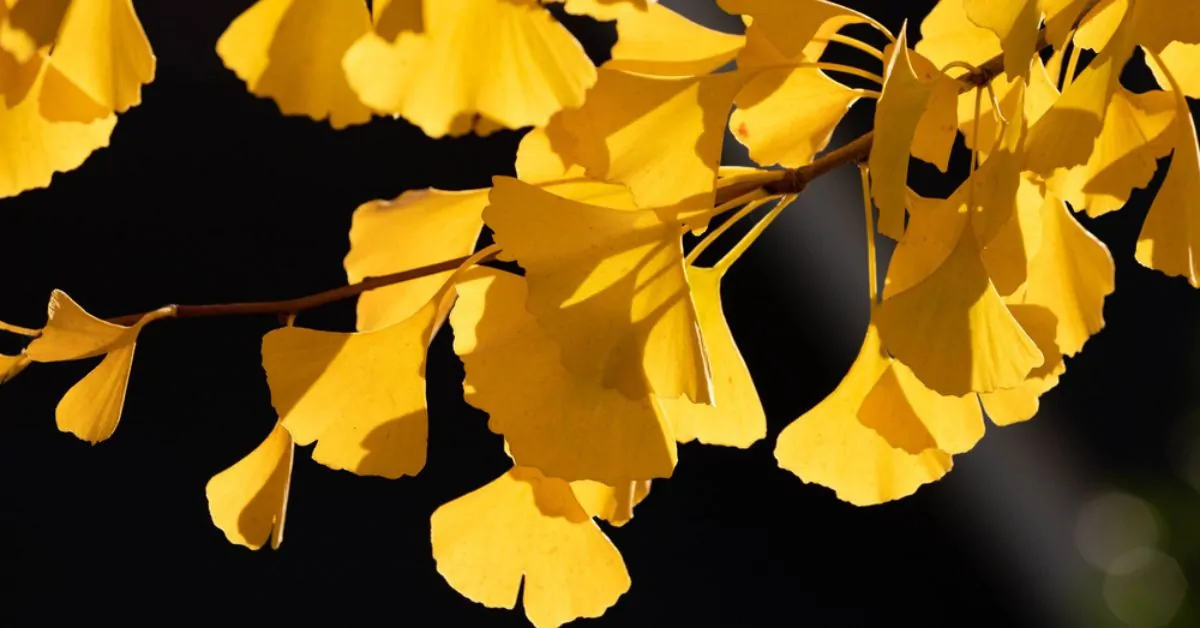
The Ginkgo biloba has stood the test of time. Trees planted in Hiroshima even recovered after the 1945 blast. With fan-shaped leaves that turn golden-yellow in fall, it also catches the eye in the garden. But before planting it, it’s best to give it plenty of space and take good care of its early years.
Which Ginkgo to choose for your garden?
Before you grow a Ginkgo at home, assess the space you have. This tree grows slowly, but a mature specimen can reach about 50–65 feet tall. There are also more compact cultivars to fit smaller should your space be limited.
A Male Tree to Avoid Odors
Ginkgo biloba is a dioecious species: male and female trees are separate. Female trees bear seeds surrounded by a fleshy outer covering. When they fall to the ground, that outer layer emits an unpleasant odor. For a planting near your home or a terrace, ask the nursery for an identified male cultivar.
You’ll find young trees in pots and larger specimens sold balled and burlapped. In the latter case, the roots are wrapped in the soil in which the tree grew. Check with the nursery what the wrap is: a synthetic net must be removed, while what to do with a biodegradable fabric depends on the packaging. Handle the root ball carefully to keep it intact.
A Bright Spot with Room to Grow
To let your Ginkgo biloba thrive, choose full sun. A touch of partial shade can work, but the fall colors are typically more striking with strong exposure.
Keep its future size in mind: position it away from façades and areas where its crown would feel cramped. Contrary to a common myth, the ginkgo also tolerates calcareous soils. The key is to avoid soil that stays waterlogged. A cool, well-drained soil suits it best for establishment.
How to plant a Ginkgo biloba?
Autumn is a good time to plant, after the leaves have fallen and outside frost periods. Planting in early spring is also possible. Avoid frozen or waterlogged soils. Balled-and-burlapped trees should preferably be planted as soon as possible after purchase.
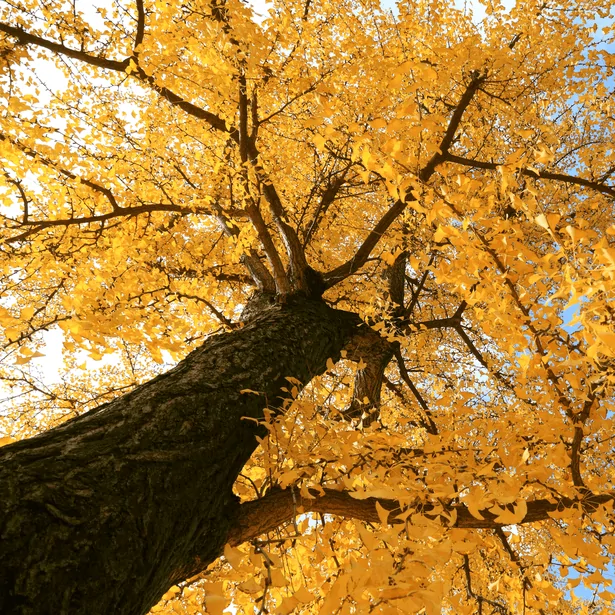
- Dig a hole wider than the root ball, but no deeper than its height. Loosen the sides and bottom, avoiding a loose layer of soil that could let the tree sink.
- Remove a container-grown tree from its pot. If roots are circling, gently loosen them. For a balled-and-burlapped tree, follow the nursery’s instructions and remove nondegradable materials.
- Place the tree so the top of the root ball sits level with the soil surface. Do not cover the base of the trunk.
- Backfill with the excavated soil, then gently firm and water deeply to bring the soil into contact with the roots.
If the plant is large or exposed to wind, install a stake that won’t injure the root ball and tie the trunk with a flexible belt. A small, sturdy tree doesn’t always need staking. Then check that the tie doesn’t constrict the trunk.
Mulching and Watering: Best Practices After Planting
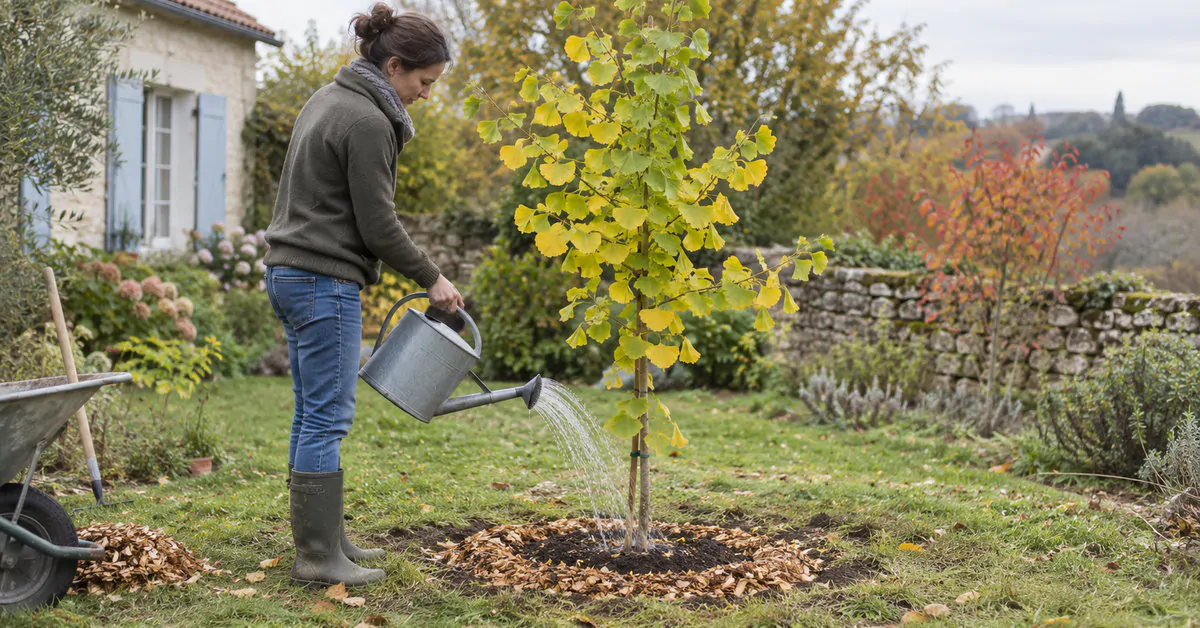
Spread a few inches of mulch on the soil around the tree. You can use chipped wood from pruning hedges. However, leave about 4 inches of space around the trunk to prevent the bark from staying damp.
During the first seasons, check the soil moisture at depth. Water slowly and deeply when the soil starts to dry, especially during hot, dry spells. Tailor the amount to the tree’s size and your soil: steady, measured watering is more effective than an automatic application of 5–10 gallons (20–40 liters) without looking at the soil.