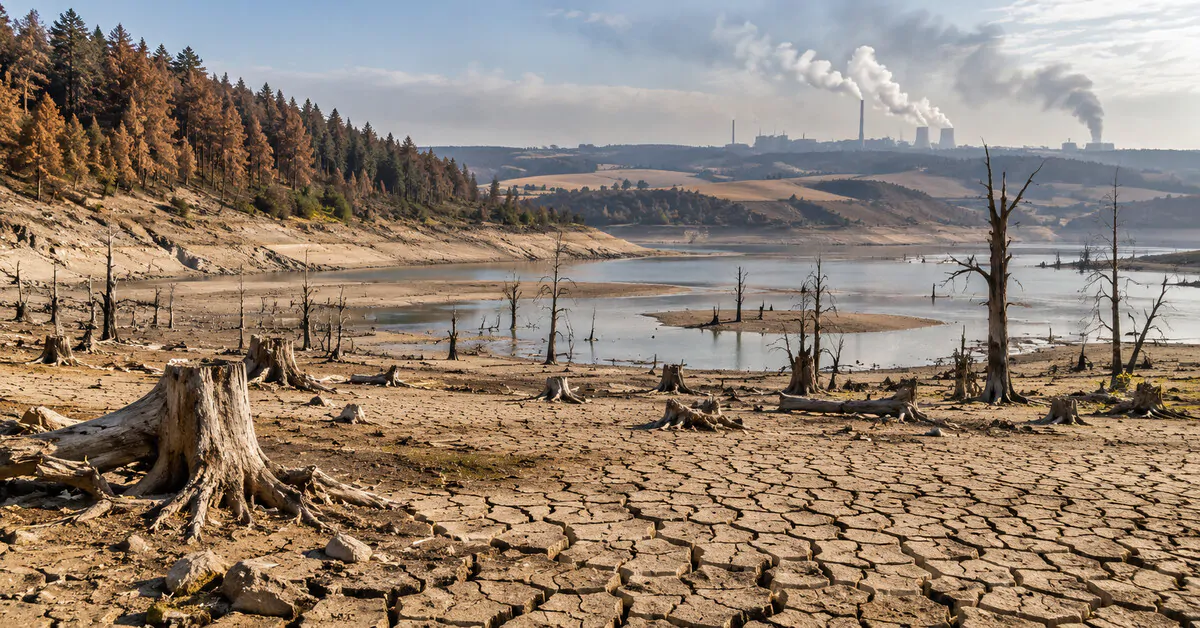
The planet’s major regulatory mechanisms are under a record level of pressure. Climate, biodiversity, water, soils, oceans, or chemical pollution: behind crises often treated as separate lies the same problem—a planet gradually losing its ability to absorb shocks.
Interconnected “Planetary Boundaries” that inform the state of the Earth
On September 21, 2026, the Potsdam Institute for Climate Impact Research published the latest edition of its annual study, Planetary Health Check. More than 60 scientists contributed to this assessment. Their finding is clear: seven planetary boundaries out of nine have been crossed, and all seven are at the highest level of overshoot recorded to date. The number hasn’t changed since 2025. The severity of the diagnosis, however, is increasing.
These boundaries, however, do not describe either a doomsday date or nine switches that would abruptly push Earth from a stable state to an uninhabitable one. They are scientific guardrails. The further humanity moves away from them, the more it ventures into a zone where the risks of lasting changes, cascading effects, and, in some cases, hard-to-reverse transformations rise.
The principle is to monitor nine major processes that contribute to the planet’s stable functioning. They cover climate, the integrity of the biosphere, land use, freshwater, the biogeochemical cycles of nitrogen and phosphorus, novel substances and materials introduced into the environment, ocean acidification, the stratospheric ozone layer, and atmospheric aerosols. In practice, these nine sets are tracked across 13 control variables. A planetary boundary, therefore, is not akin to a physical barrier – it marks a zone in which risk is considered sufficiently low to preserve the stability and resilience of the Earth system. Crossing a value does not automatically spell disaster, but increases the risk that it occurs.
The reference point broadly aligns with the relatively stable conditions in which human societies have developed. The Holocene spans roughly 11,700 years. During this period, temperatures, water and nutrient cycles, and ecosystem functioning offered a sufficiently predictable environment to enable the rise of agriculture, cities, and, ultimately, modern societies.
Yet these processes do not operate in isolation. A degraded forest absorbs less carbon. A rise in temperatures intensifies droughts and wildfires. Alteration of the water cycle, in turn, undermines ecosystems. Fertilizers can disrupt nitrogen and phosphorus cycles, then foster the eutrophication of rivers and coastal zones. It is this interdependence that gives the planetary boundaries framework its reach: it seeks to view the Earth system as a whole, rather than as a set of isolated environmental problems.
Seven planetary boundaries exceeded: Earth is moving away from the safe zone
The idea of planetary boundaries dates back to 2009, when the framework to define a “safe operating space” for humanity was formalized. The framework has subsequently been regularly revised as observations, climate models, and knowledge of ecosystems progressed. In 2026, no new domain was added to the list. By contrast, the seven exceedances have worsened. “The diagnosis is unequivocal. Pressure is rising on every planetary boundary already outside the safe operating space,” says Boris Sakschewski, lead author of the report. According to the researcher, this development increases the risk of large-scale, persistent, and potentially irreversible changes, while narrowing the margin for maneuver.
The four situations considered most concerning involve climate change, biosphere integrity, biogeochemical flows, and novel entities. These four boundaries are placed in the high-risk zone. Changes in land use, freshwater, and ocean acidification have also exceeded their safety space, but sit in a zone described as rising risk.
The climate provides one of the most telling indicators. Atmospheric CO2 concentration has reached 426 parts per million. The value associated with the safe zone sits at 350 ppm, versus about 280 ppm before the industrial revolution. In other words, the problem is not simply crossing the boundary: the concentration continues to climb within the risk zone.
Another climatic indicator is deteriorating. Radiative forcing, which measures the energy imbalance imposed on the Earth system, has risen from 2.97 to 3.10 watts per square meter, compared with a safety value of 1 watt.
The ocean tells the same story in another form. Surface seawater pH has fallen by about 0.1 units since the start of the industrial era. This seemingly small shift corresponds to a roughly 30 to 40 percent increase in acidity. The phenomenon largely results from the oceans absorbing part of the extra CO2 present in the atmosphere. It weakens organisms that build shells or calcify, and adds pressure to coral reefs.
Only two boundaries remain within the global safe operating space: the depletion of the stratospheric ozone layer and atmospheric aerosol loading. The situation, however, deserves nuance. Aerosols remain excessive in certain regions despite overall global improvement. As for the ozone layer, its recovery underscores precisely that planetary-scale environmental degradation can be reversed when the underlying causes are actually reduced.
“ We do not have the luxury of time,” sums up Johan Rockström, director of the Potsdam Institute for Climate Impact Research and coauthor of the report. He adds, however, that the knowledge, technical capabilities, and solutions needed to change trajectory exist. The challenge posed by the planetary boundaries is therefore not to determine the day when the planet would suddenly become uninhabitable. It is to measure how much safety margin remains before the major natural systems on which human societies depend become even more difficult to stabilize.