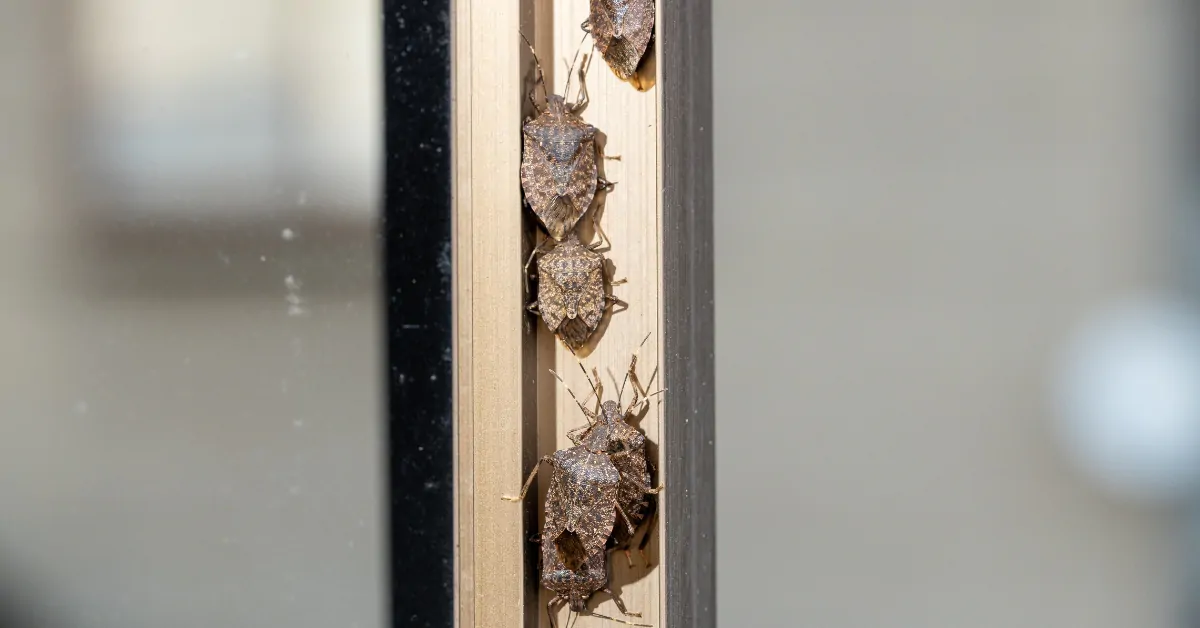
A stink bug on the curtain, another near the window… Their presence can raise fears of an infestation. Yet, the bugs that come in during fall don’t necessarily reproduce. For the brown marmorated stink bug, the home mainly serves as a winter refuge. Bed bugs, on the other hand, follow a different logic.
Summary
- Do brown marmorated stink bugs reproduce during winter?
- Why do you find multiple bugs at home?
- Where and when do they lay eggs?
- How to tell them apart from bed bugs?
- What to do if they keep showing up?
Brown Marmorated Stink Bugs Do Not Breed Indoors During Winter
No, brown marmorated stink bugs overwintering indoors do not lay eggs in your furniture or on your curtains. They do not feed and do not reproduce during this winter residence. Their presence, even in large numbers, does not mean a new generation is growing in your living room.
The brown marmorated stink bug, Halyomorpha halys, is one of the species that can enter buildings en masse in autumn. It seeks shelter to ride out the season.
However, you must identify the insect before reassuring yourself. The term “stink bug” covers species with different lifestyles. A bed bug, for example, can reproduce in an occupied home.
Why Do You Find Several Bugs Without Them Multiplying?
Groupings in the Same Refuges
In autumn, brown marmorated stink bugs may cluster on façades and then move into protected spaces. Several adults can arrive at the same building without being born there.
They often squeeze around window frames, behind certain baseboards, or in cracks in the building. These hideouts serve as winter refuges. Their gatherings help explain why a seasonal presence can look impressive.
To understand their arrival, check out our article on autumn stink bugs and how they enter homes.
Stink Bugs Reappearing in the Dead of Winter
You think you’ve removed them all, but a new stink bug crosses the living room in January? That does not prove reproduction.
Hidden adults can become visible again on a warm day or when heating rises. So, these could be insects present since autumn that temporarily leave their refuge.
An active stink bug in a heated room is not proof of an egg-laying inside the house.
Where and When Do Brown Marmorated Stink Bugs Lay Their Eggs?
Reproduction takes place in spring and summer. After overwintering, adults resume activity and feed on plants.
Females lay eggs in clusters on leaves. For the brown marmorated stink bug, these eggs are pale and rounded. The nymphs then go through five instars before becoming adults.
This species can produce one to two generations per year. That cycle occurs on plants, not in bedding or furniture during overwintering.
Be careful not to rely on quick identifications: different stink bugs lay-looking eggs that can be easy to confuse. A photo of eggs is not always enough to identify the species.
Garden Bugs or Bed Bugs: The Essential Distinction
The adult brown marmorated stink bug has a shield-shaped body and can fly. It does not feed on human blood.
The bed bug is smaller, very flat, oval, and wingless. It measures about 4 to 7 millimeters in adulthood. It feeds on the blood of sleepers and can lay eggs in hiding places near the sleeping area.
Several clues should catch your attention:
- small black specks on the mattress, box spring, or sheets;
- bloodstains on the bedding;
- insects, eggs, or shed skins near the bed;
- bites that appear after the night.
Bites alone do not allow a definitive identification. If in doubt, look for the other signs and have the insect confirmed.
What to Do If Brown Marmorated Stink Bugs Keep Appearing in Your Home?
For clearly identified garden bugs, favor collection over systematic spraying. A container can be used to collect the accessible individuals. A vacuum can help when there are many, but it risks spreading their odor inside the vacuum.
Indoor insecticide treatments are not recommended against brown marmorated stink bugs. They do not prevent new entries and have difficulty reaching adults hiding away.
Avoid crushing them as well: they can release an odor when disturbed. To limit future intrusions, check seals and window screens.
Find detailed steps in our guide to blocking stink bug entries in autumn.
The right move: identify before treating. Brown marmorated stink bug adults overwintering do not require the same response as a bed bug infestation.
Also read
Why you shouldn’t crush brown marmorated stink bugs?