
If your lawn has suffered from the blazing sun this summer, it isn’t too late to renovate it before winter, quite the opposite. Autumn is thus a prime season for its enhancement: the window from late August to late November is ideal for sowing lawn seed.
Renovating Your Lawn in the Fall: Why and How?
Indeed, in autumn the soil remains warm and moist, which promotes rapid germination of new grass. Conversely, while it’s possible to do this in spring, a lawn seeded in the spring will take longer to establish, because the soil is still cool and will require more watering, since spring rainfall is typically less abundant than in autumn.
Another advantage of seeding a lawn in autumn is that the grass will have more time to establish roots before summer and the onset of hot, dry periods. The lawn will thus be better equipped to withstand water shortages as well as intense sun.
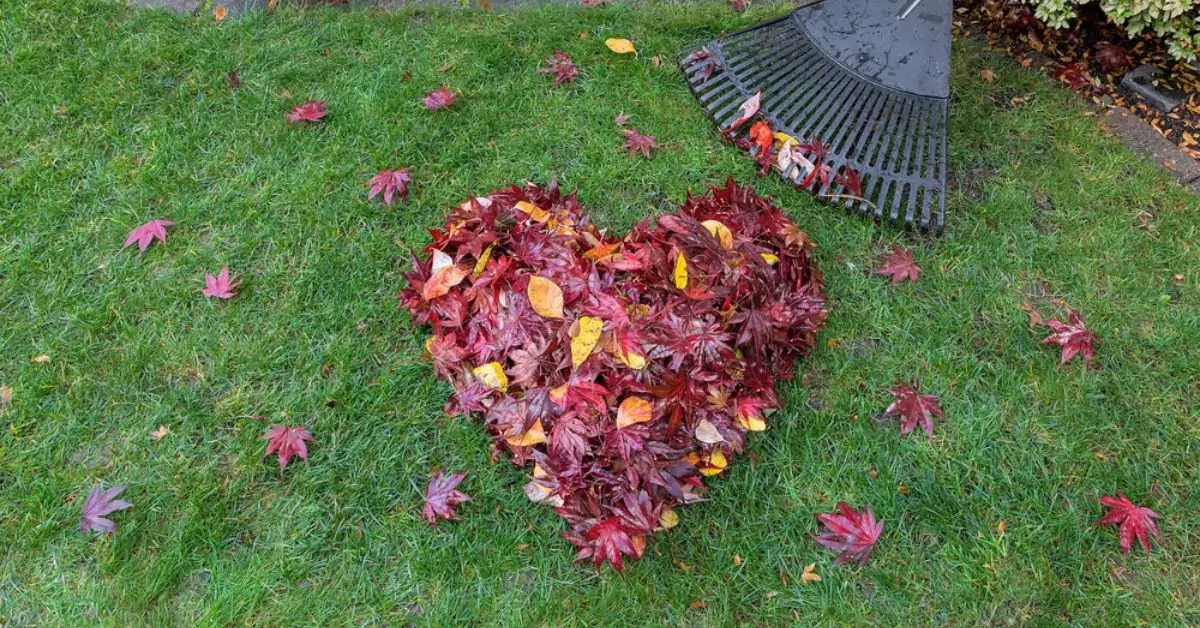
Only constraint for seeding a lawn in autumn: if your garden has trees, you’ll need to do it before the trees drop their leaves, i.e., before early October. Why? Because fallen leaves on the ground impede the lawn’s photosynthesis. You’ll thus need to regularly rake them up, while being careful not to tread too heavily on the young shoots… That’s why it’s best to sow a lawn at the very start of autumn.
1 – Should I Till the Lawn Soil?
A question arises: do I need to till the soil to renovate the lawn? Yes, but only if you want to renovate the entire lawn. You’ll need to use a rototiller or another tool to turn the soil, then break up the clumps while removing roots and stones. To obtain a flat seedbed, you can then level it with a rake or a fill rake, which will also give you loose, fine soil.
Next comes the moment to broadcast-seed your grass at a rate of about 40 g/m², so the lawn doesn’t become compacted. Then cover the seed bed with a thin layer of potting soil (about 3 mm), and lightly rake the ground to bury the seeds a little, which will keep them from being pecked by birds or washed away by wind or runoff.
Final tip for sowing grass seeds: roll the area with a garden roller to flatten the seeds. This will encourage horizontal growth, which will help the lawn withstand foot traffic better.
The seedings should then be watered lightly to moisten the top few millimeters of soil, but without overwatering. This light watering should be done regularly, ensuring there is no runoff carrying seeds away. The lawn will begin to germinate in about two weeks.

2 – Why and How to Scarify Your Lawn in Autumn?
If you simply want to reseed bare spots on your lawn, without reseeding the entire area, then scarifying your lawn is necessary. This action involves scratching the soil to a depth of about 3 cm, across both directions. It will air the soil and remove surface debris, such as moss. This will allow roots to develop more vigorously, resulting in a denser lawn.
Scarifying the lawn in autumn is also necessary if your lawn was seeded more than three years ago. It should be scarified twice a year—in autumn and in spring—even if you don’t plan to reseed.
3 – How to Mow Your Lawn in Autumn?
During summer, the lawn slows its growth, but once autumn arrives, the increased rainfall will boost its growth. The mowing will therefore be more regular until winter, a season during which your lawn should go dormant. Never cut your lawn by more than a third of its height, as a too-close cut weakens it and encourages weed growth.
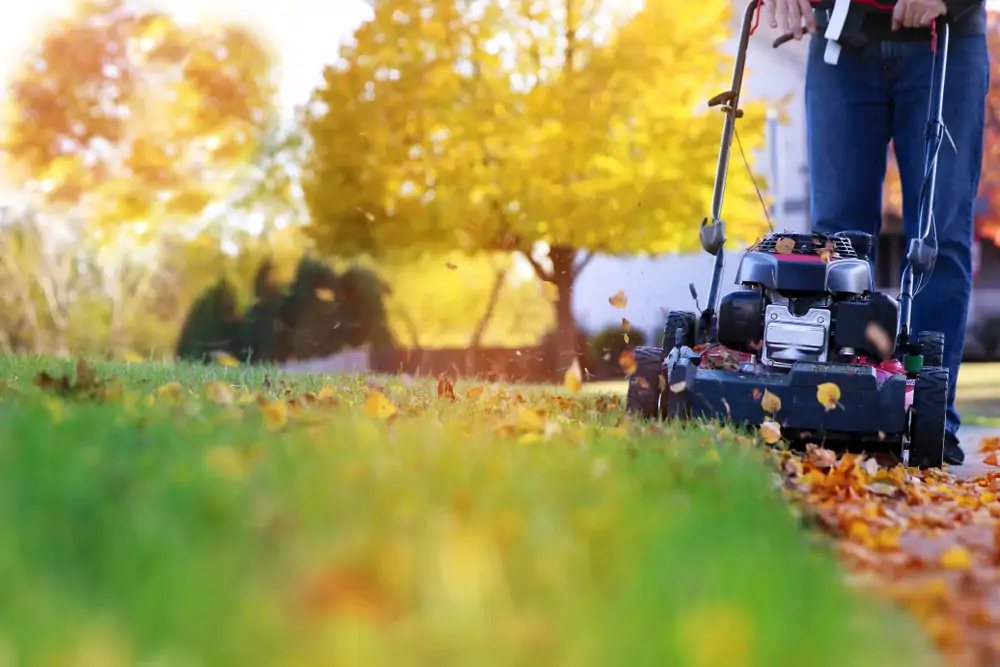
Another benefit of mowing in autumn is that you don’t have to pick up fallen leaves, which can block photosynthesis. If you have a shredding mower, that’s perfect, because your lawn will be fed by mulch.
4 – The Benefits of Autumn Mulching
Mulching is a practice that leaves grass clipping debris on the soil. Those plant materials then enrich the soil as they break down, acting like a natural fertilizer. In fact, lawns that benefit from mulched clippings tend to fare better during drought periods, but be mindful of north-facing grasses or areas that are too wet; for these, mulch can promote moss and mushrooms.
5 – Watering Your Lawn in Autumn
In autumn, once the summer heat has faded, the lawn only needs about 0.6–0.9 inches (about 1–1.2 cm) of water per week. With the rise in fall rainfall, gardeners should reduce irrigation to avoid overwatering while keeping the lawn hydrated. A lawn that lacks water is more prone to diseases. Prefer watering your lawn in the morning, since evening irrigation can also promote diseases overnight. Depending on weather conditions, one weekly irrigation in autumn is typically enough, favoring a shallow, light watering so as not to waterlog the lawn.
Read also