
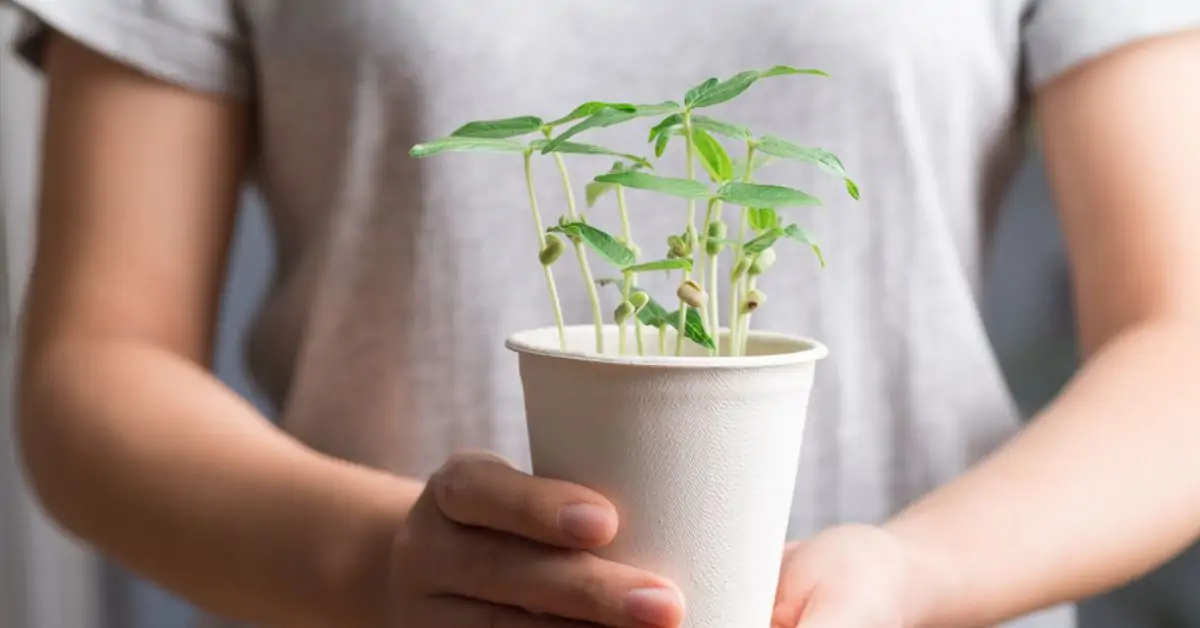
Fruits and vegetables within reach—who hasn’t dreamed of that? If not everyone is lucky enough to own a vegetable garden, know that it is still possible to grow at home certain edible plant varieties, and not only herbs. Some guidelines must be followed.
Growing vegetables in an apartment, it’s possible!
To grow vegetables indoors, you simply need to start by choosing the most suitable edible plant varieties, but that’s not all. The pot or planter you choose, as well as the quality of the potting soil, are important. The size of the container should be selected based on the plant you want to grow. Some will need more space because they tend to spread as they grow, while others can get by with a compact planter.
Also opt for a potting mix designed for growing edible plants in pots, or soil enriched with compost or another organic fertilizer to support healthy growth of your plants.
Another important factor to consider when growing fruits and vegetables indoors or at home: watering. It should be more regular than for ground-level plantings, because the roots are more exposed to drying out. But beware of overwatering, which can lead to rot. It’s better to ensure good drainage by drilling a hole at the bottom of the pot to catch the excess water in the accompanying saucer. Laying clay pebbles at the bottom of the container is also a good solution.
Exposure is equally crucial for cultivating vegetables indoors. Favor bright spots, but not directly in the sun, which could burn them. Also avoid drafty areas or, on the contrary, being too close to a heat source like a radiator.
Finally, it’s best to plant seasonal vegetables, which you can usually buy at the store while respecting nature. It’s from the roots of these edible plants that you can obtain new plants!
The fruits and vegetables that grow indoors
Leeks
To grow leeks indoors, it’s simplicity itself. If you cook with these flavorful vegetables, which can be used in numerous recipes, cut the stalks while leaving about 0.8 inches (2 cm) of roots. Place these roots in a glass with a little water at the bottom. Remember to change the water about every two days, then wait a few weeks for the leek stalks to develop. Once they’re sufficiently developed, simply plant the leeks in an appropriate pot.
Romaine lettuce
Lettuce can also be grown at home! After preparing a head of lettuce, keep the heart to place in a bowl of water exposed to light. A windowsill, for example, is perfectly suitable. Change the water every day and after a few weeks, you’ll have a brand-new head of lettuce!
It is possible to do the same with bibb/batavia lettuce, except this variety will need to be replanted in soil, in an appropriate pot.
Radishes
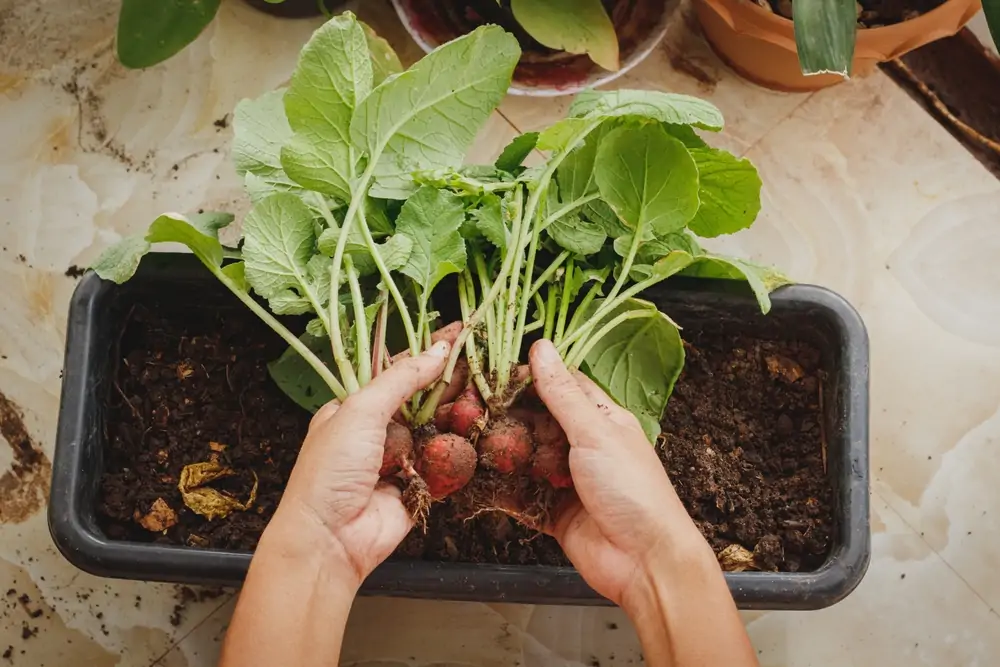
It is also entirely possible to grow radishes indoors in a pot. To do this, fill a pot with enriched potting mix, ensuring the substrate is fine enough to let the radish roots extend without difficulty. Place radish seeds one by one, spacing them at least 0.4 inches (1 cm) apart. Cover the seeds very lightly with a little soil, then water gently. Put the pot in a bright spot and keep the soil moist until germination, which usually occurs within about 5 days. Radish harvest typically occurs about a month later.
Green beans
Growing green beans in a pot at home is also fairly straightforward. If you opt for climbing beans, you’ll need to install a trellis to allow the plant to climb. It’s better to choose bush beans, whose pods are edible in full.
Plan to place your seedlings in a pot that is at least 16 inches (40 cm) in diameter, filled with a light-weight substrate that will let the roots develop easily. Plant the bean seeds about 1.2 inches (3 cm) deep. Cover the seeds with soil and lightly press with your hand. Immediately water the substrate and place the pot in bright light. Monitor watering: the soil should stay moist, not overly wet.
Beans are typically harvested 8 to 10 weeks later.
Asparagus
While it is possible to grow asparagus indoors, you’ll need to show a bit more patience. If you cook with them, remember to keep their roots. Briefly dip the roots in water, then plant them in a pot filled with potting soil, spacing them apart.
You’ll have to wait several months before you can harvest your asparagus and enjoy them, so plan to plant them each year at home to maintain a rotation.
Many other vegetables can be grown in pots and indoors as well, though they require more patience, care, and of course, may not yield a satisfactory harvest right away. Only the satisfaction of watching plants grow calmly, and later the pleasure of tasting homemade vegetables, should drive you!
Read also